Oktoberfest began as a royal wedding, and many Alpine brides wear dirndls
The first Oktoberfest in 1810 celebrated a royal wedding, and Alpine brides still wear their finest dirndl, in colors that were never only white.
Continue →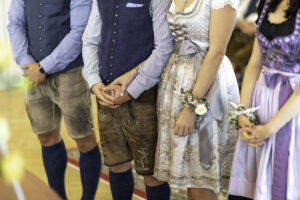
The red sindoor of Hindu weddings is traditionally made from turmeric and lime
Before red lead and cinnabar, sindoor was just turmeric and lime. The story behind the red powder in a Hindu bride’s hair parting.
Continue →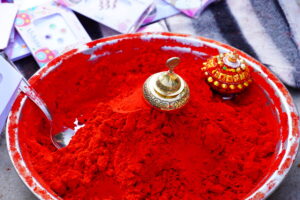
Aso ebi, the matching wedding fabric of Nigeria, literally means family cloth
Friends and family wear the same fabric at Yoruba weddings, a custom rooted in the idea that a close friend is kin.
Continue →
The kilt worn by many Scottish grooms owes its modern shape to an English Quaker
Many Scottish grooms marry in a kilt, yet its modern pleated form is usually credited to a Lancashire Quaker in the 1720s, and clan tartans came later.
Continue →
Not every Indian bride wears a mangalsutra, and that is just as traditional
From black beads in Maharashtra to coral bangles in Bengal, India marks a marriage in many beautiful ways, and the mangalsutra is only one of them.
Continue →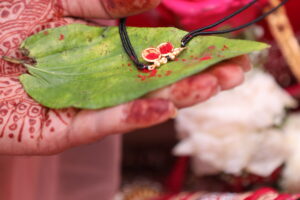
The jacket of a traditional Cantonese wedding dress was black until the 1960s
Chinese brides wear red and gold today, but the classic Cantonese qungua once had a black jacket, and mothers began sewing it the day a daughter was born.
Continue →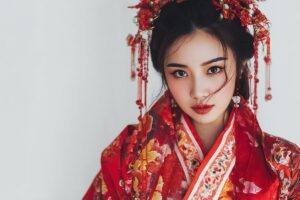
In South Asia, many grooms wear a wedding veil made of flowers or beads
Before leaving for the bride, many South Asian grooms have a sehra tied to their turban, a veil of flowers with a long history.
Continue →
Filipino grooms swapped Western suits for the embroidered barong by the 1990s
The barong is now the classic Filipino wedding shirt, yet post-war grooms mostly wore suits. Here is how it took over, and the myth it still carries.
Continue →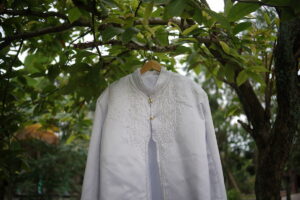
Indian brides joke that darker henna means a partner who loves them more
Bridal henna keeps darkening for up to three days, and a playful Indian saying ties that deep red-brown stain to how much a partner loves you.
Continue →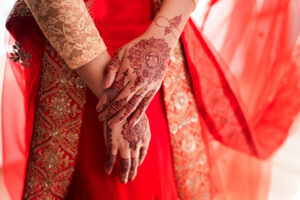
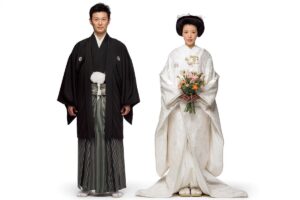
Japanese brides wear a headdress said to hide their horns of jealousy
The white silk band worn by Japanese brides is called horn hiding, and the true story behind its name is just as lovely as the legend.
Continue →