Breaking the glass at a Jewish wedding may have begun as a way to calm a rowdy party
The crash of a glass under the chuppah may date back to Talmud stories of rabbis who quieted a wedding that was getting out of hand.
Continue →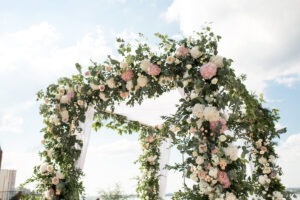
An Indian groom may arrive at his wedding on a horse, an elephant or a camel
The baraat turns the groom arrival into a joyful parade, and from camels in Rajasthan to a playful nose grab in Gujarat, every region does it differently.
Continue →
Welsh suitors once carved wooden spoons to show how many children they hoped for
Every carving on a Welsh lovespoon had a meaning, from hearts and bells to tiny caged balls counting the children a suitor hoped for
Continue →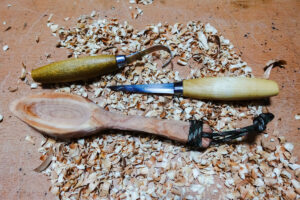
Ancient Roman brides were carried over the threshold, but not by the groom
Carrying the bride into her new home goes back to ancient Rome, where the doorway was sacred and stepping on it was seen as a bad omen.
Continue →
Why many Hispanic and Filipino grooms give their bride 13 coins
Thirteen coins, a blessing and a silk cord shaped like an 8: here is what the arras and lazo mean at Hispanic and Filipino weddings.
Continue →
In Bermuda, the wedding cake comes with a live cedar tree for the couple to plant
From a cedar tree in Bermuda to almond rings in Norway and a stack cake shared by a whole community, wedding cakes tell very different stories.
Continue →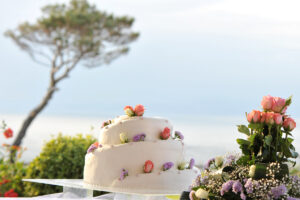
Jewish couples are lifted on chairs during the hora, linked by a handkerchief
From the Jewish horah to the Levantine dabke and the Serbian kolo, the circle dance is one of the oldest ways guests celebrate a wedding.
Continue →
Korean brides try to catch dates and chestnuts in their skirt to count future children
At the pyebaek, a small family ceremony, the in-laws toss dates and chestnuts at the bride, and what she catches hints at future children.
Continue →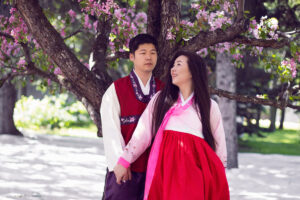
Before the chuppah stood on four poles, it was a real room for the couple
The Jewish wedding canopy was once a real room or tent, and Christian, Sri Lankan and Hindu couples have married under their own coverings too.
Continue →
At Hungarian weddings, guests pass the bridal shoes around to collect cash
From pinned banknotes in Poland to showers of naira in Nigeria, the money dance takes a different shape in every culture that loves it.
Continue →