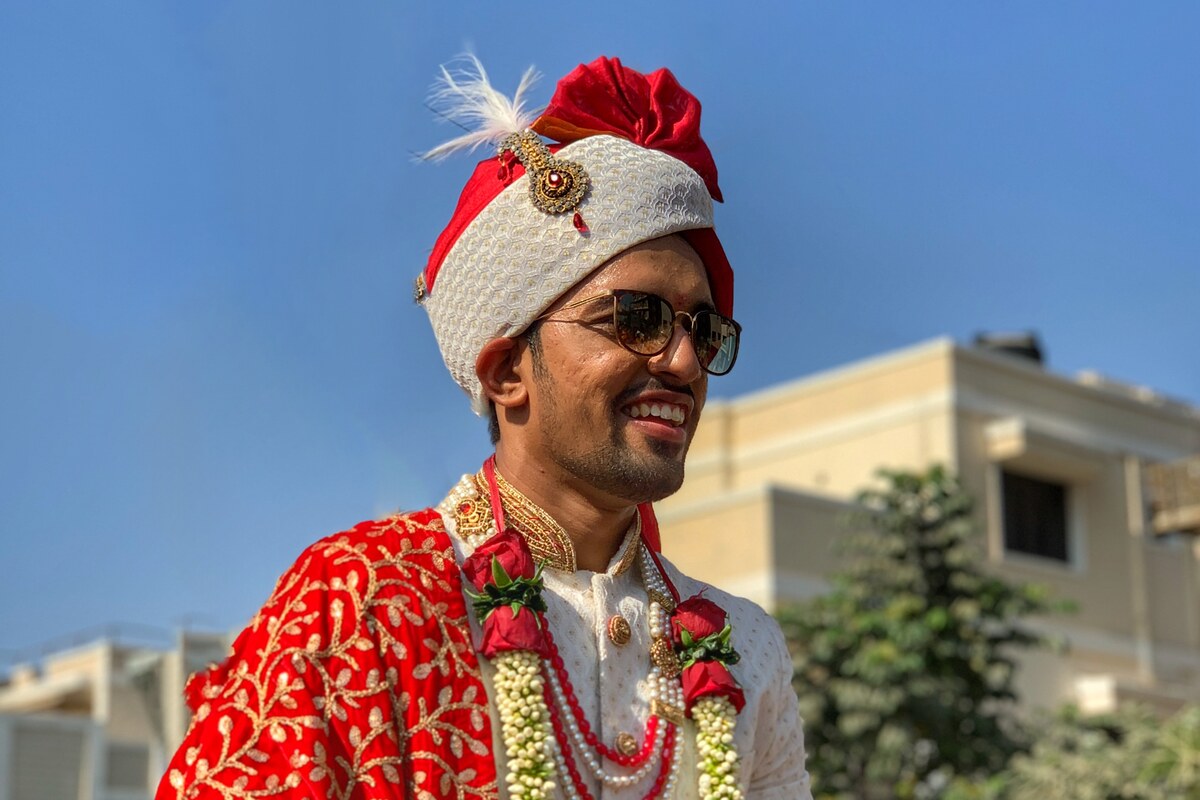
At many weddings across the Indian subcontinent, the groom does not simply turn up at the venue. He arrives at the head of a procession, with music, dancing, family and friends, and sometimes on the back of a mare, an elephant or a camel.
This joyful parade is called the baraat. It is a wonderfully festive moment, and the lovely part is that so many regions have their own way of doing it.
What the baraat actually is
The word comes from the Sanskrit Varayatra, which literally means the groom’s procession. Traditionally, the groom travels to the wedding venue, often the bride’s house, surrounded by his family members and friends.
The people walking with him are called baraatis. The term is also used more broadly for any guest from the groom’s side, and by tradition, the baraatis are looked after as guests of the bride’s family.
In earlier eras, grooms traveled on a mare, in chariots or even on elephants. Today, many arrive in vintage cars instead. A baraat can grow into a large procession with its own band, its own dancers and its own budget, headed by fireworks and the rhythm of the dhol drum.
Interestingly, the groom and his horse are dressed in finery but usually stay out of the dancing and singing. That joyful job is left to the baraatis, while the groom, who often carries a sword, rides at the center of it all.
A procession that changes from one region to the next
In Rajasthan, camels have been part of the culture for centuries as a means of transport and a symbol of wealth and status. A groom there may arrive on a camel, or in a cart pulled by one, decorated with fabrics and embroidery.
Rajput processions have a very different mood. There is no dancing in the streets at all, and every member, groom included, carries a sword. The groom rides an elephant or a female horse, dressed in a gold achkan and an orange turban, which gives the whole procession a regal feel.
In Tamil tradition, the procession is called Janavasam, and the groom rides in a beautifully decorated car while professional musicians play traditional wedding songs. In the Dogra tradition, the groom’s sisters adorn him with necklaces of gold, silver or even currency notes, and his sisters-in-law apply kajal to his eyes before he sets off.
In Nepal and Sikkim, the procession is known as Janti, and it travels from the groom’s house to the bride’s home to bring her back. In Kannada and Tulu weddings, the Dibbana begins with a prayer for the groom’s safe journey, made with kumkum and a coconut.
The warm welcome at the other end
Arriving is only half the story. When the baraat reaches the meeting point, the elders of both families meet, and the welcome is often as beautiful as the procession itself.
In north Indian Hindu weddings, the groom is greeted with garlands, tilak and aarti. In Bengal, the bride’s mother and family welcome him by blowing conch shells. In Odisha, the groom is offered curd mixed with honey or jaggery. In Punjab, a ceremony called the milni, literally the meeting, sees equivalent relatives from both sides greet each other.
The sweetest welcome may be in Gujarat. There, the groom touches the feet of his mother-in-law, and she then playfully grabs his nose. The gesture is a gentle reminder that she is giving him her beloved and precious daughter, so he should be humble and grateful.
A tradition that keeps evolving
Like many wedding customs, the baraat is not frozen in time. Riding a horse used to be reserved for grooms, but brides have begun riding horses too.
Some couples are also choosing to leave animals out altogether. Animal welfare groups such as PETA India and People for Animals have raised concerns about what loud noise, crowds and spiked bits can do to horses, and have encouraged alternatives such as palanquins. A vintage car, a decorated cart or simply a joyful crowd on foot can carry the same spirit.
If you are planning a wedding that includes a baraat, or you have been invited to join one, there is really only one rule worth remembering. The procession belongs to everyone walking in it, so the more the baraatis sing and dance, the warmer the welcome waiting at the end.