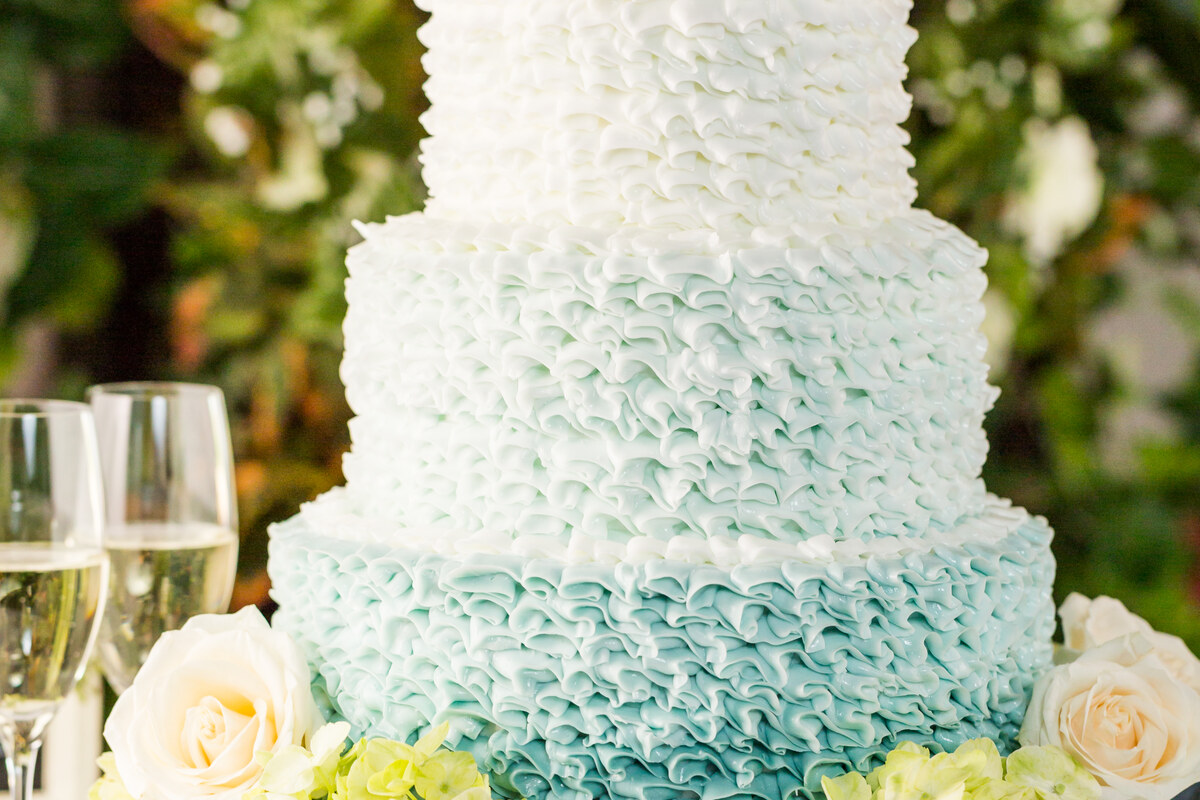
The tiers on your wedding cake exist because a heartbroken baker’s apprentice couldn’t stop looking at a church spire near his shop. His name was Thomas Rich, and the shape he came up with in 1703 is still the one bakeries reach for today.
The pie that came before the cake
Long before anyone iced a cake white, English weddings were closed out with something far less sweet: a savory bride’s pie. A documented 1685 recipe from Robert May packed the pie with oysters, lamb testicles, pine kernels and rooster combs.
Some versions went further, hiding live birds, or even a live snake, inside the pastry for guests to discover the moment it was cut open at the table. Refusing a bite was considered genuinely rude, guests ate a piece purely out of etiquette, whether they wanted to or not.
One detail from this odd tradition survives in a much gentler form today. A glass ring was sometimes hidden inside the pie, and whichever unmarried woman found it in her slice was believed to be next in line to marry, a direct ancestor of the modern bouquet toss.
A baker in love designs a tower
The switch from savory pie to sweet, tiered cake traces back to one very specific love story. Thomas Rich was a baker’s apprentice on Ludgate Hill in London, and he’d fallen for his employer’s daughter.
Looking for a way to make his cake stand out, Rich modeled its shape after the tiered spire of St Bride’s Church on Fleet Street, a building he would have walked past constantly. That tower of tiers became the template for the Western wedding cake as we still know it.
Cake size wasn’t just decoration either. For a long stretch of history, the bigger and more elaborate the cake, the more clearly it advertised the couple’s social standing to everyone at the reception.
From two cakes to a stack you kiss over
For part of the 17th century, weddings actually featured two separate cakes: a large white pound cake for the bride, white symbolizing purity, and a smaller, darker fruitcake for the groom. The groom’s cake eventually faded out of the main event.
Medieval English couples had their own cake ritual, too. They stacked small cakes as high as they could manage, then tried to kiss over the top without knocking the whole thing down. Success was supposed to guarantee a prosperous married life.
That particular custom reportedly crossed the Channel and inspired something still served at weddings today. A visiting pastry chef saw English couples balancing their precarious cake towers and recreated the idea back in France as a tower of profiteroles, the croquembouche.
A tradition worth knowing before your big day
What started as a savory pie with a hidden ring, then a baker’s tribute to a church spire he passed every day, has quietly shaped nearly every wedding cake cut since. Every tier on your own cake is standing on centuries of small, human decisions.
Whether you go for a classic tiered design, a modern one-tier statement cake, or even a croquembouche nod to that French tradition, you’re taking part in a story that started long before white icing ever entered the picture.