It is one of the sweetest moments after a wedding: the groom scoops up his new spouse and carries them through the front door of their first home together. Most couples do it simply because it feels romantic. Yet the gesture goes back to ancient Rome, where the doorway of a house was treated as something close to sacred.
A doorway the bride was not supposed to touch
At the heart of a Roman wedding was the domum deductio, which means “leading to the home”: a public procession that brought the bride from her family’s house to the house of her groom.
That journey mattered so much that the jurist Ulpian considered the marriage complete once the bride had been led to her new home, even before the couple were alone together. Another jurist, Pomponius, explained that the groom’s house was the “abode of matrimony”.
And at the end of that procession stood the threshold. According to the Roman scholar Servius, it was a bad omen for a bride to step on the threshold, because it was the “thing of Vesta”, the goddess of the hearth, and therefore sacred. The poet Ovid linked the custom to Janus instead, the god who guarded doorways.
Golden feet and a crossing with good luck
Roman poetry kept the custom alive. Catullus, in one of his wedding poems, tells the bride to cross the threshold with “a good omen” and her “golden feet”, a lovely image of a bride stepping into her new life with grace.
Arriving at the door came with other small rituals too. Pliny the Elder wrote that brides smeared the doorposts with pig’s fat as they entered the groom’s house, and another author he cites claimed wolf fat was used to protect against “evil medicine”. Servius connected the wolf to the she-wolf who nursed Romulus and Remus, a symbol of loyalty.
Doorways were dressed for the occasion as well. Roman writers mention festive wreaths on the gate, decorative bands wound around the doorposts and doorposts entwined with myrtle.
The surprising twist: it was not always the groom
Here is the detail most couples have never heard. In the version described by the writer Plutarch, the bride was carried across the threshold by other people, not by her new husband. He saw it as a symbol of reluctance: the bride was not expected to walk eagerly away from her family, so she was carried into her new home instead.
Ancient writers did not agree on a single meaning, and that is part of the charm. In a Roman comedy by Plautus, a maid even tells the “bride” to lift her feet over the threshold so she will always have the upper hand over her husband, a joke that suggests the custom was familiar enough to tease.
Plutarch also recorded a phrase linked to the bride’s arrival: “Where you are Gaius, I am Gaia.” Gaius and Gaia may simply have stood for “man and woman”, and Plutarch suggested the words could express a home run by the couple together.
From Rome to your own front door
Over the centuries, the reasons shifted. A version of the Roman belief lived on in medieval Europe, holding that evil spirits could curse a bride through the soles of her feet, so the groom carried her to and through the door of their new home to protect her and their marriage. Today, in many countries, the carry is simply seen as good luck.
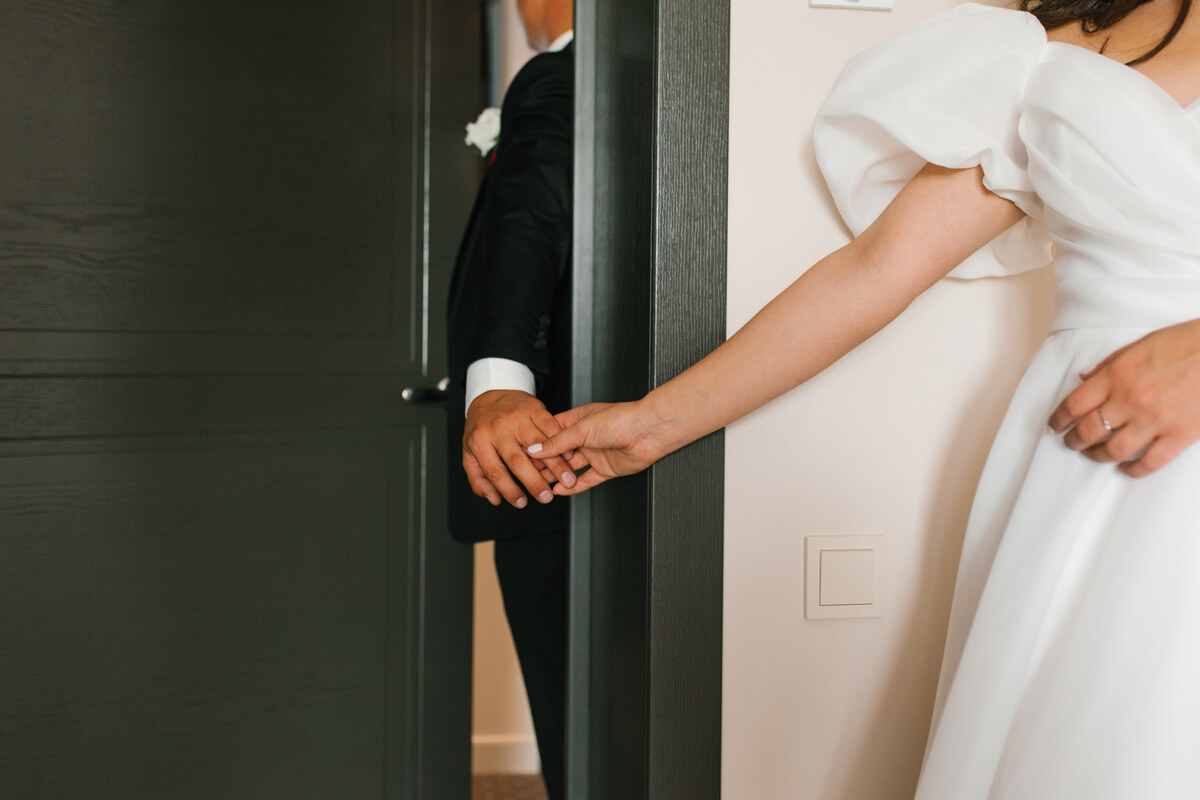
If you want to keep the tradition, it can be as simple or as playful as you like: the door of a new house, a rented apartment or even a honeymoon suite all count. And if a full lift is not your style, crossing the threshold hand in hand works beautifully too. As the Romans might say, what matters is stepping in with a good omen.