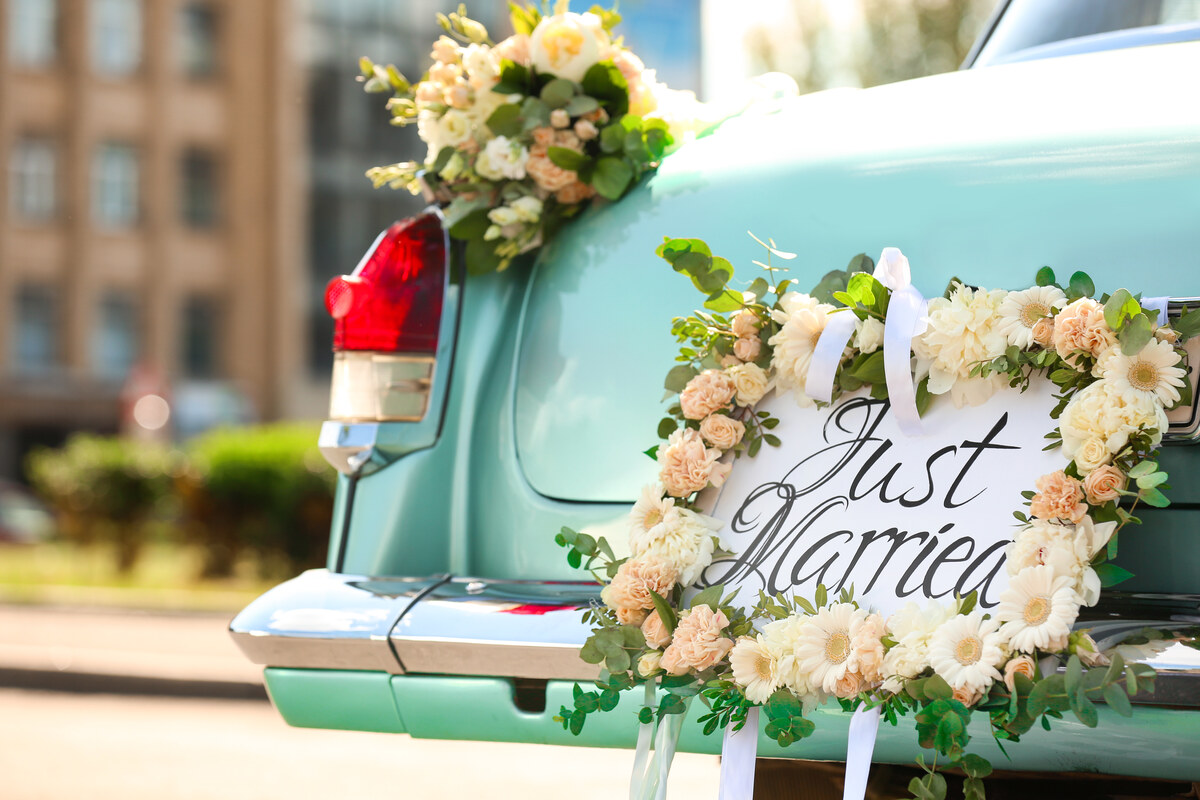
That rattle of tin cans behind a just-married car has a much older, much noisier ancestor. For centuries, newlyweds in Europe and North America could expect a crowd outside their window on the wedding night, banging pots and pans in what was called a charivari, or a shivaree.
It sounds chaotic, and it often was. But in many small towns it also became a strange, affectionate way of welcoming a couple into married life.
A wedding custom with a 700-year-old name
The word charivari is French, and the custom has been practised for at least 700 years. A painting in the early 14th-century French manuscript Roman de Fauvel already shows one, with townspeople making a racket in the street as the main character heads to his marriage bed.
The name itself likely comes from the Vulgar Latin caribaria, which already referred to rattling kitchenware with an iron rod. That word probably goes back to a Greek term meaning “heaviness in the head”, or simply a headache. Anyone who has stood next to a pot being hammered with a spoon will understand why.
In France, the charivari was first recorded as a regular wedding activity, held at some point after the vows to celebrate the new couple. It was the upper classes who practised it first, before everyone else joined in and started looking forward to the next occasion.
From village judgment to wedding night prank
Over time, the European version took on a sterner role. Villages used this “rough music” to show disapproval of marriages they did not like, such as a widow remarrying before the usual period of mourning had ended. For a remarriage that came too soon, the noise was said to represent the scream of the late husband or wife in the night.
The custom was serious enough that, in the early 17th century, the Council of Tours forbade it and threatened participants with excommunication. In England, ran-tanning and similar noisy processions were banned by the Highways Act of 1882. Even so, the custom lingered on in country villages.
Across the Atlantic, the tone changed. French colonists took the charivari to Quebec, and it became common on the American frontier, where it was usually called a shivaree (and a chivaree in Ontario). North American shivarees were generally far gentler, used as “unifying rituals” that brought people together rather than pushed them out.
One account from Kansas sums up the mood: “All in fun, it was just a shiveree, you know, and nobody got mad about it. At least not very mad.”
Cowbells under the bed and a ride in a wheelbarrow
In many communities, the shivaree became a playful spoof of the newlyweds, meant to interrupt their first night together for a little while. The pranks could be wonderfully specific. Couples might be tossed into a horse tank, or asked to buy candy bars for the whole crowd before everyone would go home.
In parts of the Midwest, such as Kansas, shivarees carried on as good-natured wedding humour into the 1960s and 1970s. Friends would wheel the bride around in a wheelbarrow or tie cowbells under the wedding bed. This last ritual may be the origin of the tin cans fastened to the newlyweds’ car.
Some parties were legendary. In Tampa, Florida, in September 1885, the wedding of local official James T. Magbee drew a chivaree of several hundred men that lasted until nearly daylight. The historian Kyle S. Vanlandingham described it as “the wildest and noisiest of all the chivaree parties in Tampa’s history.”
Popular culture kept the memory alive too. In the musical Oklahoma!, Laurey and Curly get a lighthearted shivaree from rowdy cowboys on their wedding night, and The Waltons devoted a whole episode to one.
Keeping a little joyful noise in your own wedding
Echoes of the old custom may still be with us. It is possible that the car horns blown after weddings in France and many other European countries are a holdover from the charivari, and the clattering cans behind a getaway car tell a similar story.
If you love the idea, you can borrow the happiest part of the tradition without the midnight chaos. Let friends decorate the car with cans and bells, invite guests to ring little bells or cheer loudly as you leave, or plan a joyful send-off with a big noise and a lot of laughter. The spirit of the shivaree was always about a community making itself heard, and there is something lovely about leaving your wedding wrapped in the sound of the people who care about you.