At many Korean weddings, there is a quieter moment after the big ceremony, when only the family stays behind. The new in-laws toss a handful of dates and chestnuts toward the bride, and she tries to catch as many as she can in her wedding skirt. Each one is a wish for the children the couple may have.
This tender ritual is part of the pyebaek, a Korean wedding custom built around bowing, food and family blessings. Here is how it works, and how couples celebrate it today.
A ceremony made for family only
Traditionally, the pyebaek was held a few days after the official wedding ceremony, with only family members present. It had one clear purpose: to introduce the bride to her new family. In its original form, it was exclusively for the groom’s side of the family.
The setting is simple and beautiful. The groom’s parents sit on cushions behind a low table, in front of a painted screen. The newlyweds sit opposite them and perform a deep bow, which begins standing and ends with the couple kneeling on the floor, foreheads pressed to their hands.
The bride may then present her parents-in-law with jujubes (Korean dates) and chestnuts, both symbols of children. In one variation, the couple also offers cups of wine, usually cheongju. The bride serves the father, the groom serves the mother, and sometimes the parents offer the newlyweds a cup in return. The older couple then shares some wisdom on marriage drawn from their own experience.
Catching dates and chestnuts in a wedding skirt
The most joyful moment comes at the end. The parents throw the jujubes and chestnuts back at the bride, and she has to try to catch them with her wedding skirt. The dates and chestnuts that land in her lap symbolize fertility and the number of children the couple may have.
There is a playful second ritual, too. The bride holds a date between her teeth while the groom bites the other end. Whoever ends up with the pit is said to decide whether their first child will be a boy or a girl, depending on what they wished for.
Often the groom then gives his mother a piggyback ride, followed by his bride. The gesture symbolizes that he accepts his obligations to both of them.
Every dish on the table carries a meaning
The food for the pyebaek was traditionally prepared by the bride’s mother, chosen with the journey to the groom’s home in mind. Each item has its own symbolism:
- Handmade meat jerky is commonly given to the groom’s mother, as an expression of love and respect.
- A platter of nine anju, small snacks or finger foods, goes to the groom’s father, particularly if he enjoys a drink. Nine stands for completeness and good fortune.
- Gotgam, dried persimmons, are especially prized. Because the persimmon tree must be grafted to grow, the fruit represents the couple’s union and the life experiences they will endure together.
- Yakgwa, sweet fried cookies, stand for wealth, while sikhye, a sweet rice drink, wishes the couple sweetness in marriage.
Dressed like royalty for one day
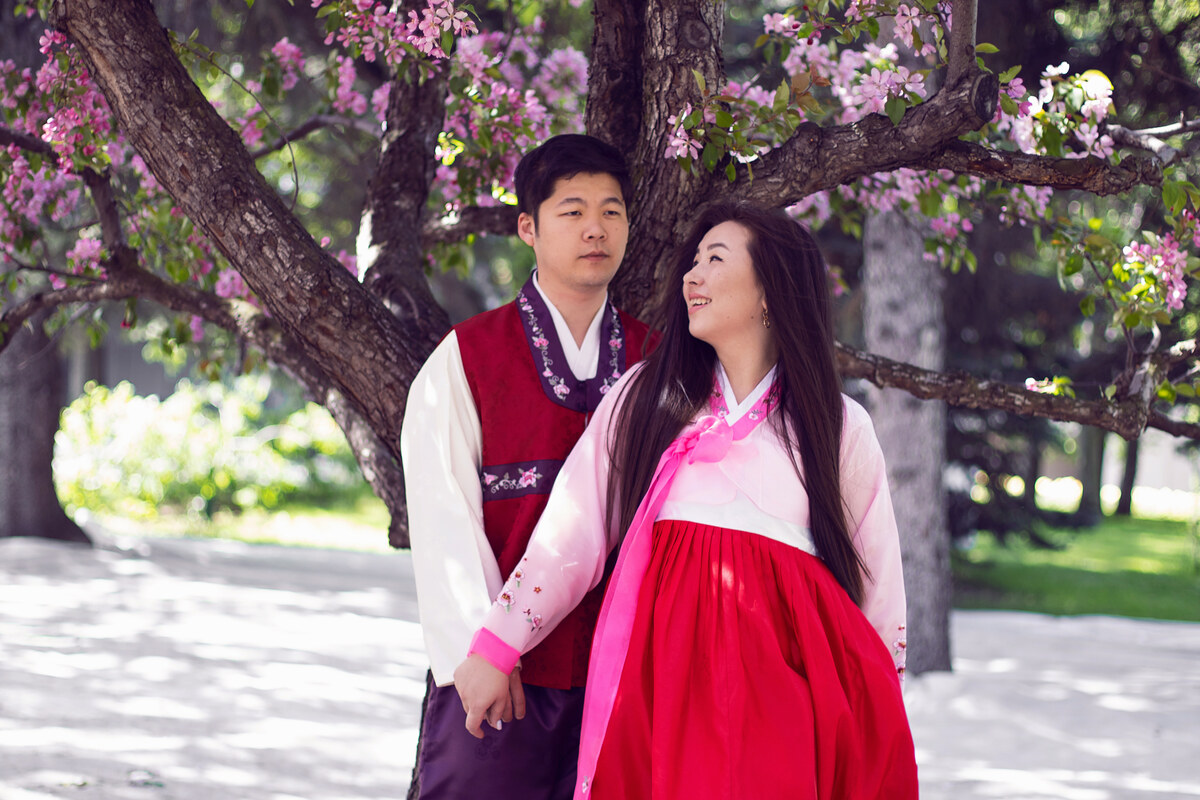
Couples traditionally wear hwarot, ceremonial attire with a wide-sleeved jacket and a flowing skirt. During the Goryeo and Joseon dynasties, it was once reserved for queens, before later becoming special occasion wear for commoners.
The bride’s hanbok often includes a green jacket with an X-shaped design and a red skirt embroidered with symbols of longevity, fertility and good fortune. Her hair is decorated with pins and a ceremonial crown called a jokduri, and some brides add red dots to their cheeks to signify youth and purity. The groom wears a blue hanbok with an overcoat called a dopo and a black hat known as a gat.
How couples celebrate the pyebaek today
Modern Korean weddings usually hold the pyebaek right after the main ceremony or reception, and many couples first have a Western style ceremony in a tuxedo and white gown before changing for this smaller traditional one. The bride’s side of the family can now take part as well.
In the United States, the ritual is often held a few days before the wedding, and the bride may receive gifts of money in white envelopes. Professors YoungHee Kim and Sung-Yeon Park of Bowling Green State University see its revival as a way for Korean Americans, whether or not they marry someone of Korean heritage, to introduce their heritage culture into mainstream American weddings.
If you would love to include a pyebaek but are unsure of the steps, you are not alone: commercial services exist to help couples who are unfamiliar with the ceremony. However you approach it, it remains a family moment at heart, a calm and intimate pause in the middle of the wedding celebrations.