Long before it became the choreographed centerpiece of a wedding reception, the first dance was not even a wedding tradition at all. It started as a formal ballroom custom, and the couple was never meant to dance alone.
A tradition borrowed from the ballroom, not the wedding
At historical formal balls, the very first dance of the evening was led by whoever held the highest social rank in the room, sometimes literal royalty. It was less a romantic moment and more a signal that the event had officially begun.
Every era and country had its own signature opening dance. In 17th century France it was the minuet, known at the time as “the Queen of Dances.” Victorian Britain opened its balls with the quadrille, while the 19th century Russian Empire favored the Polonaise.
That history is still hiding in plain sight in everyday language. The phrase “to open the ball,” now used to mean kicking off any kind of event, comes directly from this same ballroom first dance tradition.
What Emily Post actually told newlyweds to do
Here is the part that tends to surprise couples planning their own wedding today. In 1922, etiquette authority Emily Post gave very specific advice about the newlyweds’ first dance, and it looks nothing like the spotlight moment most receptions build toward now.
Post recommended that the couple simply dance together briefly, then move on to dance with other partners, all while the rest of the guests kept dancing around them. There was no hush over the room, no crowd forming a circle, no performance framing at all.
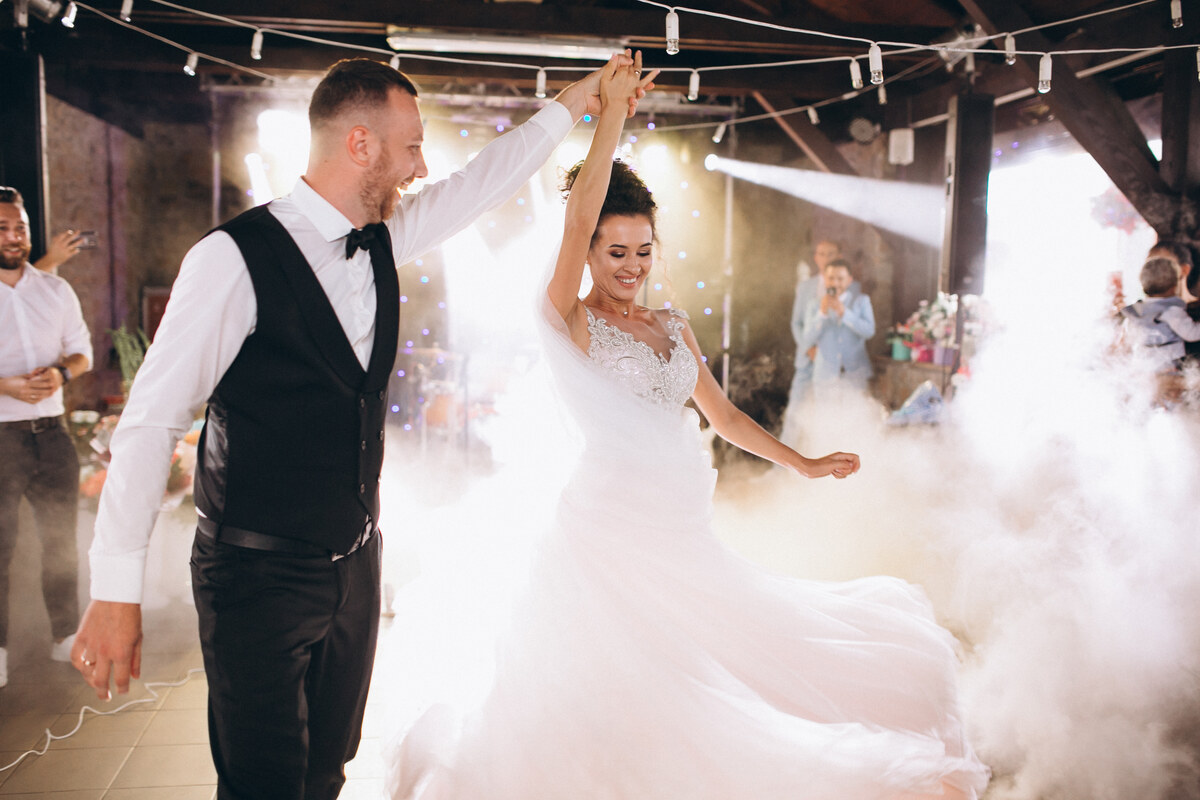
The now familiar image of a couple dancing completely alone under a spotlight while everyone else watches from the edges is a much newer invention than the tradition itself.
Why the spotlight version won anyway
Modern etiquette voices have actually pushed back on the performance version. Longtime manners columnist Judith Martin, known to generations of readers as Miss Manners, has specifically argued that a rehearsed choreographed duet performed for a watching crowd is “actually inappropriate,” a direct rebuttal to the viral video style first dance.
So why did the spotlight version take over anyway? Part of the answer is skill. Ballroom dancing used to be common general knowledge for anyone attending formal events. As that faded, an entire industry of dance instructors and studios grew up specifically to choreograph a couple’s first dance from scratch, which naturally pushed the moment toward something more rehearsed and performance shaped.
A simpler way to plan your first dance
If the idea of memorizing a routine in front of a room full of guests has been stressing you out, the etiquette record actually gives you permission to relax about it. The original version of this tradition was never a performance to get right, it was simply a couple dancing together to mark the start of the celebration, with everyone else free to join in whenever they liked.
You can absolutely still choreograph something special if that is genuinely what you and your partner want. But if a simple, warm dance feels more like the two of you, that is not a shortcut, it is actually closer to how this tradition started in the first place.