For generations, young men in Wales who wanted to court someone sat down with a pocket knife and a single piece of wood. The result was a lovespoon, a carved gift of affection in which every tiny detail carried a message, including how many children he hoped to have one day.
A spoon that was never meant for soup
In Welsh, the lovespoon is called a llwy garu. Simple carved wooden spoons were common across Northern Europe, and the earliest lovespoons were still designed to be used as cutlery. Over time, though, the Welsh tradition grew far more ornate.
The oldest true Welsh lovespoon that survives today is dated to 1667 and belongs to the collection of St Fagans National History Museum in Wales. It already has an oval bowl, a heavy handle topped with a heart, and two small carved cages holding loose wooden “seeds”. It is so richly decorated that it was clearly made for ceremony rather than for the dinner table.
The tradition is thought to have existed for some centuries before that spoon was made, even if no one knows exactly when the more elaborate carvings began.
Proof of skill for a future father-in-law
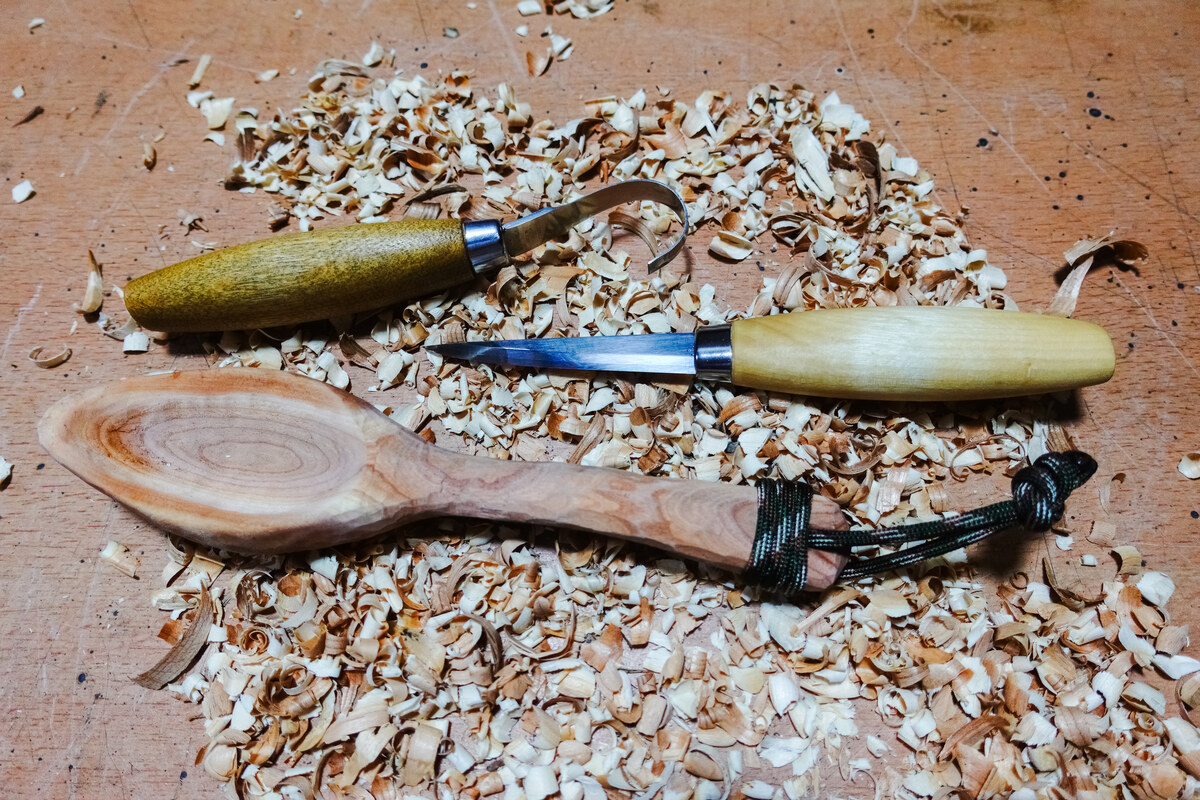
By the 18th and 19th centuries, lovespoons had been part of Welsh courtship for generations. A suitor carved his spoon from a single piece of close-grain wood, such as sycamore, box or fruit wood, using an ordinary pocket knife and a curved blade called a twca cam, which helped him hollow out a deep bowl.
The craftsmanship mattered as much as the sentiment. At a time when most people earned their living through manual work, a beautifully carved spoon showed that a young man was good with his hands. It was a quiet way of telling the young woman, and her father, that he could provide for a family if they married.
Some handles grew two or three times wider than the bowl, simply to make room for more symbols. The most elaborate spoons even had two bowls side by side, a design said to stand for “two souls with but a single thought, two hearts that beat as one.”
The hidden language carved into every lovespoon
This is where the lovespoon becomes truly charming. Each carved detail had a meaning that people across Wales would recognise:
- Hearts stood for love, and bells for marriage
- Loose wooden balls trapped in a cage showed the number of children hoped for
- Chains meant that accepting the spoon was accepting a romantic attachment
- Keys symbolised offering his home to the woman he loved, and house shapes stood for domestic happiness
- Vines and flowers showed a love that would keep growing
- Anchors brought good luck, often carved by men who were away at sea
- A Welsh harp represented harmony, and a wheel the promise of supporting a loved one
Many spoons also carried the initials of the carver and the recipient, along with the date the gift was given. A single spoon could quietly tell a whole love story.
Similar spoons from Norway to southern Africa
Wales is not the only place where spoons and romance go together. In the Netherlands, from around 1870 to 1900, suitors gave Bonbon spoons designed to serve sweets. These were more often made of silver and decorated with courting couples, lovebirds or intertwined dolphins, a symbol of eternal love.
In Norway, from the mid-19th to the early 20th century, newlyweds ate with linked spoons on the second day of their wedding. The couple used them to feed each other wedding cake, then hung them above the door of their home. Norwegian folklore adds a sweet detail: after a young couple had been allowed to sit together alone in a cold room, the young man’s hands might be inspected by his future father-in-law for signs that he had really been busy carving.
Among the Tsonga people of southeastern Africa, and related peoples such as the Zulu and Shona, two chain-linked spoons carved from one piece of wood are made for cultural events and show off the maker’s craftsmanship.
How couples give lovespoons today
Lovespoons are rarely used as courting gifts now. Instead, they are given as keepsakes for weddings, anniversaries, christenings, Valentine’s Day and Dydd Santes Dwynwen, the feast of the Welsh saint of love. Many modern spoons are mass produced and feature daffodils or the Welsh Dragon rather than the old symbols.
If you love the idea, you could ask a carver for a spoon that uses the traditional language: your initials, your wedding date, a heart for love and a bell for marriage. It makes a meaningful gift for a partner, or for parents celebrating a milestone anniversary, and it carries centuries of tenderness in a single piece of wood.