Picture a wedding reception today and a hotel ballroom probably comes to mind, or maybe a barn strung with fairy lights. For most of Western history, though, that picture would have been almost unrecognizable. Until after World War II, the reception nearly always happened in the bride’s own home.
A party shaped by the family’s finances
Before rented venues were even an option, the style of a wedding reception was a direct reflection of what a family could afford. A wealthy household might host a full formal ball. A middle class family was more likely to offer a modest luncheon.
For working class families, the celebration could be as simple as afternoon tea with cake and lemonade, served right in the front room. None of these were considered lesser weddings. They were simply the version that fit the household hosting them.
Some communities even found a creative way around the cost question entirely. Mass weddings, where several couples married and celebrated together on the same day, were sometimes chosen specifically so multiple families could split the expense.
What the word reception actually means
There is also a small detail hiding in plain sight in the word itself. A reception is literally the moment a couple receives society, family and friends, for the first time as a married pair. It was never meant as a generic label for a party.
For a long time, that moment actually came in two very different forms depending on when the ceremony happened. Morning religious weddings were followed by a wedding breakfast. Evening ceremonies were followed by a wedding ball. Over the course of the 20th century, both traditions quietly merged under the single umbrella term we use now.
When the party finally left the house
Home hosting stayed the norm well into the 20th century, but it was not built for every guest list. Once a family’s celebration outgrew what their living room or garden could hold, they needed somewhere else to go.
That is where dance halls come in. They only became a common wedding rental option right at the start of the 1900s, offering the first real alternative to hosting at home for families who simply had too many people to fit.
The shift to dedicated wedding venues and hotel ballrooms, the version most people now assume is the timeless standard, is actually a fairly recent development that took hold only after World War II.
A tradition worth remembering while planning your own
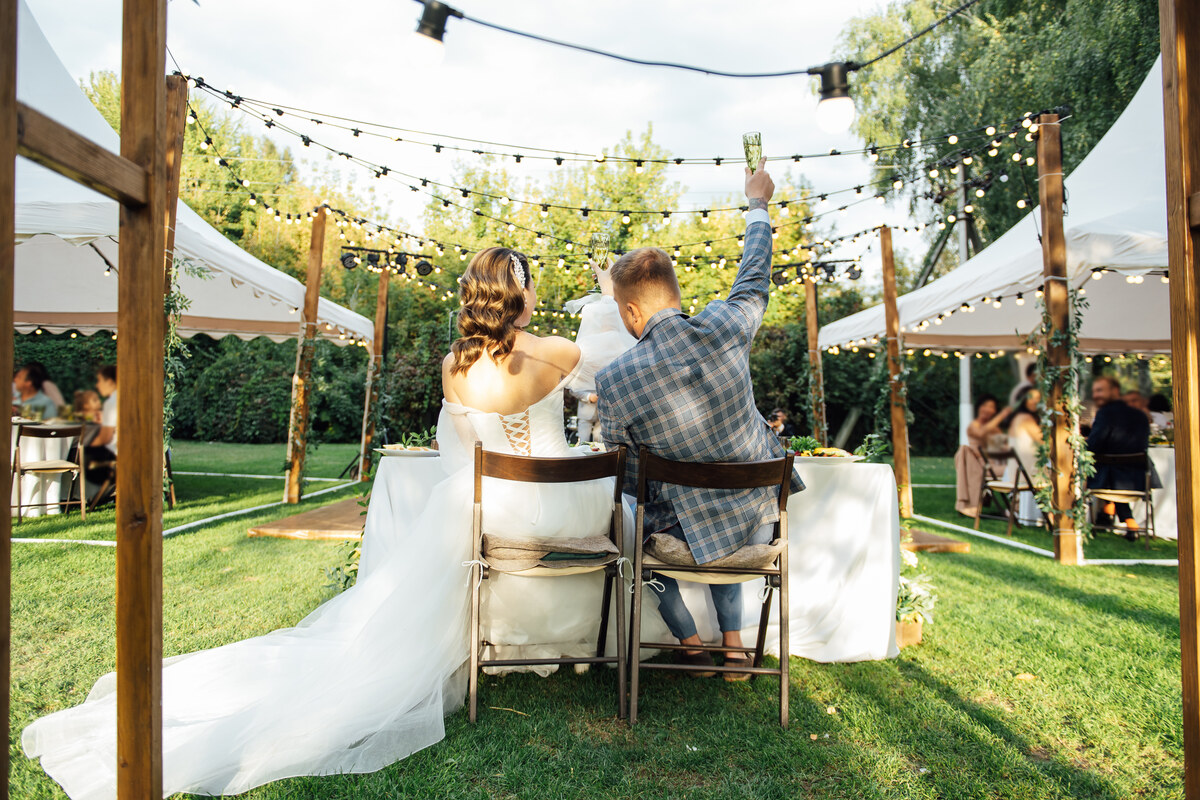
If a backyard reception or an intimate at home celebration has ever felt like a compromise compared to a big hotel ballroom, the history says otherwise. For most of the time weddings have existed in the West, home was not the backup plan. It was simply where the reception happened.
There is something reassuring in that. The scale of your reception was never really the point. What made it a reception, in the truest sense of the word, was simply the moment your people gathered around you for the first time as a married couple.