In Norway and Sweden, a bride does not always need to buy her headpiece. Many local church parishes keep a bridal crown of their own, often in silver or gold, and simply lend it to the brides who marry there.
It sounds like a fairytale detail, but it is the living end of a very old tradition. Across Central and Northern Europe, the bridal crown is probably one of the oldest decorative headdresses women have ever worn, alongside the wreath and the veil.
A crown that was never just for princesses
Traditionally, the bridal crown (called a Brautkrone in German) was not reserved for royalty at all. In Central and Northern Europe, single women wore one on certain holidays and at festivals, and finally on their wedding day. It was especially loved in farming areas.
For the bride, the crown was a symbol of purity. For her family, it was also a quiet statement of status. The earliest versions were made from what grew nearby: flowers, fir branches, herbs and even ripe fruit. Over time, families who could afford it moved on to pearls, mirrors, silver and gold.
That is where the borrowing began. Families with less money could borrow a crown from neighbours and friends, paying them back in kind. Churches and parishes often owned crowns too, and hired them out to brides. Today, Scandinavian parishes still keep and lend their own crowns for the ceremony and the reception, usually shaped like a small princess coronet and attached to a long veil.
Every region had its own version
What makes bridal crowns so charming is how much they change from one valley to the next. In Norway, Sweden and Serbia, they were made of silver. In Bavaria and Silesia, brides wore crowns of gold wire, glass stones and glittering metal flakes.
In Germany’s Black Forest, the crown has its own name, the Schäppel. It is decorated with pearls, glass balls, mirrors and ribbons or paper roses, and its design varies from place to place. The Black Forest Costume Museum in Haslach holds a whole collection of them.
The Sorbs of Lusatia wear a crown called the Borta, while the farming costume of Altenburg in Thuringia includes one called the Hormt. In Hungary and Slovakia, many bridal crowns are covered in artificial flowers and beads.
In several regions, there is also a lovely ritual after the church service: the bride takes off her crown and hangs it over the wedding table, as a sign of peace.
How the crown slowly became a tiara
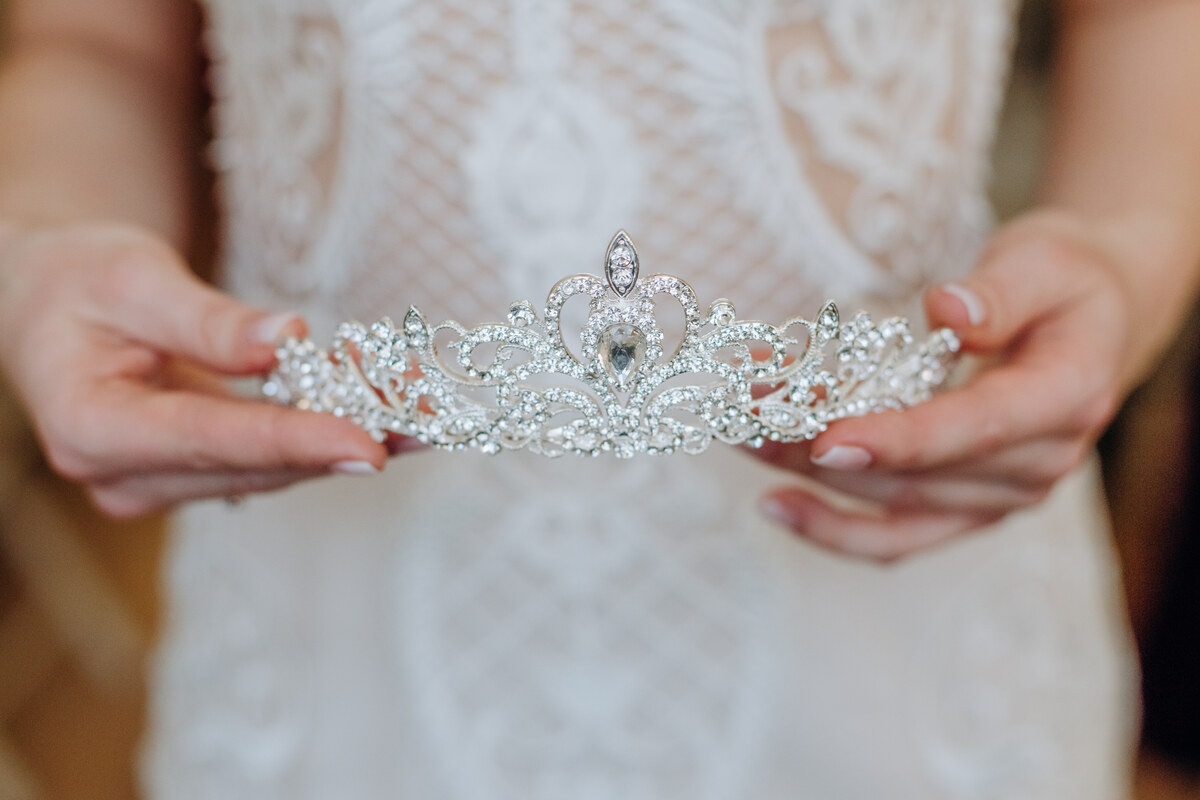
During the 18th century, the bridal crown gave way to the bridal wreath in many places. Then, in the late 18th century, a new style arrived. Napoleon and Joséphine are credited with popularizing the tiara, and by the 19th century a bride often received one as a gift from her husband or her father on her wedding day.
Tiara etiquette came with its own rules. Traditionally, a young woman did not wear a tiara before marriage, and on her wedding day she wore one owned by her birth family. Once married, she was expected to wear only tiaras from her husband’s family or her own. These rules are no longer strictly applied today.
And one popular belief has never been true: you do not need a title to wear a tiara. It is sometimes thought that only titled women are allowed to wear one, but etiquette says otherwise.
Wearing a crown or tiara on your own wedding day
If you love the idea, you are in good company, and history offers a few practical lessons. Wearing a tiara can lead to headaches, which is why large ones are often fixed to a supporting frame cushioned with velvet ribbon. Freshly washed hair is smooth and soft, and offers less grip, which is part of why tiaras faded after the First World War, when women cut their hair short and washed it more often.
You might also look closer to home. A crown borrowed from a relative, a local tradition from your family’s region, or even a simple wreath of flowers and herbs all carry the same old meaning. In the end, the bridal crown was always about one thing: letting a bride feel, for one day, like the most treasured person in the room.