In parts of Ukraine, Russia and Belarus, a single round loaf can stand at the center of the whole wedding. And in hard times, sharing that loaf was sometimes treated as enough to make a couple married in the eyes of their community.
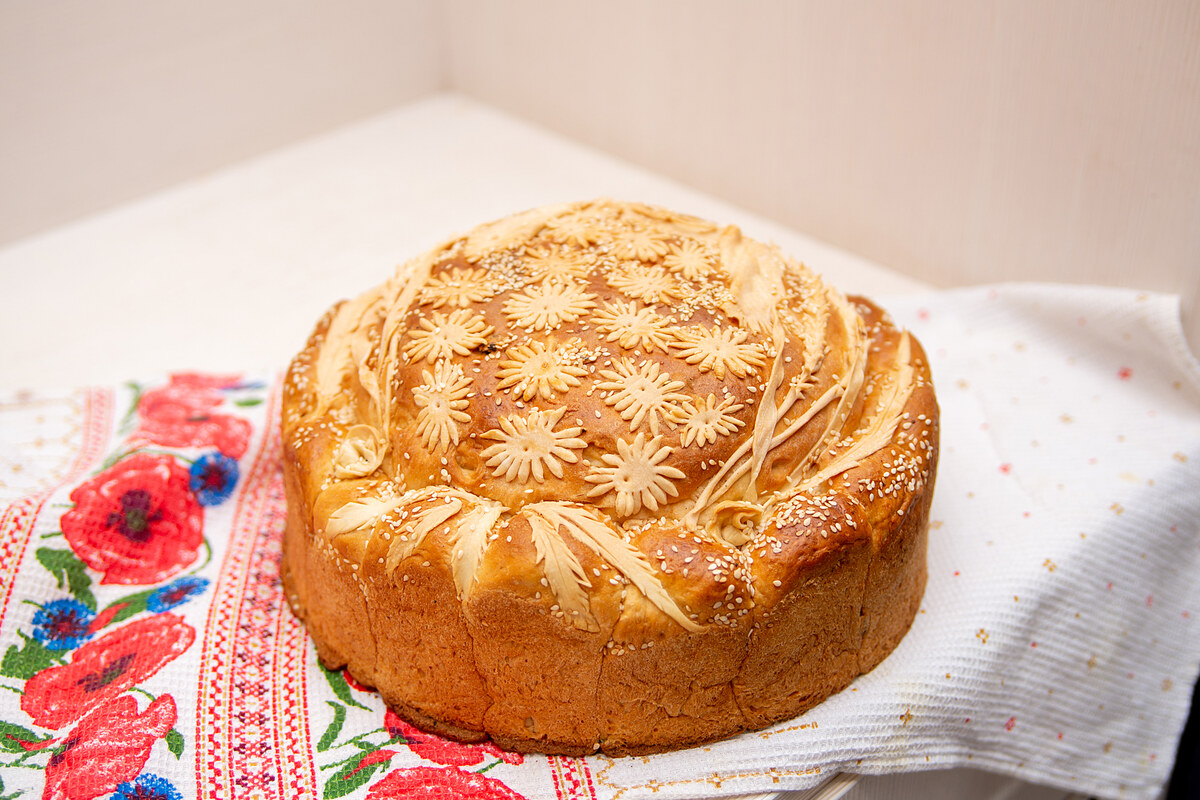
The bread is called a korovai, and it is far more than something to eat with dinner. It is a large, braided, decorated loaf that carries the hopes of two families.
A bread with ancient roots
The korovai is traditionally baked from wheat flour, and its origins go back to the pagan belief in the magical properties of grain. Its use in Belarus, Russia and Ukraine dates back to hospitality and holiday customs in ancient Rus.
There is no single design. The style and ornamentation change from region to region, though red, gold and silver were the colors most often used. Wheat stalks, herbs, nuts, flowers and fruit decorate the loaf, along with symbolic flags and figures such as suns, moons, birds, animals and pine cones. The white shapes are usually made from salt dough.
Seven women, a few songs and a blessing
The korovai was traditionally prepared in the bride’s home by women who sang traditional songs to guide them through the making. They were called the korovainytsi, and they were most often invited in odd numbers, usually seven.
Every decoration had a job to do. Two birds made of dough stand for the couple, while other birds represent family and friends. A wreath of periwinkle, a symbol of love and purity, surrounds the arrangement. The loaf receives a blessing before it goes into the oven.
Who gets which slice
The bride and groom were given the korovai as a blessing before the wedding ceremony. Afterward, it was shared among all the guests, and that sharing was considered the culmination of the wedding.
The slicing follows its own order. The top part of the loaf symbolizes the moon. It is divided in half and belongs to the couple, and the next slice goes to the parents of the bride, and so on. In eastern Ukraine, the mother receives a pair of shoes made out of dough, while the father is given an owl from among the decorations. The bottom section, called the pidoshva, is shared with the guests and the band as a symbol of good luck and future prosperity.
The embroidered cloth underfoot
Bread is not the only ritual object. Many weddings in the same region also feature the rushnyk, a decorative and ritual cloth made of linen or cotton, embroidered with symbols that carry hidden meaning. Red is the main color, standing for life, the sun, fertility and health. In Old Russian, the very word for “red” also meant “beautiful.”
During the ceremony, the couple stands on a rushnyk called a pidnozhnyk, literally a “step-on towel.” The bride drags it behind her, and her bridesmaids follow along its path, in the hope that they will be married next. Pairs of ducks are a common motif, because in wedding folklore a duck and a drake symbolize a bride and a groom.
A tradition you can borrow
You do not need a korovai to take something from this custom. The idea behind it is simple and warm: the whole community shares one symbolic food, and every person receives a piece. If you are looking for a meaningful moment at your own reception, consider a shared loaf, a family recipe, or an embroidered cloth that your relatives help to make.