Today, a Sikh bride and groom walk four times around the Guru Granth Sahib while hymns are sung. For most Sikhs, that image is the wedding. Yet this version of the ceremony is far younger than many people assume.
A ceremony that once looked very different
The Sikh wedding is called Anand Karaj, usually translated as “act towards happiness.” It goes back to Guru Amar Das (1479 to 1574), who composed the long hymn “Anand.” His successor, Guru Ram Das, wrote the four stanzas of the “Lavan,” which are sung to solemnize the marriage.
The hymns are old. The walking is not. Before the late nineteenth century, many Sikhs completed the ceremony by circling a sacred fire, much as in a Hindu wedding. In fact, the historian W. H. McLeod noted that the pre-reform Sikh wedding was essentially a Hindu one, with the Anand hymn recited along the way.
From fire to scripture
The change came through reform movements. The Nirankari movement of the mid-1800s made the Anand ceremony central. Its founder’s son, Darbara Singh, is credited with performing the first wedding circling the Guru Granth Sahib while the marriage hymns were read, on 13 March 1855.
The later Singh Sabha reformers pushed the same idea further. They wanted Brahmin priests and astrologers out of the ceremony and the scripture, rather than the fire, at its center. Between 1884 and 1915 they wrote numerous manuals on proper Sikh marriage customs, though the manuals did not always agree with each other.
Why 1909 matters
At the time, British law required Sikhs to marry under Hindu rites. That changed in October 1909, when the Anand Marriage Act was passed. From then on, Sikhs could be married by taking four circuits around the Guru Granth Sahib, with legal recognition.
Not everyone agreed with the new approach. The Sanatan Sikh movement argued there was no evidence the Gurus themselves had circled the scripture. Even so, the ceremony is now observed by Sikhs everywhere. One sect, the Namdhari, still asks couples to walk around the sacred fire four times.
What the ceremony asks of a couple
At the heart of the Anand Karaj is the Lavan. The hymns are sung as the couple circles the scripture, and they lay out the foundations of a good marriage while placing it within the couple’s unity with God.
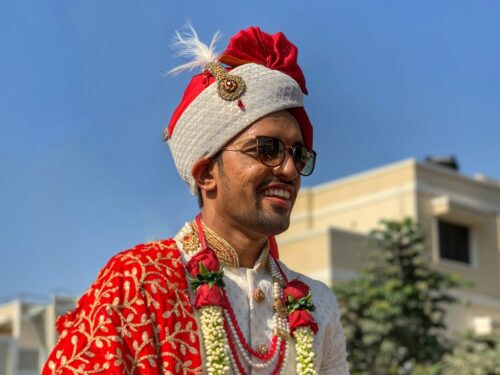
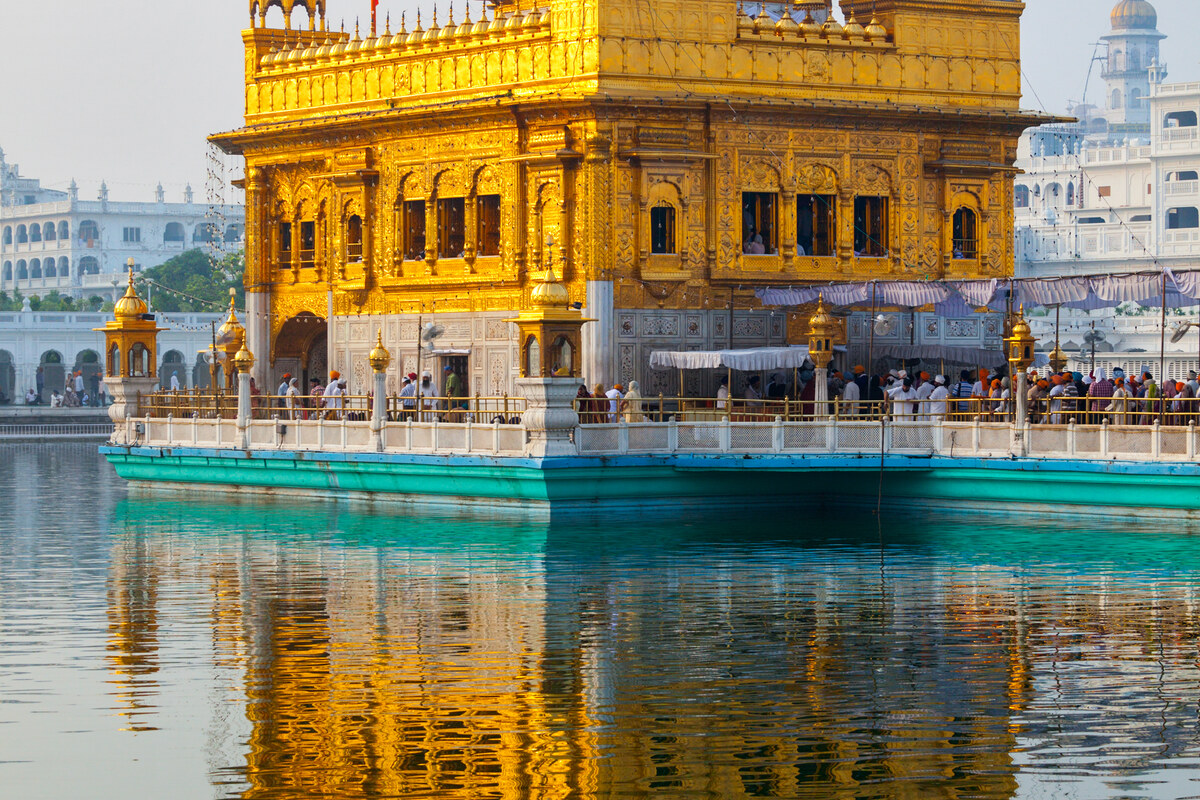
Many Punjabi Sikh weddings also include familiar Punjabi customs, such as an engagement ceremony called the kurmai and the baraat, the groom’s procession. Under guidance issued by Sikh authorities, any baptized Sikh may perform the ceremony, and it is meant to take place in a Gurdwara rather than at a destination resort.
Legal recognition today
In India, an amendment passed in 2012 lets Sikhs register their marriages under the Anand Marriage Act instead of the Hindu Marriage Act. Sikhs in Pakistani Punjab have been able to register their Anand Karaj marriages since 2024. In the UK, however, the ceremony alone is not recognized, so a legal English marriage is also required.
If you are planning to attend an Anand Karaj, or to hold one, it helps to know that the ritual is both deeply devotional and a modern chapter in a longer story. Few wedding traditions can point to a date as precise as 1855 for the moment a custom took the shape we see today.