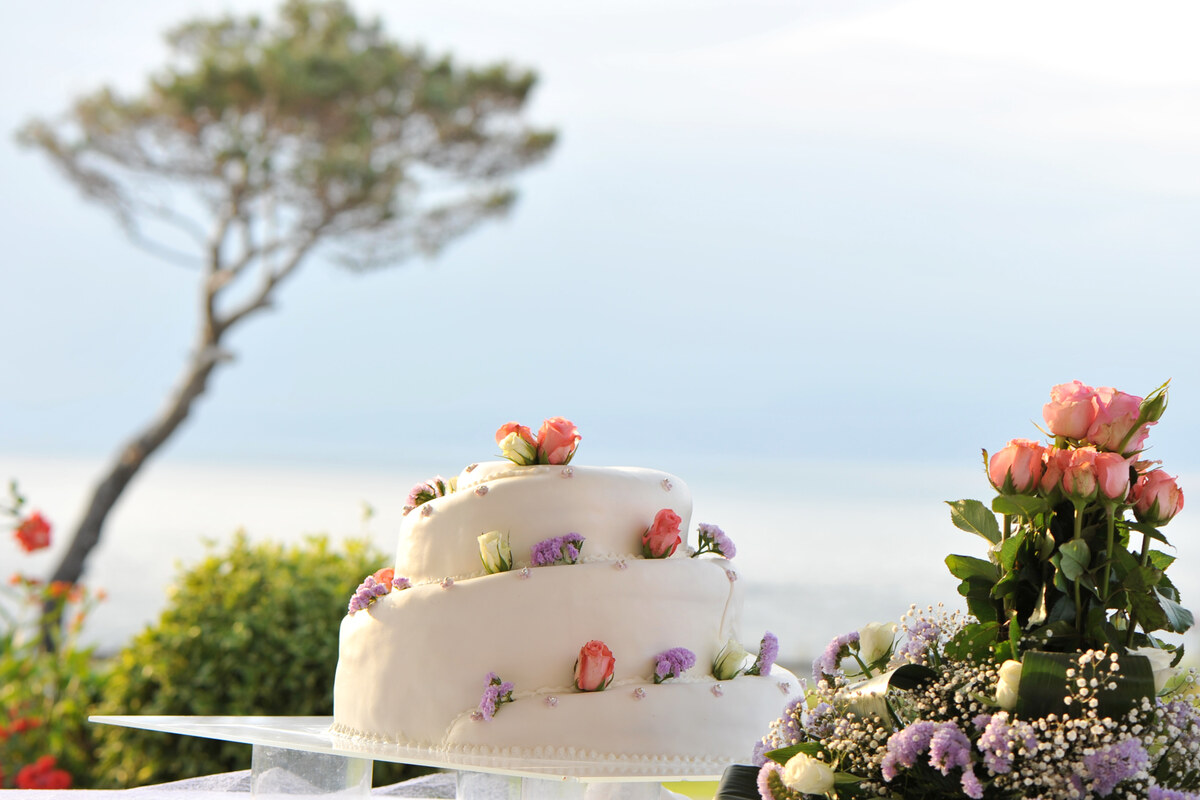
In Bermuda, a wedding can come with two cakes, and one of them is topped with a small living cedar tree. After the celebration, the couple plants it and looks after it together, a living symbol of their growing love.
The tiered white cake may feel universal, but couples around the world have found very different ways to celebrate with something sweet. Here is a short tour of wedding cakes that tell their own stories.
Two cakes and a tree in Bermuda
Bermuda keeps its own version of the two-cake tradition. The bride’s cake is a three-tiered fruitcake decorated with silver, a symbol of prosperity. The groom’s cake is a pound cake decorated with gold, representing his role as the head of the family.
On top of the groom’s cake sits a live cedar tree. It stands for the couple’s growing love, and once the party is over, the newlyweds plant it and care for it.
Scandinavia builds its cake from almond rings
In Norway and other Scandinavian countries, the preferred wedding cake is the kransekake, often made by the family. Its name means “wreath cake”, and in Norway it is also called a tower cake. It is built from concentric rings of almond, sugar and egg white, stacked into a steep cone of often 18 layers or more and held together with white icing.
The cake can be traced to the 18th century, when it was first created by a baker in Copenhagen. Almonds were very expensive at the time, so an almond-rich cake was a way for wealthy families to show their means.
At some weddings, the couple lifts the top ring together. The number of rings that stick to it is said to be the number of children they will have. In Denmark, the original wedding version is shaped like a horn of plenty and filled with chocolates, cookies and other small treats, sometimes with a bottle of wine or akvavit in the center.
Cakes that bring a whole community together
Not every tradition is about display. In Appalachia, the stack cake was a way for families with less money to celebrate potluck-style, spreading the cost across the community. Different guests each baked a thin cake, and the layers were stacked on top of each other with apple butter or cooked apples in between.
Among the Cajuns in the United States, the bride’s family traditionally bakes several cakes at home rather than ordering one large one. In both cases, the cake comes from the hands of family and friends rather than a single bakery.
Height, honor and luck across Asia
In Indonesia, very tall tiered cakes matter: the overall height of the cake is said to predict the couple’s prosperity. In China, the couple cuts a multi-tier cake starting from the lowest level, and the first pieces go to their parents and ancestors. It is a symbolic way of honoring them as the foundation of the family.
In Korea, the traditional wedding cake was a rice cake topped with a powder made from red beans, although guests today are more likely to see a sponge cake with fresh fruit. At Thai weddings, kanom sam kloe is a fried pastry made of three balls of coconut and sesame dough. If the pieces stay together, it is said to promise a successful marriage and at least one child. In the Philippines, the cake might be a purple ube cake, and topping it with fresh flowers is typical.
Further west, Greek wedding cakes were traditionally flavored with honey, sesame and quince, while in Algeria the tiered cake is often personalized with the names of the bride and groom and served alongside pastries such as makrout and baklava.
Borrowing a tradition for your own cake
Some of these customs are easy to bring into a modern wedding. In the south of England, a wooden clothes peg was sometimes baked into the cake to symbolize the connection between the couple, a tradition believed to come from Romany culture. In traditional American weddings, young unmarried women pulled ribbons attached to the bottom tier, and the one holding a charm or ring was said to be the next to marry.
Even saving the top tier has a history. In 19th century Europe, christening cakes were similar to wedding cakes, and since fruitcake kept well and a first baby often arrived within a year or so, couples saved the top part for that celebration. More recently, some couples freeze it for their first anniversary instead.
In Italy, each couple simply picks the cake they like best, and that may be the warmest tradition of all: your cake can tell your own story.