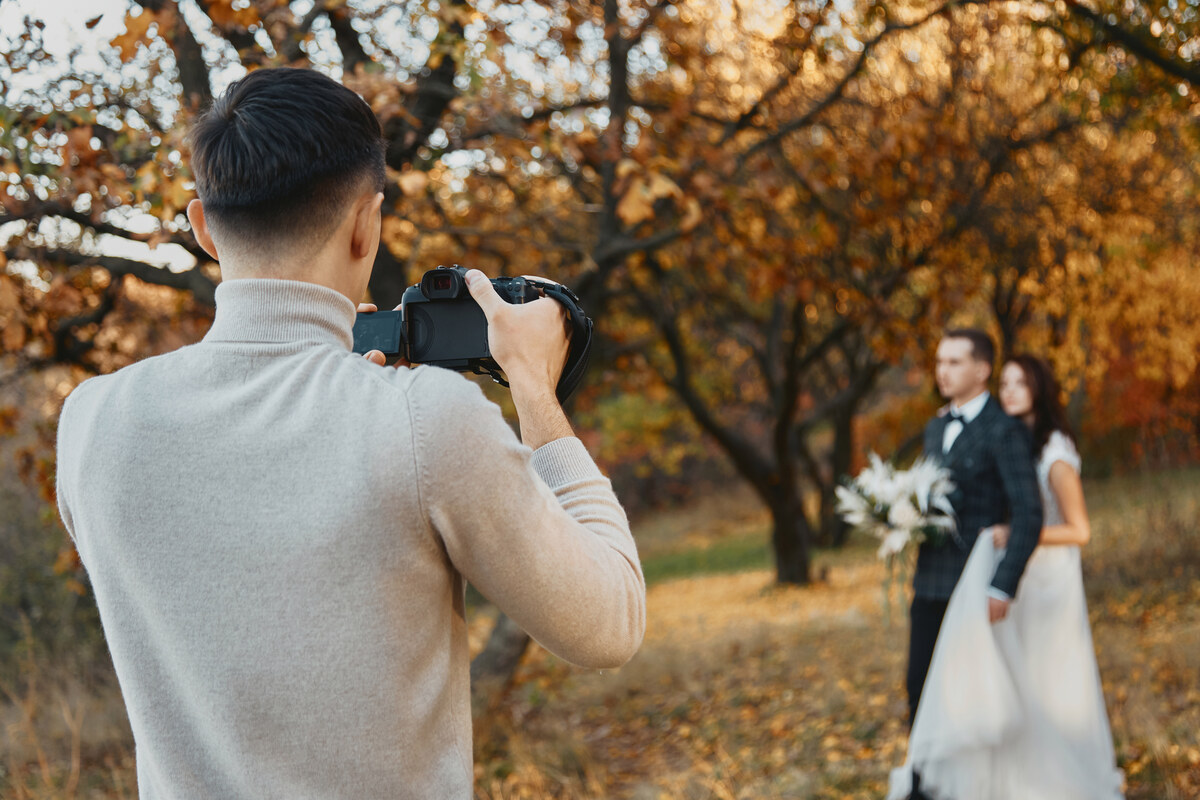
Today, many couples choose their photographer for one quality above all: the ability to catch real, unposed moments. Yet for much of the history of wedding photography, the “candid” shots were not candid at all. Even after photographers started coming to weddings, those natural looking pictures were more often staged once the ceremony was over.
The story of how we got from a single studio portrait to a full record of the day is a lovely reminder of how much our wedding memories owe to changing technology.
When the wedding photo happened somewhere else
In the early days of photography, most couples did not hire anyone to photograph the wedding itself. Instead, they might pose for one formal portrait before or after the wedding, dressed in their best clothes rather than always in their wedding attire.
That began to change in the late 1860s, when more couples started posing in their wedding clothes. Some even hired a photographer to come to the wedding venue, although this was far from the norm.
The reason was practical. The equipment was bulky and lighting was a real challenge, so wedding photography remained largely a studio practice for most of the late 19th century. Wedding albums started to become more common in the 1880s, and photographers would sometimes include the wedding party in the pictures.
Flash bulbs and photographers who just showed up
Color photography existed at the beginning of the 20th century, but it was unreliable and expensive. Most wedding photos were still taken in black and white.
The real turning point came after the Second World War. Roll film and the compact flash bulb made it possible to work outside the studio, and photographers would often turn up at a wedding and try to sell the photos to the couple afterwards. The early results were often of low quality, but the competition pushed studio photographers to start working on location too.
Even then, they arrived with a lot of heavy equipment, which made it hard to follow the whole day. So the “candid” photos in many albums from this era were more often staged after the ceremony, once the vows were over and everyone could pose.
The 1970s and the birth of the wedding story
In the 1970s, a more modern approach began to take shape: recording the entire wedding as an event, with a style closer to documentary photography. This is the approach most couples know today, where the aim is to capture the atmosphere of the whole day, not just a single portrait.
Technology kept helping. During the film era, photographers favored color negative film and medium format cameras, especially Hasselblad. Today most weddings are photographed digitally, which lets photographers spot lighting mistakes immediately, although some still shoot film because they love its look. Mirrorless cameras with interchangeable lenses, such as the Sony A7 series, were a significant step for photographers working in a reportage style.
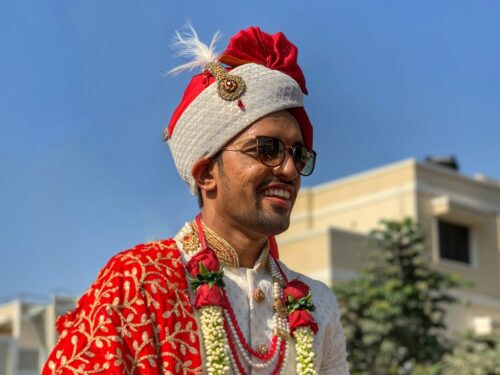
Around the world, traditions shaped the craft differently. In China, wedding studio photography is hugely popular: couples book a studio or location shoot with a hairstylist and makeup artist, and change outfits and backgrounds many times. At Indian weddings, where even a modest celebration can welcome several hundred guests, the photographer is by convention expected to include every guest in at least one photo with the bride and groom.
What this means when you choose your photographer
The good news is that you no longer have to pick between a stiff portrait and nothing at all. Today there are several distinct styles to choose from:
- Traditional: classically posed images, with the photographer directing much of the day.
- Photojournalistic: candid images with little interaction, shot quickly with available light or on-camera flash.
- Fashion based: a mix of candid moments and posed images inspired by editorial fashion photography, often with more dramatic editing.
Because there is no standard wedding package, what you receive can vary a lot from one photographer to another: proofs, an online gallery, prints, files, or an album that may be included or bought later. It is worth asking exactly what is included, and checking who owns the copyright of your pictures, since this is often stated in the contract and otherwise depends on the laws of your country.
Whatever style you choose, you are part of a long tradition of couples who simply wanted to hold on to one precious day. The only difference is that now, the moments in your album can be just as real as they felt.