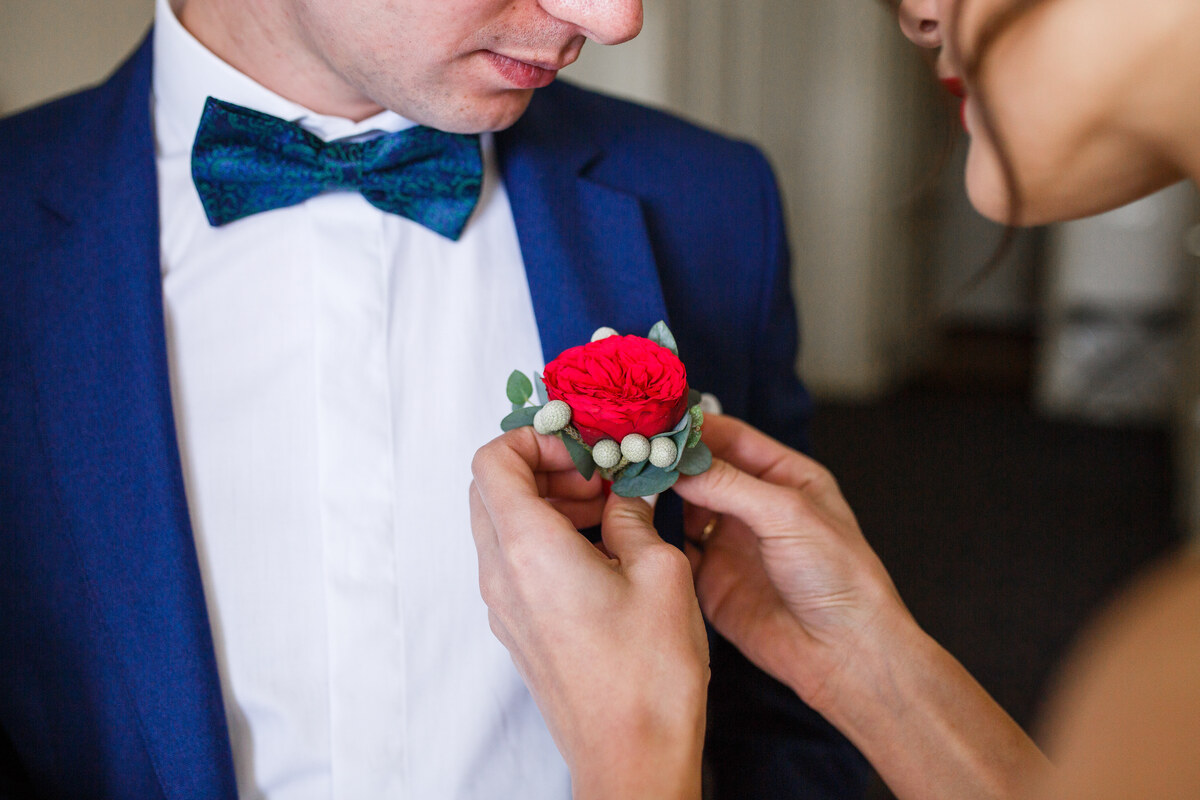
The little flower on a groom’s lapel looks like a simple finishing touch. Traditionally, though, a boutonnière was never pinned on at all: it was a single bloom slipped through the buttonhole on the left lapel, the same side as a pocket handkerchief. Knowing that small detail, and where the custom came from, can make the flowers your wedding party wears feel a lot more meaningful.
A flower that started as a lucky charm
The word boutonnière simply comes from the French word for “buttonhole,” and in British English that is still what the flower is called. Its early role was less about style and more about protection.
Much like the wedding bouquet, boutonnières in the 16th century were used to ward off bad luck and evil spirits. They were also meant to keep bad smells away and were believed to protect against disease.
The idea of wearing flowers for luck at a wedding is even older. As far back as Ancient Greece, small bunches of fragrant flowers and herbs were worn at weddings to keep evil spirits at bay. In the 16th and 17th centuries they may even have been part of daily life, before slowly becoming pieces kept for special occasions.
From fashion statement to wedding classic
By the 18th century, men across much of Europe wore boutonnières as fashion statements, tucked into the buttonholes of their frock coats. In the 19th century, followers of the Romantic movement loved them for the fresh color they added to an outfit.
After the two World Wars, a flower on the lapel stayed popular and came to stand for elegance and sophistication, partly thanks to the cinema. Today it is mostly kept for formal events such as weddings and proms, where it often matches the bride’s flowers. In some weddings, the groom, his groomsmen and the father of the bride all wear one.
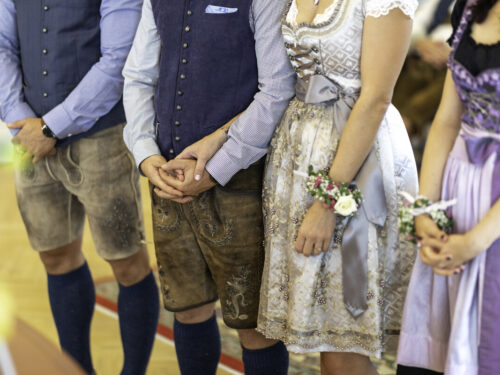
The women of the family have their own version. In some countries, the mothers and grandmothers of the bride and groom wear corsages, small bouquets worn on the dress or around the wrist. The word comes from the French bouquet de corsage, a bouquet worn on the bodice.
How to wear a boutonnière the traditional way
Most boutonnières today are pinned onto the front of the lapel, but the traditional method is to push the stem through the buttonhole. Pinning can look less tidy, and repeated pinning may eventually damage the cloth or silk facing of the jacket.
A few practical details help:
- Check the buttonhole. Some jackets have a buttonhole that is not actually cut open. A seam ripper can open it, and for a standard-sized flower like a carnation it should be at least 1 1/8 inches (29 mm) long.
- Look for a boutonnière loop. This thick thread on the back of the lapel holds the stem in place. It is rarely included on jackets today and has long been a mark of high-quality tailoring, but a tailor can easily add one.
- Keep the petals flat. The flower should sit flat and secure against the lapel rather than sticking out and moving about.
- Mind the pocket square. Some style guides advise against wearing both a boutonnière and a pocket handkerchief. More relaxed guides allow both, as long as one or both stay simple.
Shawl collars traditionally have no buttonhole because they developed from smoking jackets, which do not fasten. That is why boutonnières are often pinned to them. Some designers, Tom Ford among them, add a buttonhole anyway, and the Duke of Windsor wore shawl collars with a buttonhole on each side.
Choosing the flower, and keeping it afterwards
The classic choice is a carnation, and a white one is considered the most formal, with clove red as the traditional alternative. A white gardenia is sometimes seen as an even finer option for its scent and beauty, while a blue cornflower or another color can be chosen to suit the rest of the outfit.
Florists recommend choosing colors that complement the clothes, and coordinating boutonnières with corsages so it is clear who belongs together. Afterwards, corsages are often dried and pressed as keepsakes.
The flowers can even return years later. At anniversary celebrations, wives and mothers often wear corsages made with the same flowers used at the wedding, with ribbons marking the milestone: silver for the 25th, red for the 40th. It is a lovely reason to write down exactly which blooms you chose for your big day.