Long before florists talked about palettes and textures, a small round bouquet could carry a whole love letter. In Victorian England, sweethearts exchanged tiny posies called tussie-mussies, and every flower inside was chosen to say something that could not be said out loud.
That little bouquet is also a close cousin of the one many brides still carry today. Here is how a handful of flowers became a secret language, and what it can mean for your own wedding bouquet.
A bouquet that started with the nose
The word nosegay tells you a lot. The flowers were meant to smell lovely, and “gay” once meant an ornament. These small bouquets were first carried to mask the smells of the street, so they were packed with fragrant herbs and flowers such as lavender, lemon balm and roses.
Brides had the same practical idea. Bridal bouquets have been known since the Renaissance, and their strongly scented flowers originally helped cover body odors and the heavy fragrance of incense.
Over time, the purpose softened. By the 16th century, these posies were commonly given to a love interest. Tussie-mussies arrived in England in the early 18th century, and by the early 19th century they were a fashionable accessory for young women. They were often held in a little cone of tin or silver with a chain attached, so they could be carried like jewelry.
How the language of flowers reached England
The fashion for coded flowers came from far away. Its roots lie partly in the court of Constantinople, which had an obsession with tulips in the first half of the 18th century, and in the Turkish tradition of sélam. Known in Europe as Turkish love letters, these were bundles of objects such as flowers, locks of hair and pearls, wrapped in a handkerchief to form a hidden poetic message.
The poet Lady Mary Wortley Montagu, whose husband was ambassador to Turkey, brought the idea back to England in 1718. A century later, in 1819, the French writer Louise Cortambert, using the pen name Charlotte de la Tour, published Le langage des Fleurs, one of the first dictionaries of flower meanings. English and American versions soon followed, and floral dictionaries became a craze in England, France and North America.
What a Victorian bouquet could say
By the Victorian era, almost every flower had a meaning. A woman might send chamomile to a romantic interest to tell him “Patience”, while goldenrod signaled indecision. Roses had a whole vocabulary of their own:
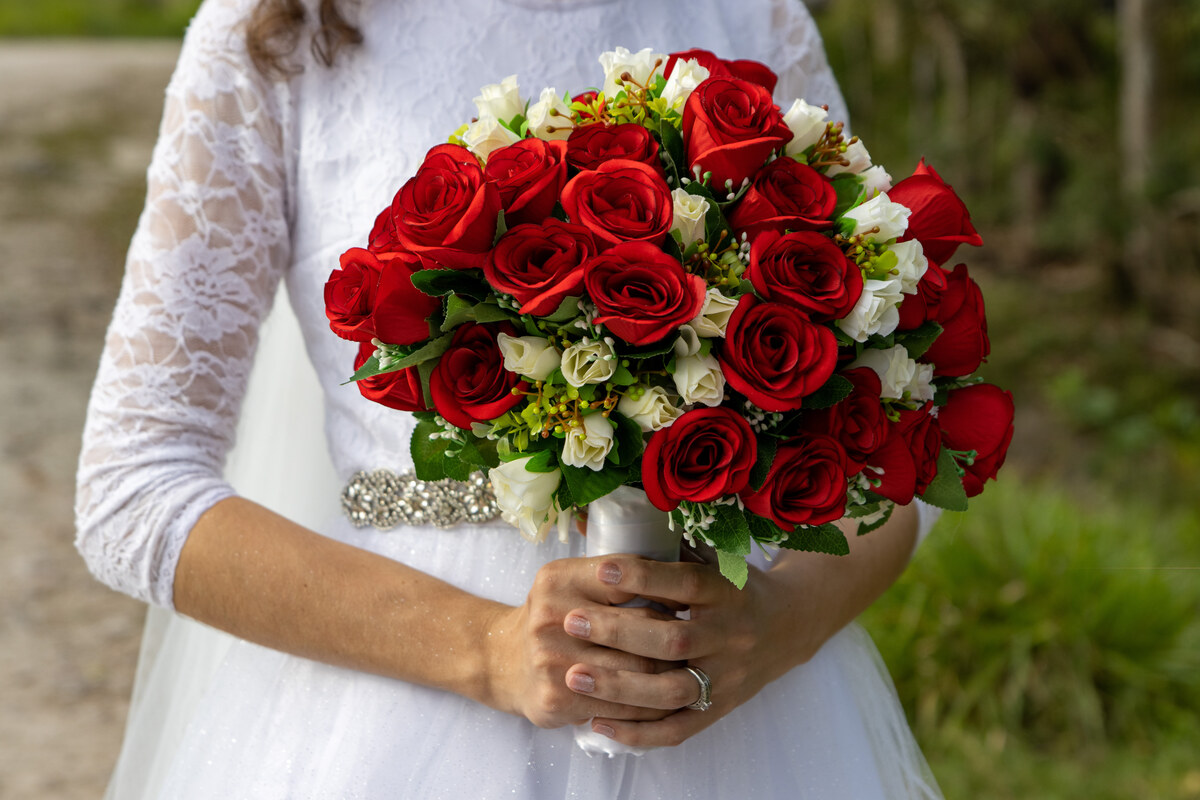
- Deep red roses stood for intense romantic love
- Pink roses suggested a gentler affection
- White roses meant virtue and chastity
- Yellow roses stood for friendship or devotion
Even the way flowers were handed over mattered. Giving them with the right hand answered a question with yes, and the left hand meant no. Where a woman pinned a tussie-mussie from a suitor could seal his fate. Pinned at the neckline, it signaled friendship. Pinned over her heart, it was, as one writer put it, “an unambiguous declaration of love”.
Why there is no single right meaning
Here is the reassuring part if you are planning your own flowers. There was never one official dictionary. Nearly every flower had several associations, spread across hundreds of floral books, and meanings changed from one author to the next.
That leaves you free to pick the flowers you love and give them the meaning you want. A sprig of your grandmother’s favorite bloom can say more than any Victorian dictionary. Traditionally, brides have also carried a small nosegay, a sweet way to honor this history.
Choosing a bouquet shape that suits you
Shape is simply a matter of personal taste. Many brides follow the trends of their day, while others choose a style that recalls another era. A few classic options:
- Posy: small, round and simple, easy to carry and to hand to your maid of honor, who traditionally holds it during the ceremony
- Cascade: a large arrangement that tapers toward the bottom, made famous in the 1980s by Lady Diana Spencer’s wedding and enjoying a revival in recent years
- Presentation: long stems such as calla lilies, cradled in your arms rather than held by the stems, a style that grew popular at the turn of the 20th century
Whatever you choose, your bouquet carries a little of that old secret language. Tuck in one flower with a meaning only the two of you know, and it becomes your own tussie-mussie.