White has not always been the rule for a wedding dress, and it only became one because of a single, hugely publicized royal wedding. For most of history, brides simply wore their best dress in whatever color they already owned.
Before white became the rule
Before the 19th century, a bride’s dress was simply her best dress, whatever color that happened to be. Wealthy families chose rich fabrics like velvet, fur and silk, while most brides wore their ordinary church clothes. Color came down to what a family could afford, not tradition.
White did appear occasionally, and early. Philippa of England wore a white silk tunic trimmed with squirrel and ermine fur when she married Eric of Pomerania in 1406, the earliest documented royal bride in white. Mary, Queen of Scots wore white too, for her 1559 wedding to Francis, the Dauphin of France, more than 280 years before white became the expected norm. Both were personal choices, not the start of a trend.
The wedding that went viral in 1840
That trend arrived with Queen Victoria. When she married Prince Albert in 1840, she wore white lace trimmed with Honiton lace, and illustrations of the wedding were printed and circulated widely, about as close as the 1840s could get to something going viral. Elite Victorian brides began copying the look almost immediately, and the association between white and weddings never really let go.
Not every culture followed along right away, either. In Finland, black was actually a popular, fashionable wedding dress color before the Victorian white trend eventually caught on there too.
Red, not white, is the real tradition for half the world
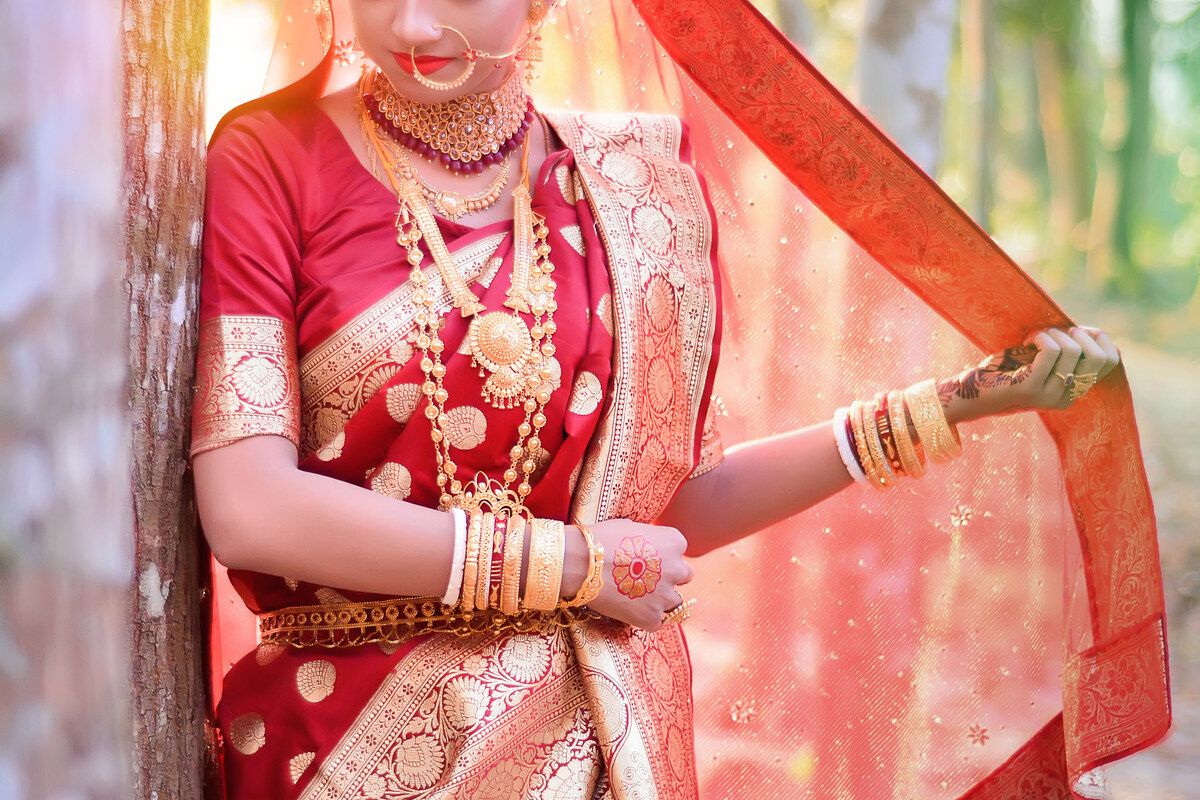
Look past Western Europe and North America, and white stops looking like “the” tradition at all. In both Chinese and Indian culture, red is the traditional bridal color, chosen specifically for its association with luck and good fortune, essentially the opposite emotional register from white.
Indian brides traditionally wear a red wedding sari with gold brocade, since red is tied specifically to married status, not just to celebration. In Tamil Nadu, brides wear red-white checkered patterns instead. Traditionally, Kurdish brides marrying for the first time wore red to represent the loss of virginity, while previously married brides wore pink, though that particular color code has mostly fallen out of use today.
What this history actually gives you
None of this makes white the “wrong” choice, of course, it is a beautiful, well-established tradition with its own 180-plus years of history behind it now. But it does mean white is a tradition with a start date and a name attached, 1840, Queen Victoria, rather than a rule that has always existed.
So if you are drawn to ivory, blush, deep red, or anything else entirely, you are not breaking with tradition so much as reaching back further into it, closer to how most brides dressed for most of history. Even “wedding white” today rarely means pure white anyway, common shades include eggshell, ecru and ivory, all considered part of the same tradition.