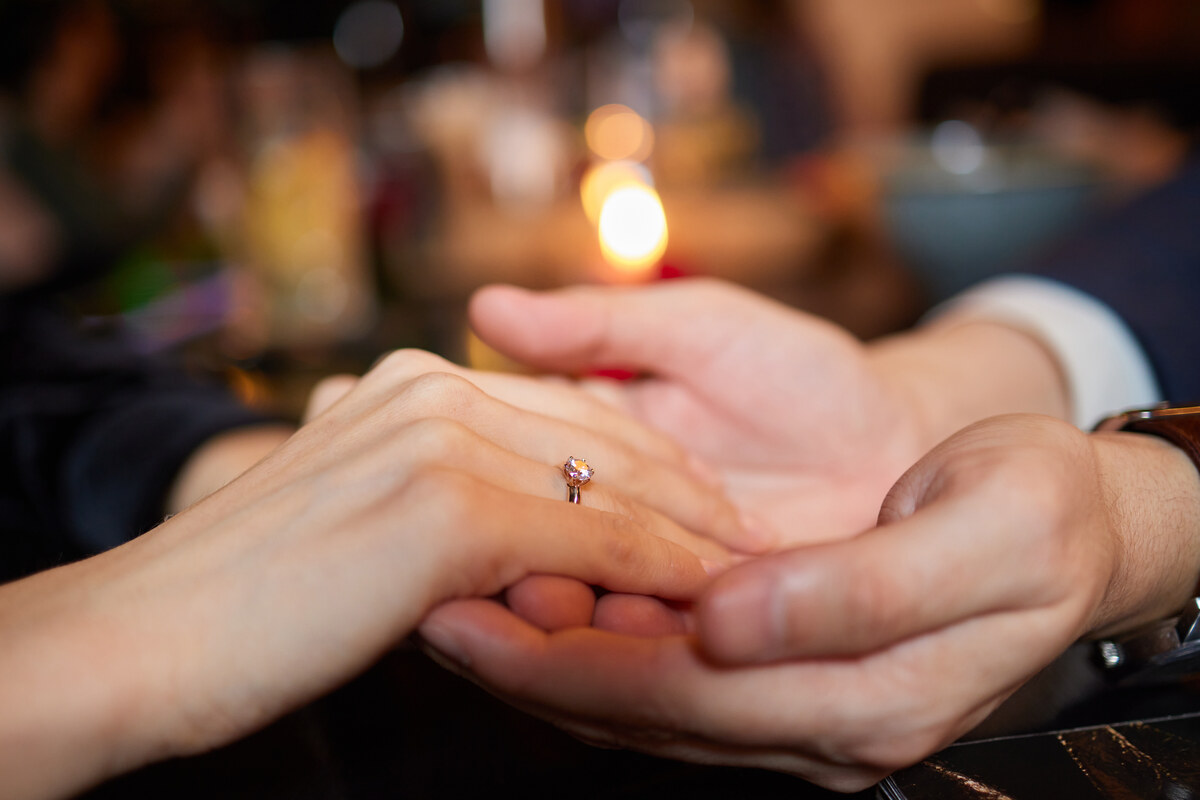
If you have ever heard that an engagement ring should cost two months of salary, you are not alone. The rule sounds like old family wisdom, but it actually comes from diamond advertising, and the number itself has changed over the years.
A rule written by a diamond company
The idea that a man should spend a big share of his income on a ring traces back to De Beers, the diamond cartel, and its marketing materials in the mid-20th century. The goal was simple: sell more diamonds.
In the 1930s, the suggested budget was one month of income. By the 1980s, the advice had doubled to two months of salary, and in Japan it was set at three months. The rule many couples treat as tradition was never a fixed custom, it was a sales target that kept moving.
Diamonds were not always the obvious choice
It is easy to assume engagement rings have always sparkled with diamonds. In fact, before World War II, only 10% of American engagement rings contained a diamond. During the Great Depression, diamond prices had collapsed, and market research showed that engagement rings were going out of style with younger people.
In 1938, De Beers set out to bring the diamond ring back into fashion. Advertising started in 1939 and taught the public about the 4 Cs (cut, carat, color and clarity). In 1947 came the slogan “a diamond is forever”. The campaign aimed to convince couples that an engagement ring was indispensable, and that a diamond was the only acceptable stone. Between 1939 and 1979, diamond sales in the United States rose from 23 million to 2.1 billion dollars.
The diamond ring itself does have a long and romantic history. The first well documented diamond engagement ring was given in 1477, when Archduke Maximilian of Austria became engaged to Mary of Burgundy at the imperial court in Vienna. For centuries afterward, though, diamond rings stayed mostly in noble and wealthy circles, and simpler bands were often the norm.
What couples actually spend
In 2012, the average cost of an engagement ring in the US, as reported by the jewelry industry, was 4,000 dollars. That figure can make it feel as if everyone spends that much. A 2015 scholarly study tells a gentler story.
Almost a quarter of the couples surveyed said they did not buy an engagement ring at all. Another third spent less than 2,000 dollars on it. Fewer than 15% of couples spent 4,000 dollars or more. In the UK, estimates of the average cost range from 1,200 to 2,000 pounds.
The same body of research also found that couples who spend less on the ring and the wedding tend to have longer marriages, with spending above 2,000 dollars on a ring strongly linked to debt related stress.
Choosing a ring that feels right for you
The good news is that there is no single correct engagement ring. Many couples choose a family heirloom, an unusual design, or a ring with socially responsible characteristics, such as stones not associated with the blood diamond controversy. Lab grown diamonds and alternatives like moissanite or cubic zirconia keep the look while lowering the cost.
Metal is just as open. Yellow, white and rose gold or platinum are classic, but titanium, silver and stainless steel are also used. In Nordic countries, both partners traditionally wear an engagement ring, usually a plain gold band.
Whatever you choose, the ring is a promise, not a price tag. A budget that lets you start married life without money worries is a choice no salary rule can beat.