Picture a wedding guest standing at a card table, carefully counting bills into a bright red envelope. At a traditional Chinese wedding, that moment matters more than any registry gift, and the exact amount inside is chosen with real care. Some numbers are welcome. One is quietly avoided at all costs.
Why cash, not a registry gift, is the real tradition
For many couples in the West, the wedding registry feels like the natural way guests show their love. A set of plates, a stand mixer, a honeymoon fund. It is easy to assume this is simply how wedding gifts work everywhere.
In Chinese wedding etiquette, though, the traditional gift is cash. Not a registry item, not a boxed present, but money presented to the couple. And choosing a gift from a registry instead can actually go against etiquette rather than being a thoughtful alternative.
Interestingly, China is not alone here. Traditional Italian weddings share the very same custom of cash over registry items, a lovely overlap between two cultures that could hardly be more different in most other ways.
The red envelope, and the color no one uses
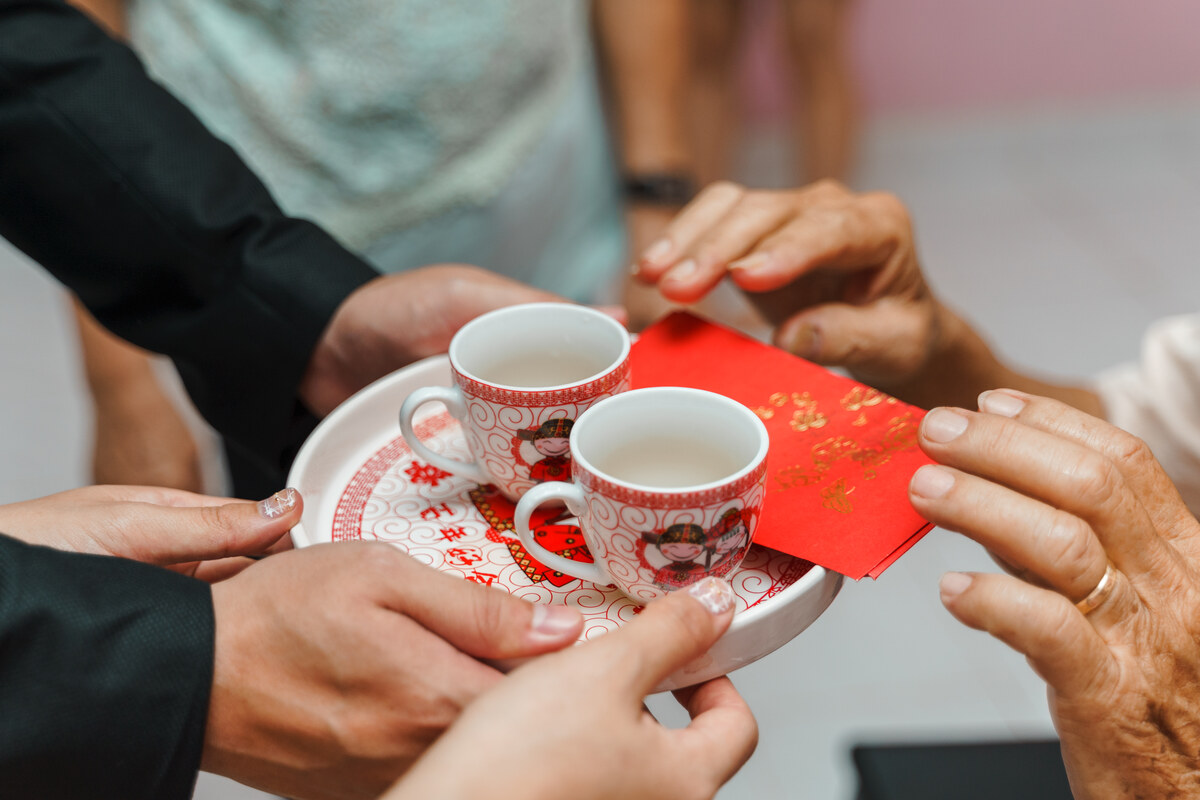
How the gift is wrapped matters just as much as what is inside. Cash for a Chinese wedding is traditionally presented in a red envelope.
White, on the other hand, is specifically avoided for gift-wrapping. It is associated with death and funerals, which makes it about the last thing anyone would want to hand a newly married couple. A plain white envelope that would look perfectly neutral at many Western weddings would send a very different message here.
The numbers that carry a wish
This is where the tradition becomes truly charming. When deciding how much to give, guests pay close attention to the amount itself, not just its size.
The number 4 is actively avoided, because it is considered unlucky. Even numbers are generally favored, and two numbers in particular are especially popular:
- 8, because it sounds like the word for fortune
- 9, because it sounds like the word for longevity
In other words, the amount in the envelope works almost like a small spoken blessing. A gift built around an 8 quietly wishes the couple prosperity, while a 9 wishes them a long life together. It is a beautiful example of how a practical gift can carry a heartfelt meaning too.
Two times on one invitation
Chinese wedding customs hold another surprise for first-time guests: the invitation itself. It usually lists two distinct times, typically two to four hours apart.
The first is “gōnghòu”, the greeting, when guests arrive and welcome the couple. The second is “rùxí”, when the reception banquet actually begins. The gap in between is not a scheduling mistake. It is a built-in window for socializing, and restaurants traditionally supply mahjong or poker so guests can play while they wait.
For Chinese American couples, this in-between time is increasingly being replaced by a Western-style cocktail hour. In southern China, Hong Kong and Macau, though, the mahjong tables are still a common and much-loved part of the day.
A thoughtful guide if you are invited
If you have been invited to a Chinese wedding, or are planning one that blends two families and two traditions, a few simple details go a long way:
- Choose cash over a registry gift if the couple is following tradition
- Present it in a red envelope, never a white one
- Avoid any amount built around the number 4, and lean toward even numbers, 8 or 9
- Read the invitation closely, since the first time listed is the greeting, not the meal
None of this is about getting things perfectly right. It is about showing the couple that you took a moment to understand what their day means to them, and that kind of care is always the best gift of all.