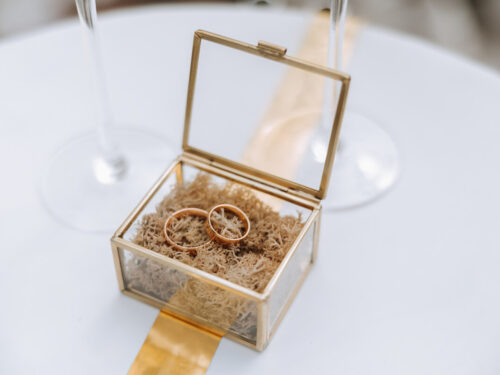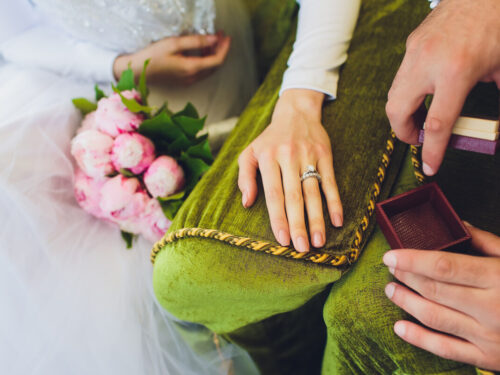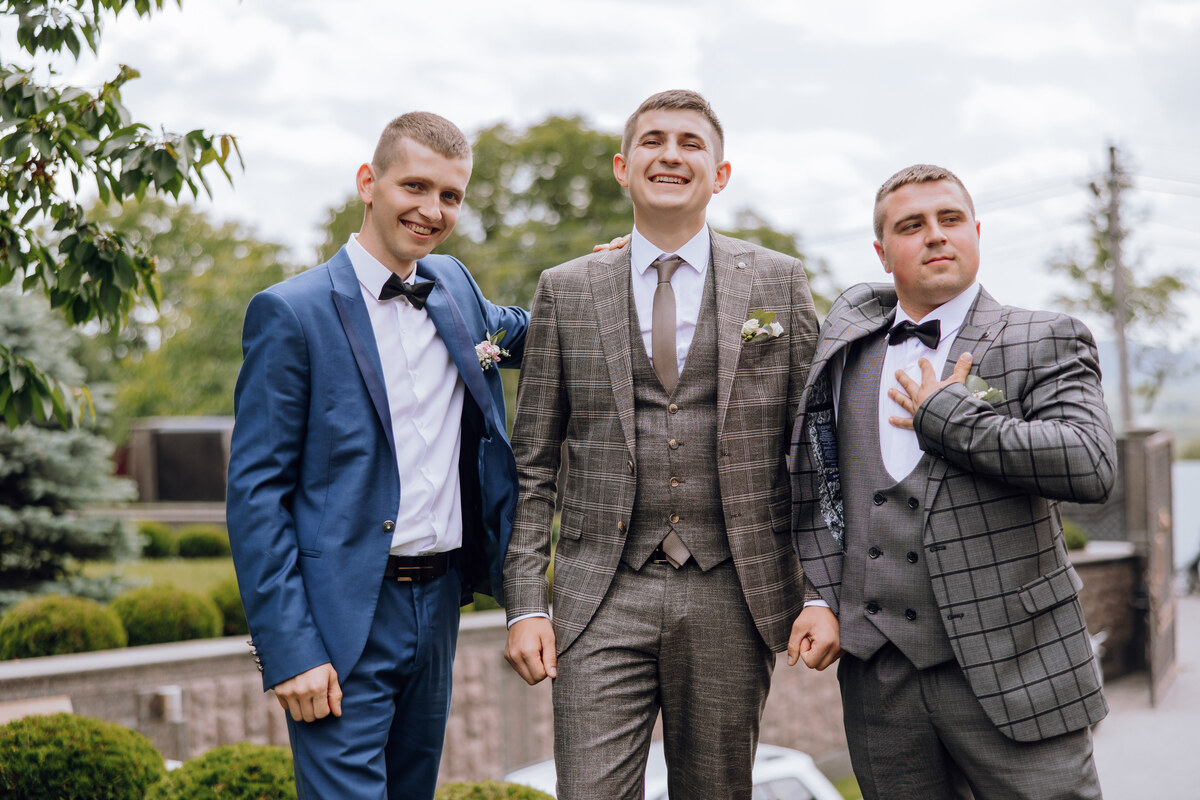
Today, the best man’s job looks pretty simple: hold the rings, give a toast, maybe plan a bachelor party. But the role itself carries a much older, much stranger history, one that has nothing to do with champagne glasses at all.
What the best man’s job really used to mean
Groomsmen were historically called “bride-knights”, a name that comes straight from the era of marriage by capture. Back then, a groom would call on his friends not to plan a party, but to help him physically carry off a bride, or to defend her from rival suitors trying to steal her away first.
It sounds like something out of a legend, but the language itself is the proof. “Bride-knight” is what linguists call a fossil word: a term that survives long after the practice behind it has disappeared, quietly carrying the memory of it forward.
A tradition that comes from real danger, not tradition for its own sake
The word “groomsman” has been documented in English since 1698, according to the Oxford English Dictionary. The specific term “best man” shows up a bit later, first recorded in 1782, describing “best man and best maid” as the Scottish-dialect version of England’s “bride-man and bride-maid”.
So while the wording has shifted over the centuries, the underlying idea stayed remarkably consistent: this was the person the groom trusted to have his back, whatever that actually required at the time.
Even the words “bride” and “groom” themselves reach back to Old English, long before either one had anything to do with cake tastings or seating charts. It’s a reminder that a lot of what feels timeless about weddings is, quite literally, ancient.
A role that’s still surprisingly official today
Some of that old weight never really went away. In many Western ceremonies, only four people formally stand at the altar: the officiant, the bride, the groom, and the best man. He’s also commonly a legal witness to the marriage, signing the actual marriage certificate alongside the couple, a real legal role, not just a symbolic one.
Military weddings keep an even more literal echo of the old guard: groomsmen are often replaced entirely by a “sword honor guard” of fellow officers, forming the ceremonial saber arch the newlyweds walk through.
And despite how central the best man’s toast feels in English-speaking weddings, it isn’t universal. In continental Europe, it’s become standard for all the groomsmen and bridesmaids to give speeches at the reception, not just one person carrying the whole tradition alone.
A tradition worth knowing before your big day
None of this means today’s best man needs to guard the church doors. By classic etiquette, his actual required duties are simply those of a good friend, everything else, the speech, the rings, the bachelor party, is customary, not obligatory.
Still, it’s a nice thing to carry into your own wedding: when you ask someone to be your best man, you’re handing him a role that has meant “the person who shows up for me” for well over three centuries.
So the next time his toast runs a little long or his bachelor party planning gets a little chaotic, remember he’s playing a part with real staying power. Long before it meant holding a ring box steady, it meant standing next to you when it actually mattered.