Between sweat, spilled wine and dried grass stains, your wedding dress goes through a lot more than most people realize. You picked it after what felt like 254 fittings, and you are probably already dreaming of your daughter wearing it one day. Whether it is silk, chiffon or taffeta, covered in lace or embroidery, it is one of a kind, and it is fragile. Here is how to protect that precious keepsake so it survives the day, and the years after it.
A day in the life of your wedding dress
Photo sessions, hugs, the cocktail hour, dancing until midnight, your dress will go through a lot in a single day. If your dress could keep a diary, it might read something like this:
1pm, getting ready, still safely tucked in a protective garment bag, only the designer, the seamstress and the bride have touched me so far.
2pm, the bridesmaids arrive, gently touching the delicate lace, two people wrestle with my buttons, I am finally in place.
3pm, on the way to the ceremony, in the rush, the hem gets caught in a car door.
3:30pm, an emotional aunt with a love of non waterproof mascara leaves her mark on my shoulder.
4pm, congratulations everywhere, hugs multiply, a few different foundation shades join the mascara.
5pm, cocktail hour starts, someone’s uncle nearly spills a drink nearby, disaster narrowly avoided.
6pm, it is getting warm, things start to feel a little damp under the arms.
7pm, everyone is in a great mood after a few cocktails, the bride sits down in the grass with her friends.
8pm, dinner starts, the train picks up dust from the entire venue floor.
11pm, the first dance begins, at this point nobody is being careful anymore, the lace tears a little in the back and the hem gets stepped on more than once.
You will not avoid every stain, but with the right approach, your dress can absolutely be brought back to life afterward.
A designer’s tips for caring for your dress
The most fragile parts of a wedding dress are usually the train, exposed to dust, heel marks, grass and spilled drinks, and the lace, especially delicate types, which can easily snag on jewelry.
Professional dress shops rely heavily on dry cleaning to keep gowns presentable, and they never attempt to treat a stain themselves, by hand or by machine. A few things they do allow: treating a small blood stain with saliva on a cotton swab immediately (without over wetting the fabric), or using white vinegar on a cotton swab for a small iron mark. Silk, on the other hand, should always go to dry cleaning rather than being treated at home.
These same precautions apply on your wedding day. Make sure floors are clean before your dress touches them, wash your hands often since a bit of foundation or a quick snack can easily transfer onto the fabric, and if you are worried about makeup transfer, try tying a silk scarf around your head and face while getting dressed, a trick borrowed straight from backstage at fashion shows.
The most common damage tends to come from heel marks on the train, which grind dirt and grass into the fabric and can even tear it. Not quite dry nail polish is another sneaky culprit, it only takes a light touch to leave a stain behind.
The best way to handle a stain
The golden rule with any stain on a wedding dress is simple: do not touch it. A stain left completely untouched is always easier to treat professionally later. Never apply water or baking soda to a fresh stain, both can actually set it permanently and make it far harder, sometimes impossible, for a professional cleaner to remove later. Left untouched, a wine stain has a very good chance of coming out almost completely at the cleaners. The moment something spills, resist the urge to fix it yourself, and get the dress to a professional as soon as possible rather than waiting weeks after the wedding.
What happens at the cleaners
A good dry cleaner will start with a full inspection, checking the overall condition, spotting any tears and identifying where each stain likely came from. The most common culprits on a wedding dress: dirt, grass, makeup, wine, sauce, red fruit and sweat. Since wedding dresses rarely come with care labels, a cleaner’s expertise is often the only way to determine the safest cleaning method.
Before any treatment begins, beading, fabric flowers and other delicate ornaments usually need to be removed, since they can change color, tear off or damage the surrounding fabric in the wash. Any small tears also get repaired first, before stain removal even starts.
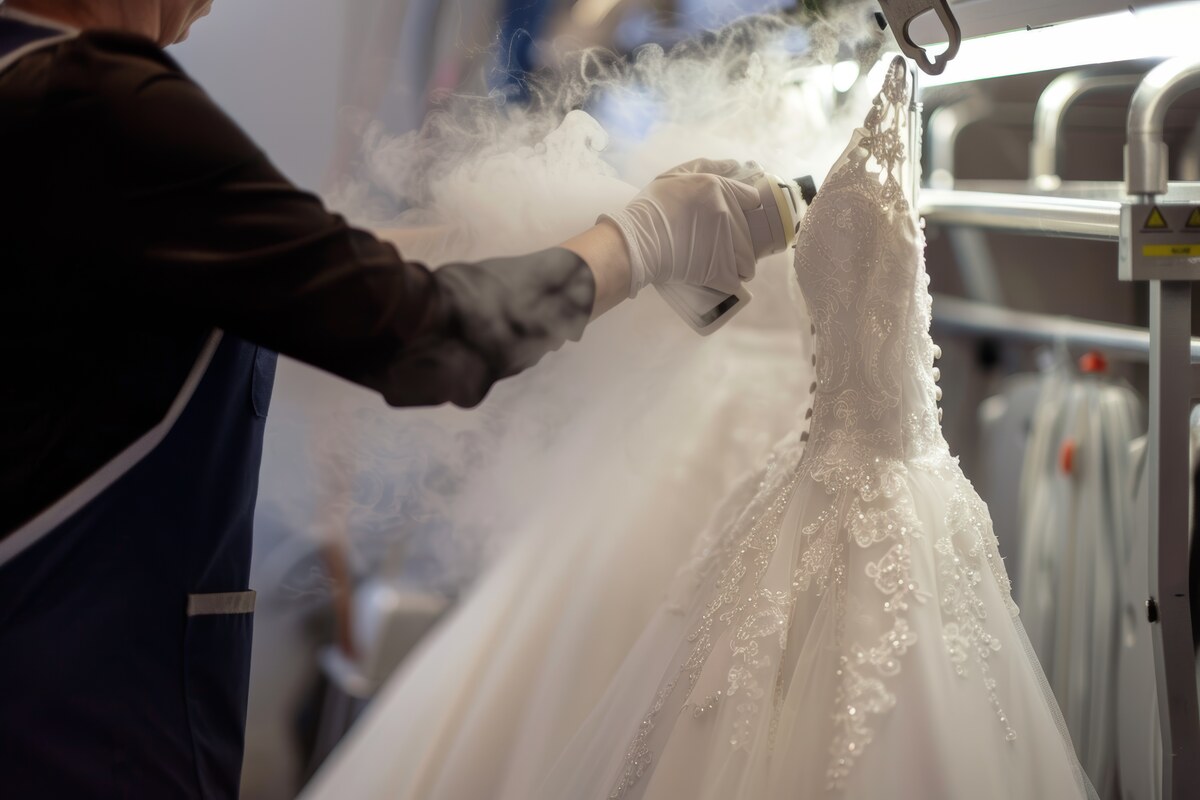
Each stain gets treated with a targeted professional product, left to work for a few minutes, then carefully removed with steam and pressurized air so nothing mixes together before the wash. Textured stains like grass or mud usually get brushed out separately beforehand. From there, the majority of wedding dresses, around 90%, can be safely washed in a properly sized machine.