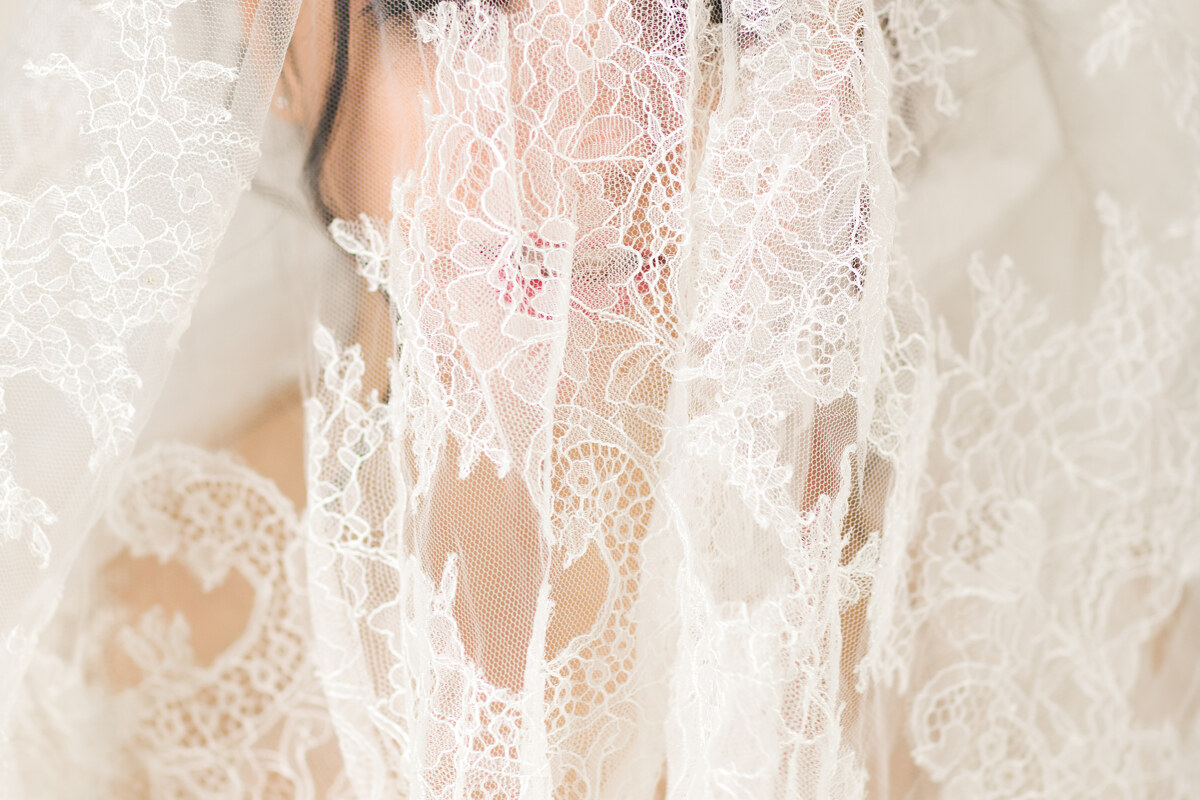
If you’ve ever wondered why the veil became such a fixture of wedding day style, the answer isn’t really about romance at first. It starts with a Roman priestess who was legally forbidden from ever divorcing her husband, and a veil borrowed from her wardrobe as a kind of built-in charm for lifelong fidelity.
A veil borrowed from a priestess who could never leave
The bridal veil’s most direct ancestor is the Roman “flammeum”, a deep yellow veil worn by brides that literally evoked the color of a candle flame. It wasn’t chosen at random. The flammeum echoed the veil worn by the Flaminica Dialis, a Roman priestess bound to her marriage for life, divorce simply wasn’t an option for her.
By wrapping a bride in the same fabric, Roman wedding custom was quietly borrowing that priestess’s permanence. The veil became a wish, almost a spell, for a marriage that would last.
What it meant to go unveiled in ancient Rome
The Romans also folded this idea into language itself. The Latin verb “nubere” (to marry) is tied to “nubes” (cloud), so a bride was literally imagined as someone being clouded over by her veil. The word “nuptial” still carries that same root today, a detail most couples using it on their invitations have never guessed.
Going without a veil, meanwhile, was never treated as a small style choice. In 166 BC, the consul Sulpicius Gallus divorced his wife simply because she left the house without hers, treating it as exposure of something meant only for him to see.
A tradition far older, and stricter, than a wedding day accessory
Veiling itself predates weddings by a long stretch. The earliest documented reference comes from a Middle Assyrian law code dating to 1400-1100 BC, which strictly regulated who was allowed to veil. Married women were required to. Prostitutes and enslaved women were forbidden from it, and could be brutally punished for wearing one anyway.
That legal weight softened over the centuries, but the veil never fully disappeared from daily life. Anglo-Saxon and Anglo-Norman married women wore veils covering their hair and neck, known as the wimple, for centuries, until around 1175, when the style faded as hoods rose in popularity. In parts of southern Italy, face-covering veils stayed in everyday use until as recently as the 1970s, layered as a cap (cuffia) and then a kerchief (fazzoletto), sometimes covering everything but the eyes, worn to signal modesty and piety.
Plenty of the veil’s history had nothing to do with religion or romance at all. Sheer veils were also a practical shield against sun and wind when pale skin was fashionable, a way to keep dust off the face while traveling, or a quiet way to hide a woman’s identity altogether.
What this means for your veil today
None of this means today’s veil carries the weight of Assyrian law or a lifelong Roman vow. But it’s a nice thing to know as you’re choosing one: you’re picking up a tradition that has meant fidelity, modesty, protection, and even anonymity, depending on the century.
Whether you choose a cathedral-length veil, a short blusher, or skip it entirely, there’s no single “correct” way to wear this piece of history. It has changed meaning dozens of times already, it can mean exactly what you want it to on your own wedding day.