For most of Korea’s Joseon dynasty, farmers and commoners were not allowed to wear colorful clothes in daily life. The wedding was one of the few days when that rule was lifted.
A rule about color, and its exceptions
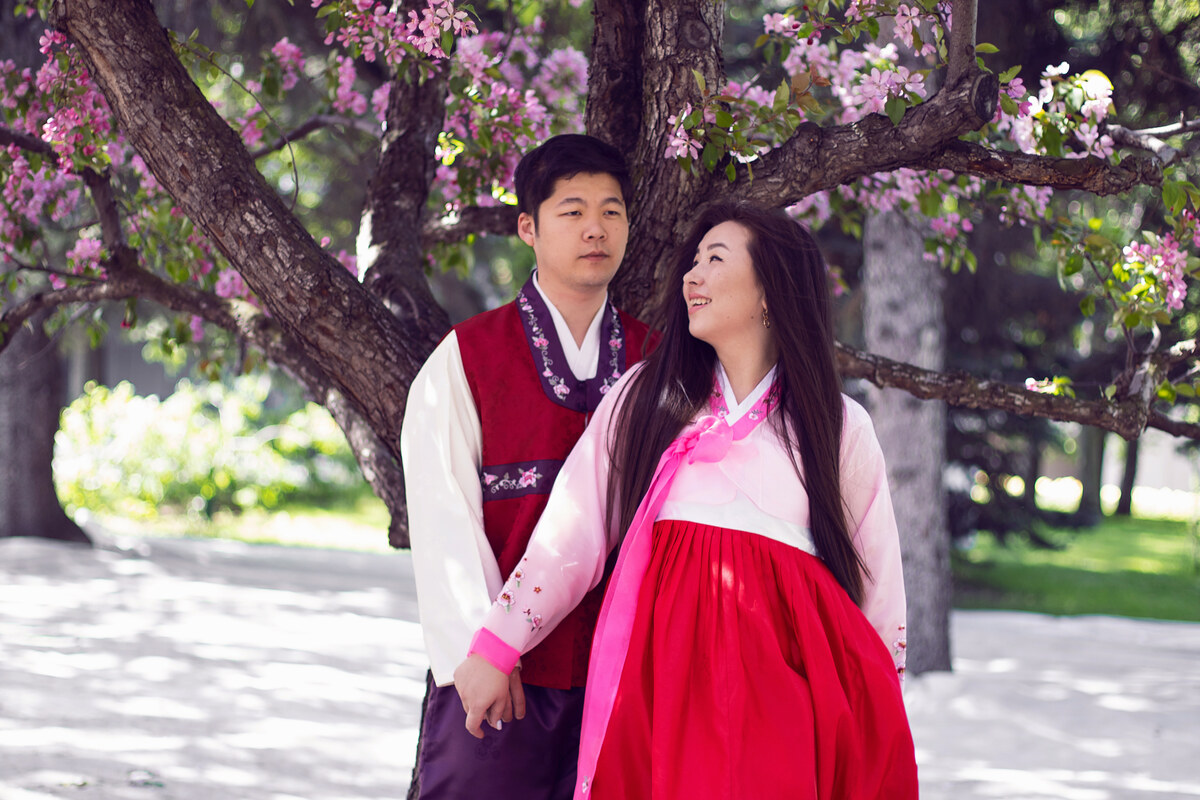
In the Goryeo and Joseon eras, what you wore told everyone where you stood. The hanbok, Korea’s traditional dress, varied in type, color and decoration according to social status and gender, and colored garments were off limits to farmers and commoners in their everyday lives.
A few groups were exempt, including shamans, gisaeng and children. And there were special occasions when everyone was allowed to dress in color: weddings, birthdays and holidays.
The bride’s borrowed rank
The most striking part is what an ordinary bride put on. The hwarot was the full dress of a princess and of a king’s daughter by a concubine, and it was also the formal dress of the upper class. During the Goryeo and Joseon dynasties, it served as bridal wear for ordinary women too.
Its embroidery was rich in symbols: lotuses, phoenixes, butterflies and the ten traditional symbols of longevity, including the sun, mountains, water, clouds, pine trees, turtles, white cranes and deer. Each sleeve carried blue, red and yellow stripes.
Ordinary women also wore the dangui, a ceremonial robe worn by queens, princesses and the wives of high-ranking officials, as part of their wedding dress. For one day, the bride dressed far above her station.
Patterns that carried wishes
Embroidery on a hanbok was never just decoration. Patterns were stitched to represent the wishes of the wearer. Peonies on a wedding dress stood for a hope of honor and wealth, while lotus flowers symbolized a hope for nobility. Bats and pomegranates expressed a desire for children.
Some motifs stayed out of reach. Dragons, phoenixes, cranes and tigers were reserved for royalty and high-ranking officials, so a bride’s choices were generous, but not unlimited.
Hair, headwear and the hairpin
The finishing touches mattered too. Women wore a jokduri, a ceremonial headpiece, on their wedding day. A long hairpin called a binyeo fastened the knotted hair, and its shape depended on status: women of the royal family had dragon or phoenix tips, while ordinary women had trees or plum blossoms. The binyeo was also considered proof of marriage.
Grooms had their own formal dress. The dallyeong, a style that came from China, was used as formal attire for officials and grooms, so the groom’s wedding robes also followed formal court dress.
Why it still feels special today
Western clothes largely replaced the hanbok from the late 19th century, but it never disappeared from celebrations. Today it is still worn for weddings, Lunar New Year, ancestral rites and the birth of a child.
If you are planning a wedding with Korean roots, it is a lovely detail to share with your guests: for generations, this was the day a family could put on color, symbols and a little borrowed splendor to start a marriage.