The mangalsutra, a necklace of black beads tied around the bride’s neck by the groom, is closely associated with Hindu weddings. Yet it has never been worn everywhere: in large parts of North India, a married woman has traditionally been recognized by something else entirely.
Whether you are planning a South Asian wedding, attending one as a guest or simply curious, here is how one small necklace takes on so many different forms, and why its absence can be just as traditional.
An auspicious thread, tied by the groom
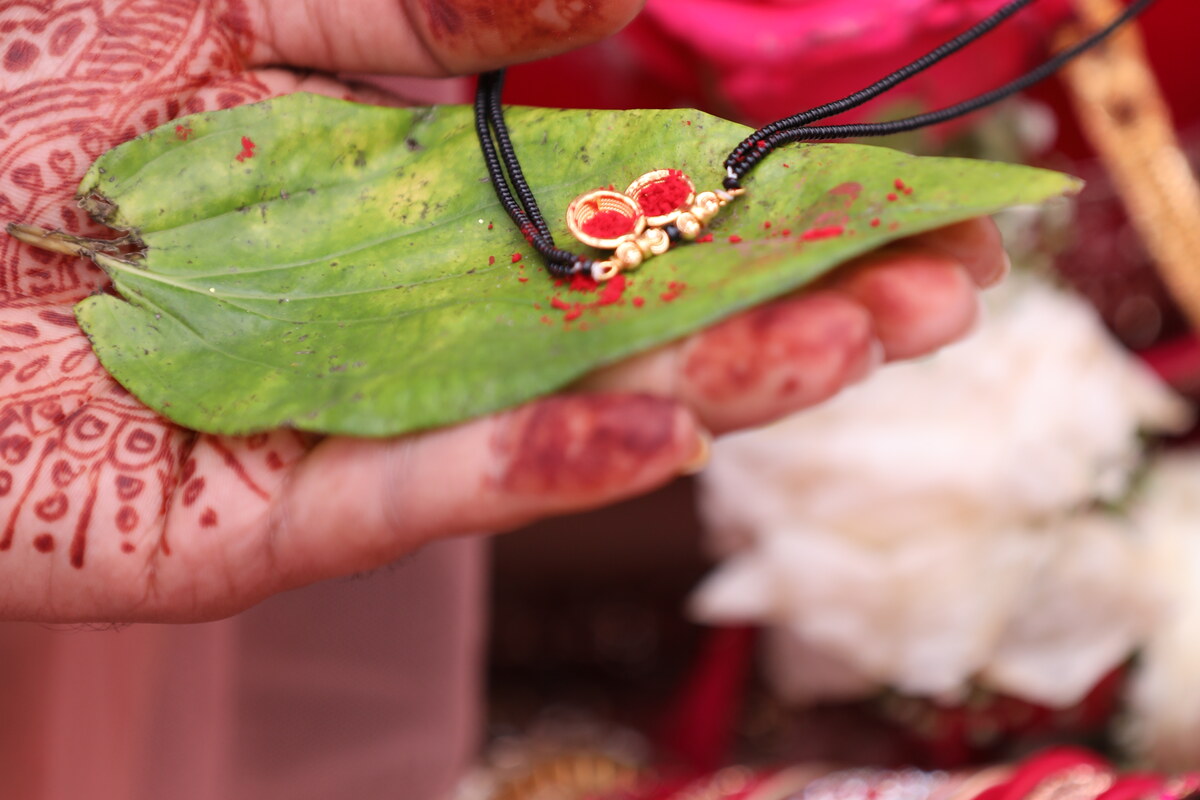
The name comes from Sanskrit and literally means “an auspicious thread”. During many Hindu weddings, a ceremony called the Mangalya Dharanam (Sanskrit for “wearing the auspicious”) may take place, and this is the moment the groom ties the mangalsutra around the bride’s neck.
It is usually made of black beads strung on a black or yellow thread prepared with turmeric. Depending on the region, gold, white or red beads may be added. Once tied, it is worn for the rest of the marriage and serves as a visual sign that the bride is now a wife. According to Hindu tradition, it is worn for the long life of the husband.
The custom is common in India, Sri Lanka and Nepal. In languages of Southern India and Sri Lanka, it is often called the tali. In Southern India, that word mainly refers to the pendant, while mangalsutra or mangalyam describes the whole necklace.
A design that changes from region to region
There is no single mangalsutra. Telugu brides from Telangana and Andhra Pradesh wear the Lakshmi tali, featuring images of Lakshmi, the goddess of auspiciousness. Malayali brides in Kerala wear the ela tali, or minnu, and in Tamil Nadu some communities wear the Kumbha tali. Traditionally, the design is chosen by the groom’s family according to their customs.
In Maharashtra, the pendant is made of two vati, tiny ornaments shaped like little bowls. In Karnataka, the necklace looks much the same but usually has just one. Konkani brides, among them Goans and Mangaloreans, wear three necklaces at once, one of them strung with gold and coral beads.
One of the sweetest details comes from Andhra Pradesh and Telangana. There, the mangalsutra carries two coin-sized gold discs separated by a few beads, and by tradition one disc comes from the bride’s family and the other from the groom’s side.
Where brides wear sindoor and bangles instead
Here is the part many people do not expect: the mangalsutra is not a systematic element of Hindu weddings, and several communities historically never used it at all. They simply have other, equally meaningful ways of marking a marriage.
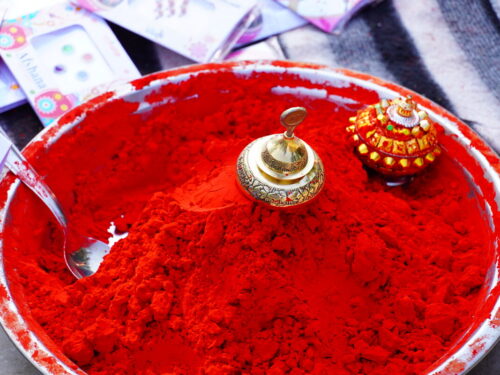
In large parts of North India, a married woman is recognized by vermilion in the parting of her hair (sindoor), by toe rings (bichiya) and by glass bangles. Punjabi brides wear chooras, while Bengali brides wear shaka pola, a pair of shell and red coral bangles. In Kashmir, Pandit women receive a pair of dejhoor on their wedding day, ear pendants whose shape can vary by family, clan or region of the valley.
Meanwhile, some non-Hindu communities wear nuptial necklaces close to the mangalsutra, among them Syrian Christians, Tamil Jains, the Mappilas of Kerala and the Dakhni Muslims of Hyderabad. Such necklaces were also used by Indian Jewish communities of the Konkan and Cochin, and Saint Thomas Christian women wear a minnu featuring a cross. The groom tying the necklace is a common thread, but there are variations: in some Muslim communities it passes from mother-in-law to daughter-in-law, and among Cochin Jews from sister-in-law to wife.
From a simple thread to a family heirloom
The roots of the mangalsutra are old. Its origin is dated to the 4th century CE, and a 6th-century reference describes a single yellow thread tied around the bride for protection from other men and evil spirits. Historian of Indian jewelry Usha Balakrishnan explains that it once referred to a literal thread rather than a piece of jewelry.
Bridal jewelry in ancient times also worked as a form of financial security against old age and widowhood. Today, many fashion-conscious families choose lighter, more contemporary versions, such as a single vati pendant.
If you are planning a wedding with South Asian roots, there is no wrong answer here. Ask both families which marital token matters to them, whether it is a mangalsutra, sindoor, a pair of coral bangles or Kashmiri ear pendants. Each one tells the same love story in its own beautiful way.