At a traditional Shinto wedding in Japan, the bride often wears a folded band of white silk over her hair. It is called the tsunokakushi, which literally means “horn hiding”, and the story most people tell about it is a charming one: it covers the bride’s metaphorical horns of jealousy before she starts her married life.
The real history of the headdress is a little more tangled, and just as lovely. Here is what the Japanese bridal look actually means, piece by piece.
A headdress named after hidden horns
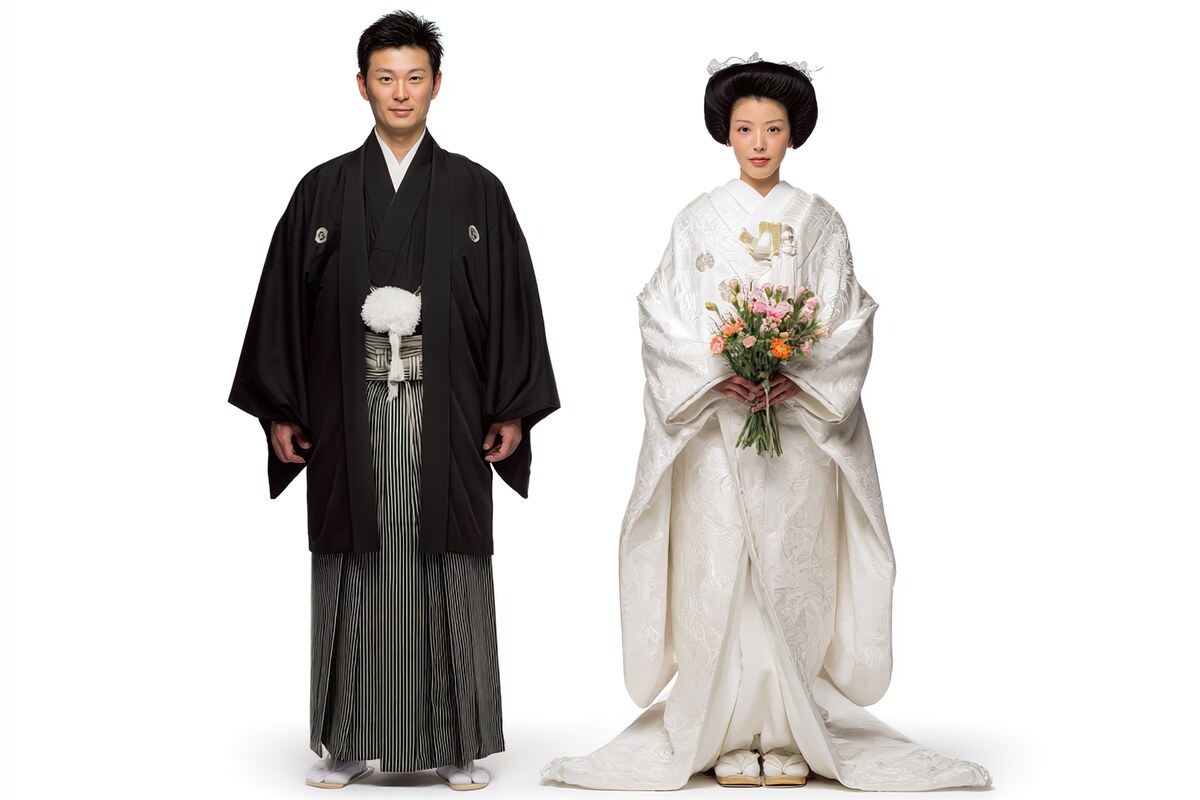
The tsunokakushi is a rectangular piece of cloth, usually white silk to match the bride’s kimono, folded and worn over the front of her hair. Today that hair is often a wig, styled in a traditional updo called the bunkin takashimada.
The name joins two words, tsuno (“horn”) and kakushi (“hiding”). According to the popular explanation, the bride is veiling her horns of anger, jealousy, ego and selfishness, so she can present her most gentle and virtuous self on her wedding day. It is a tender idea: the bride leaves her worst moods at the door of her new life.
The horns may come from a temple visit
Not every source agrees about those horns. The headdress appears to have emerged during the Edo period as something women wore when visiting a Buddhist temple. In certain Buddhist sects, female visitors had to cover the front of their hairline, an area known as sumi, meaning “corner”.
The headdress may first have been called sumi kakushi, the “front hairline hider”. The same written character can be read as either sumi or tsuno, and an older headdress called tsuno bōshi (“horn hat”), worn since at least the Heian period (794 to 1185), had a triangular point rising above the forehead. Over time, the “corner” seems to have become a “horn”, and a new legend was born.
So the jealousy story is quite possibly a folk etymology. Many brides still love it, and there is no reason to stop: plenty of beloved wedding customs have meanings that grew up long after the object itself.
A white hood that works like a veil
Some brides choose a different headpiece, the wataboshi, or “cotton hood”. This all-white cowl is the closest Japanese equivalent to the Western bridal veil. Its role is to hide the bride’s face from everyone except the groom until the end of the ceremony.
The wataboshi was adapted from the katsuki, a hood worn outdoors by married women of samurai families from the Muromachi to the Momoyama period. Younger women took it up from the Edo period onwards. It is only worn outside, only with the white shiromuku kimono, and it comes off for indoor receptions.
Pure white for the vows, red for the party
The shiromuku, which means “white pure innocence”, is a solid white over-kimono with designs woven only in white. It symbolizes the purity of the bride as she enters the marriage, and it is paired with a bridal wig, matching hair ornaments called kanzashi and a small sensu fan tucked into the kimono.
The alternative is the uchikake, a heavy brocade over-kimono that can shimmer with gold and silver thread. Its name comes from a verb meaning “to drape upon”, and it dates back roughly to the 16th century, when the ruling classes wore a kimono draped unbelted over their shoulders. Because it is never worn with an obi belt, its design covers the entire back. Bridal uchikake are usually red or white, and red, white and black are all considered auspicious colors in Shinto.
Many brides wear white for the ceremony and then change into a red kimono for the reception, for good luck.
An old look for a surprisingly modern ceremony
Here is the twist that surprises many couples: the Shinto wedding itself is fairly recent. The first mention of a wedding in a Shinto manual dates from 1872, and before that, weddings were family gatherings without religious meaning. One of the very first Shinto ceremonies was the marriage of Crown Prince Yoshihito and Kujo Sadako at the Imperial Palace in 1900. Tokyo’s Hibiya Daijingu shrine hosted the next one in 1901.
If you are drawn to this look for your own wedding, know that very few brides buy a new shiromuku. Because formal kimono are so costly, renting the full ensemble for the day is common, and some brides wear a kimono passed down or borrowed from their family. A borrowed kimono, worn with a headdress whose story keeps evolving, may be the most fitting tradition of all.