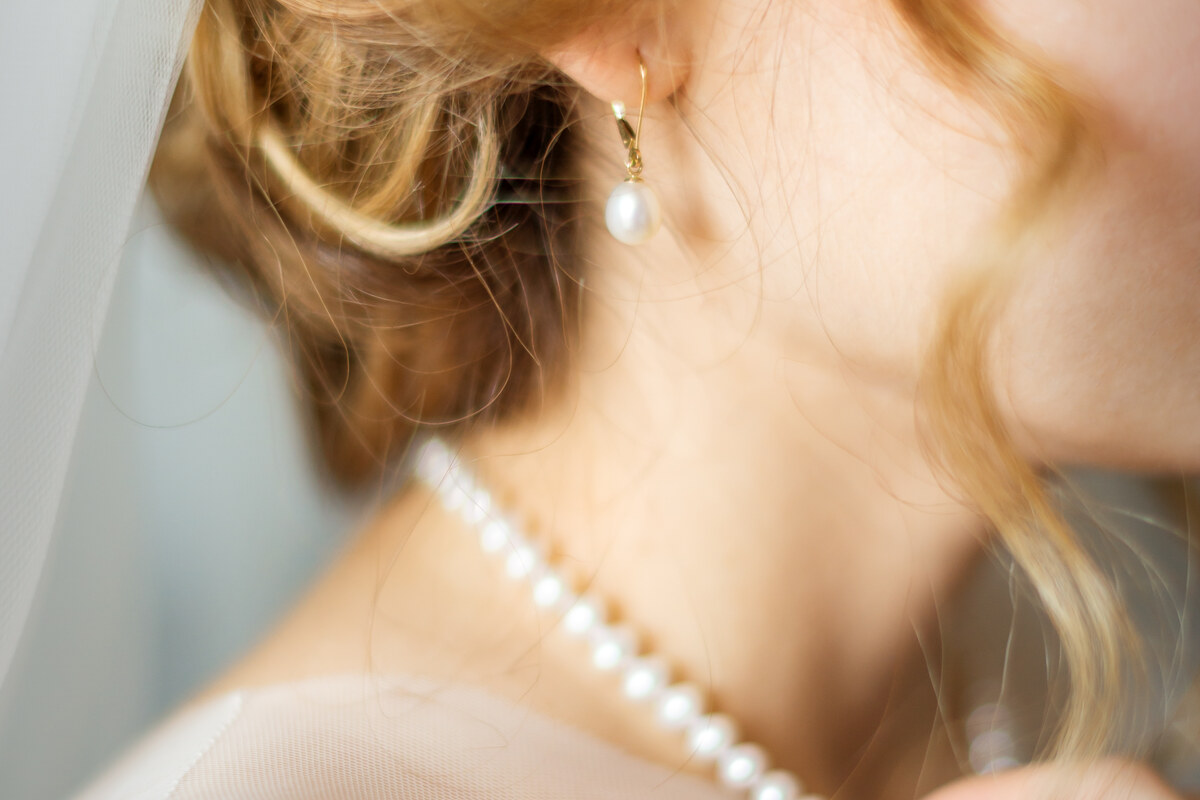
Pearls feel like the most bridal jewel of all, soft, luminous and timeless. Yet an old superstition says they should stay in the jewelry box on your wedding day, because their tear-drop shape was thought to bring tears into the marriage.
It is one of those beliefs that sounds surprising today, and it is far from the only one. Many wedding traditions have roots in superstitions about what makes a lucky or unlucky marriage, and a surprising number of them focus on exactly what the bride wears.
Why pearls were linked to tears
According to English folklore, a sapphire in a wedding ring brings happiness to the marriage, while pearls bring misfortune. The reason is simple and very visual: their shape was said to look like a tear drop, and a bride wearing tears on her wedding day was seen as a bad sign for the years ahead.
The same idea travelled much further than England. Some Nicaraguan brides believe that pearls are “tears of the sea”, and that wearing them on the wedding day will bring sadness to the marriage. This superstition is common in Latin culture.
It is a lovely example of how one image, a small drop of light that looks like a tear, can shape a tradition on more than one continent.
The mirror rule and the accessory that fixes it
Another old belief concerns the moment you first see yourself as a bride. In English folklore, it is bad luck for the bride to look at herself in the mirror once she is fully dressed in her bridal wear.
Happily, the superstition comes with its own remedy. The bad luck can be counteracted by adding another accessory after that first look. In other words, take your mirror moment, then slip on your earrings, your bracelet or your shoes, and the spell is broken.
Colour mattered too. Marrying in green was considered bad luck in English tradition, while a 1905 issue of the London Journal described wreaths as lucky but “unbecoming”, suggesting orange blossoms instead. Thanks to their association with the Crusaders returning from the Holy Land, orange blossoms were believed to bring good luck and prosperity.
Ribbons, shoes and coins around the world
Elsewhere, brides added luck to their outfits rather than removing anything. As per a Mexican wedding superstition, brides might sew coloured ribbons into their dresses, each colour carrying its own wish: yellow to bring the blessing of food, blue to bring wealth and prosperity, and red for a passionate marriage.
Shoes carry their own folklore. A Polish superstition warns brides to be mindful of their footwear, because open-toed shoes are said to let all their future wealth and prosperity fly out. Luckily, that wealth can be won back: guests shower the couple with coins as they leave the ceremony, and the bride and groom must collect them to ensure wealth in their marriage.
In Sweden, a bride might tuck a silver coin from her father into one shoe and a gold coin from her mother into the other, so that she never has to do without. It is a tender gesture, a small piece of each parent carried down the aisle with every step.
Wearing what you love, with a little folklore
None of these beliefs is a rule, and you are free to wear pearls if they mean something to you. Superstitions like these are part of the charm of weddings, little stories passed down through families and cultures rather than instructions you must follow.
If you love the idea of a nod to tradition, they are easy to borrow. You could choose a sapphire for its happy association, sew a ribbon in a meaningful colour into your hem, or ask your parents for a coin to slip into your shoes. And if pearls are what make you feel like yourself, wear them, then add one last accessory after your mirror moment, just to be safe.