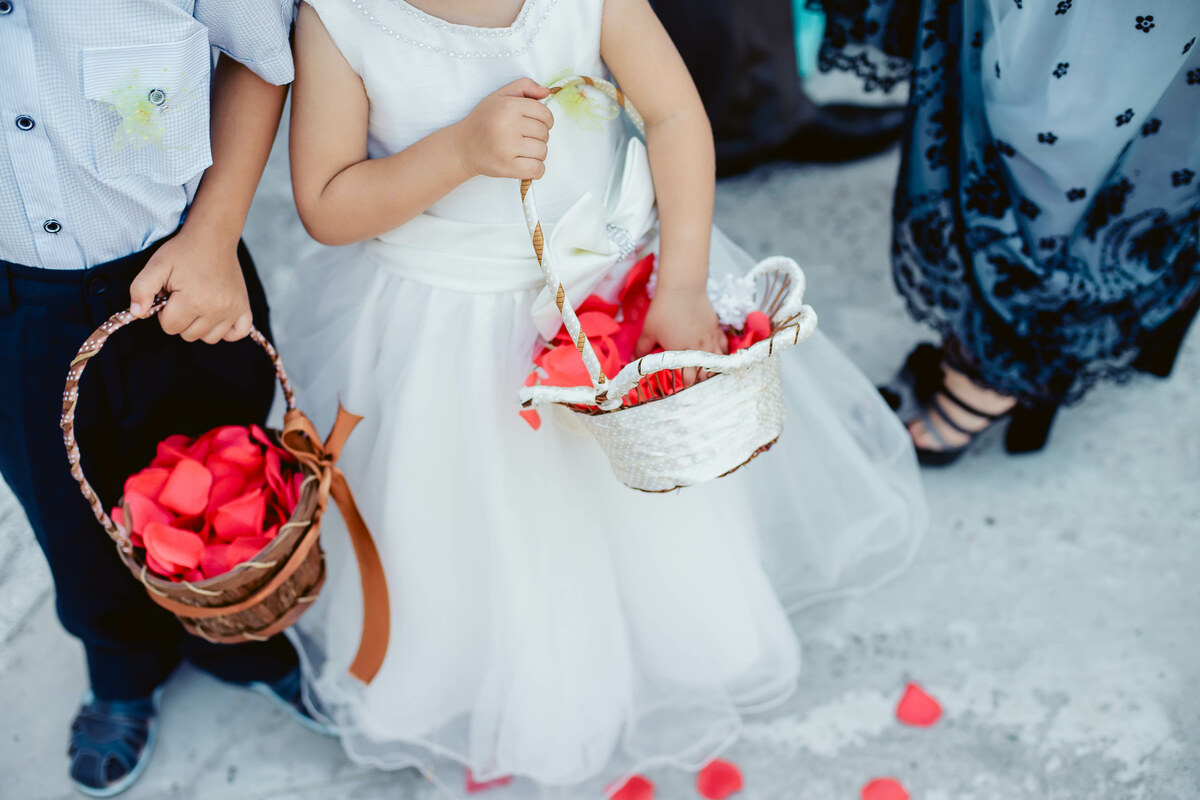
Today, a flower girl means a little one in a tiny version of the bride’s dress, scattering rose petals down the aisle. But for most of wedding history, her basket held something very different: sheaves of wheat, bundles of herbs and, at one point, strands of garlic.
Wheat and herbs, carried for good luck
For centuries, marriages were often arranged for political or family reasons rather than love. In some cultures, the bride and groom did not even meet before the wedding day, and the main hope placed on the new couple was that they would have children.
That is where the first flower girls came in. Instead of petals, they carried sheaves of wheat and bouquets of herbs, symbols of fertility and prosperity for the newlyweds.
In the Roman Empire, the role went to young girls who carried a sheaf of wheat during the ceremony, a gesture believed to bring prosperity to the bride and groom. It was a hopeful wish, carried right into the ceremony.
Garlic and rosemary on the way to church
During the Renaissance, the flower girl’s offering became a little less romantic to modern eyes. She carried strands of garlic, which people believed would keep evil spirits and bad luck away from the couple.
By the Elizabethan era, the procession had taken on a gentler, more fragrant feel. Wedding guests scattered flower petals all the way from the bride’s home to the church, and flower girls walked behind the musicians.
Instead of a basket, they carried a gilded rosemary branch and a silver bride’s cup decorated with ribbons, filled with flower petals or rosemary leaves. Some carried a small posy of rosemary sprigs, or a little bouquet with fresh rosemary tucked in.
The Victorian flower girl we still recognize
The flower girl most couples picture today really took shape in the Victorian era. She was usually dressed in white, sometimes with a sash of colored satin or silk.
Her dress, most often made of muslin, was intentionally kept simple so it could be worn again after the wedding. A thoughtful detail, and one that still feels very modern.
She carried an ornate basket of fresh blooms, or sometimes a floral hoop. The round shape of the hoop echoed the wedding ring and symbolized a love with no end. It is a lovely idea to borrow if you want something a little different from a basket.
Many people still see a deeper meaning in her role. Some view the flower girl as leading the bride forward, from childhood into adulthood. Others see her as a picture of the bride as a little girl, or as a symbol of the new family being formed.
Little helpers with real jobs
The flower girl rarely walks alone. She is usually partnered with a ring bearer or a page boy, the young male equivalent of a bridesmaid. Traditionally, page boys carried the bride’s train, which is why they are generally no younger than seven: a long train is not easy to manage.
Flower girls, on the other hand, are usually between three and seven years old, often chosen from the extended family or the children of close friends. In Western Europe, child attendants were never limited to a flower girl and a ring bearer: royal and society weddings often include several flower girls, and pages were part of the wedding of Prince William and Catherine Middleton in 2011.
As for the rings, the cushion is often symbolic. The real rings are usually kept safe by the best man, and if the real ones do ride on the cushion, they are typically tacked on with thread so they cannot get lost along the way.
Tips for planning your own flower girl moment
If you are including little attendants, a few practical points are worth knowing before the big day:
- Check your venue first. Some venues do not allow petals to be scattered, so ask before you order them.
- Petals are optional. A flower girl can carry wrapped candies, confetti, a single bloom, a ball of flowers or even bubbles instead.
- Talk about the outfit early. Families of the couple once provided the flower girl’s clothing, but today most couples expect her parents to cover her outfit and related costs. A friendly conversation upfront avoids any surprise.
Whether she carries petals, a floral hoop or a sprig of rosemary in honor of her Elizabethan predecessors, your flower girl is part of a tradition that has always been about one simple thing: wishing the couple a happy, abundant life together.