Long before themed games and carefully chosen gift lists, the bridal shower had a surprisingly tender purpose. The custom is said to have grown out of a simple act of friendship: helping a bride marry the man she chose, even when her family could not, or would not, give her a dowry.
Friends who stepped in when the dowry did not
In earlier centuries, a dowry could decide whether a wedding happened at all. A poor family might simply not have the money. And sometimes a father refused to hand over his daughter’s dowry because he did not approve of the match.
According to the story most often told about the shower’s origins, that is where her friends came in. They gathered together and brought gifts to make up for the missing dowry, so she could still marry the man she had chosen. In other words, the first showers were less about stocking a kitchen and more about making a wedding possible.
The earliest stories of these gatherings come from Brussels, Belgium, around 1860. A much-repeated legend places the very first one in the Netherlands in the 16th or 17th century, although that version is closer to folklore than to documented history. The idea also echoes the American colonial hope chest, where a young woman collected linens and household goods ahead of her marriage.
A medieval cousin with beer on the menu
Medieval England had its own pre-wedding way of raising funds, and it is a charming one. At a feast called the Bride Ale, held before the wedding day, the bride brewed beer herself and sold it to her guests at a high price.
The custom was familiar enough to appear in literature: Langland’s poem Piers Plowman refers to a “bruydale”. Different century, same spirit: the community chipping in so a new couple could start their life together.
Where the word shower comes from
In the United States, bridal showers first appeared in cities in the 1890s, mostly among upper middle class families. By the 1930s, they had spread to rural America too.
One of the earliest known printed uses of the word in this sense appeared in a Michigan newspaper, the Grand Rapids Evening Press, on June 22, 1904, which mentioned “shower parties”. As for the name itself, it may come from a lovely Victorian custom: presents were tucked inside a parasol, which was then opened above the bride-to-be so the gifts would quite literally shower down on her.
Interestingly, early etiquette kept things wonderfully relaxed. A 1920s guide said showers should be “purely spontaneous and informal,” with guests simply arriving unannounced at the bride’s home. It was only by the 1950s that planning guides began suggesting themes and games.
A gentle reminder for anyone planning one today
Because of that informal history, showers never developed the strict rules that surround weddings themselves. Invitations can go out by mail, phone or email, and there is no single right way to host. Showers are usually held in the afternoon or evening, commonly four to six weeks before the wedding, and guests who cannot attend are not expected to send a gift.
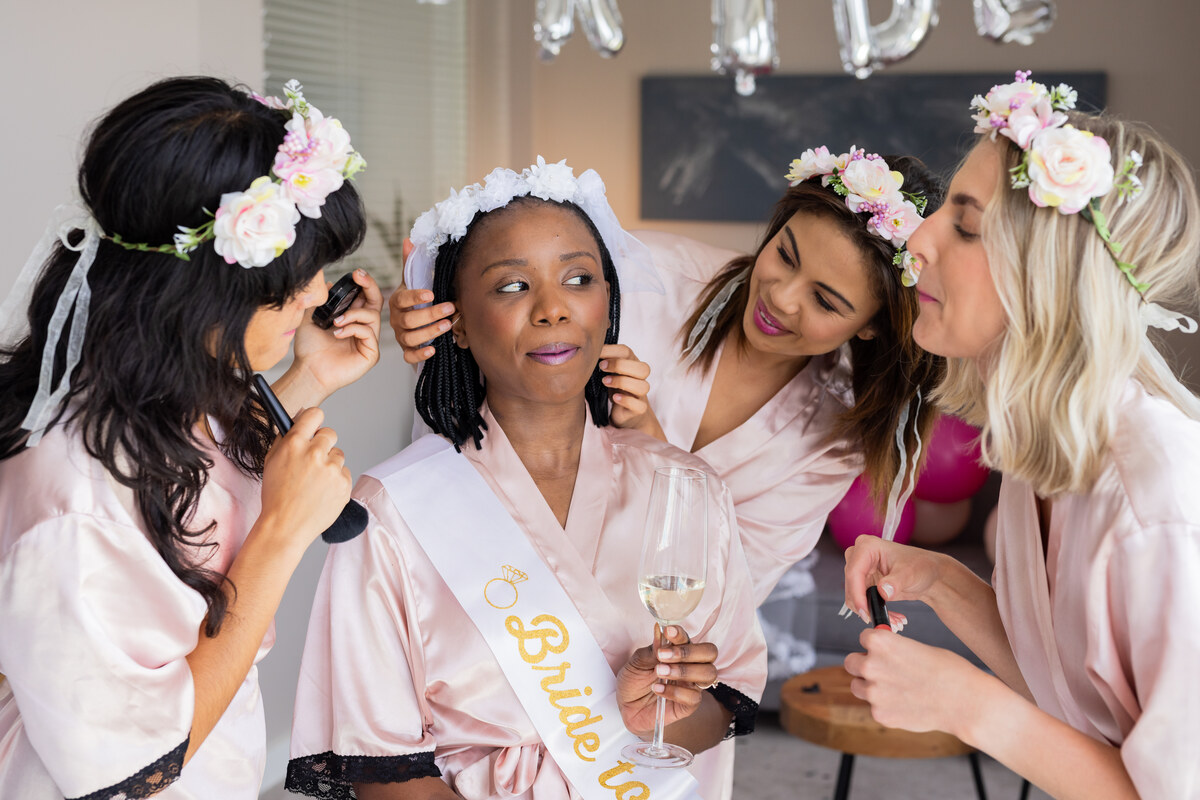
Traditionally, close friends such as the bridesmaids did the hosting, but today it is perfectly common for mothers of the couple or other relatives to host or pitch in. And the format travels well: Australia and New Zealand have the Kitchen Tea, an afternoon tea at the bride’s family home, while in India the Mehndi brings the bride’s female friends and family together as her henna designs are applied.
So if your shower ends up small, simple or a little unconventional, you are in good company. At its heart, it has always been about the people who show up for you.