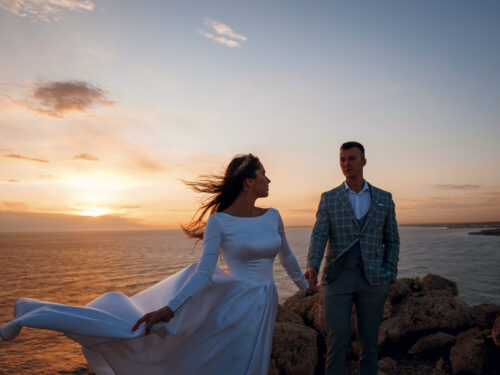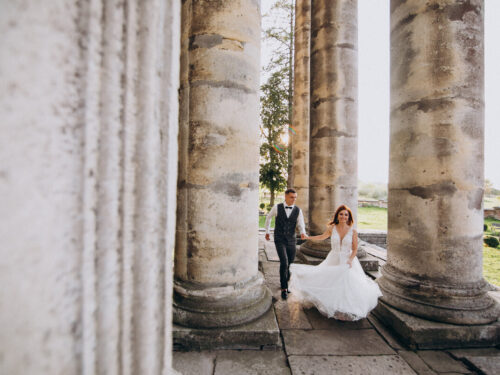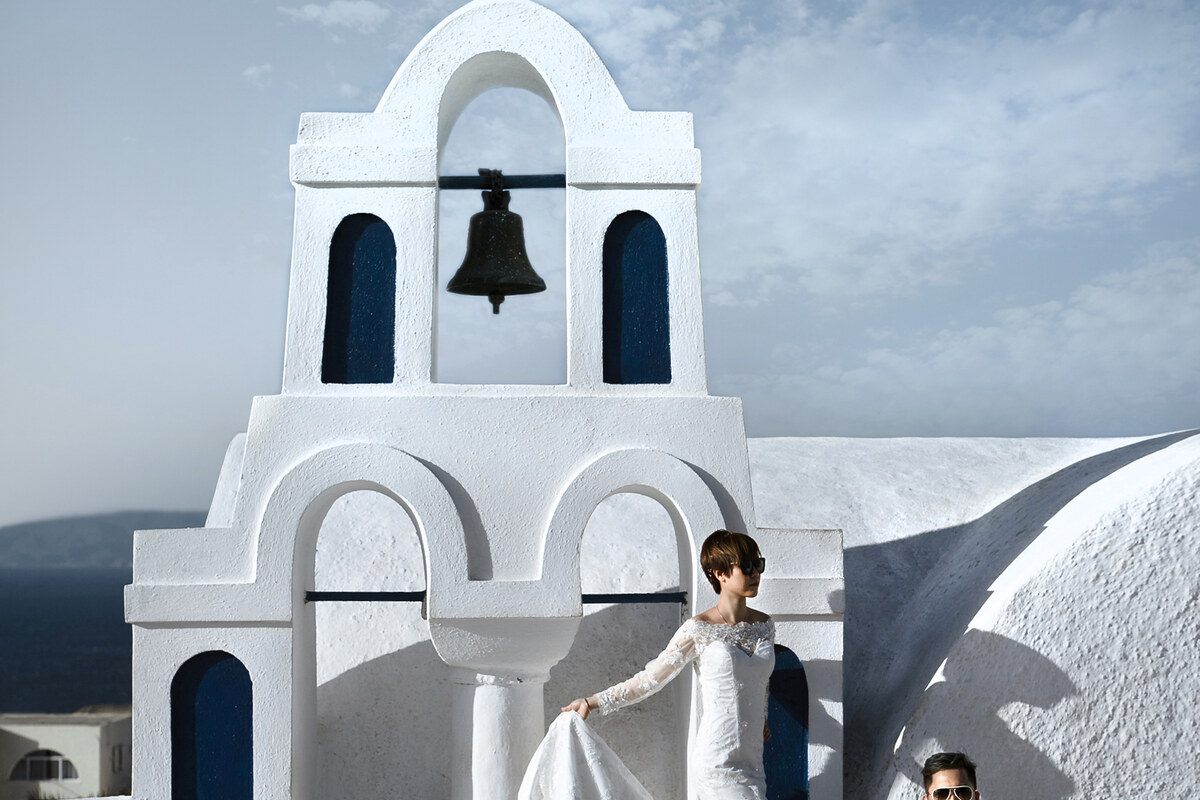
When the 2009 financial crash hit, traditional weddings across the country got smaller and cheaper almost overnight. Destination weddings did the opposite. While couples everywhere else were trimming guest lists and cutting bands, destination weddings kept growing, and it had nothing to do with couples suddenly having more money to spend.
The recession that shrank weddings everywhere except one place
A destination wedding has a specific definition: most of the invited guests have to travel to a vacation-style location and typically stay several days once they arrive. That is different from an elopement, which is about skipping guests entirely rather than picking a far-off place.
During the 2009 recession, that specific format kept growing while traditional weddings, the kind held close to home with a full local guest list, contracted along with everyone’s budget. On paper, flying a wedding party to another country during a recession sounds like the last thing anyone would do.
Why a smaller guest list beats a bigger budget
The real driver was math, not extravagance. A destination wedding naturally comes with a smaller guest list, since travel costs and multi-day commitments filter out anyone who is not close enough to justify the trip. A shorter guest list ends up making the whole event cheaper overall, even with flights and hotels added into the total.
That is why some of the most sought-after destination-wedding locations, places like Lake Como and Tuscany in Italy, Santorini in Greece, or Paris in France, held their appeal even during a downturn. Couples were not choosing them despite the recession. They were choosing them partly because of it.
A tradition some religions do not allow
There is a detail worth knowing if faith plays a role in your wedding: some Catholic denominations specifically prohibit destination weddings, teaching that a Christian marriage should take place in the same church where the couple’s own faith journey began, at their baptism.
It is also worth knowing that in most of the world’s most populous regions, from North and South America to Europe, Asia, Australia and the Pacific, a civil ceremony performed by a judge, justice of the peace or mayor is the only version that is actually legally binding. A religious ceremony layered on top can be symbolic only, unless the civil paperwork is handled too.
What this means if you are dreaming of a destination wedding
If a religious ceremony matters to you, it is worth checking with your officiant or faith community early, before you fall in love with a venue. And if the legal side matters, confirm which ceremony actually counts as binding in the country you are marrying in, so the day you plan is also the day that makes it official.
Beyond the paperwork, there is something genuinely reassuring in the recession story itself. A smaller guest list was never a compromise. For a lot of couples, it turned out to be exactly what made a destination wedding possible in the first place, recession or not.