If you got married in Stockholm instead of Berlin, your wedding ring would not just look different, it would sit on a completely different hand. Ring customs feel timeless and universal when you are in the middle of planning, but they shift dramatically depending on where in the world you say “I do”.
The hand your ring goes on isn’t universal
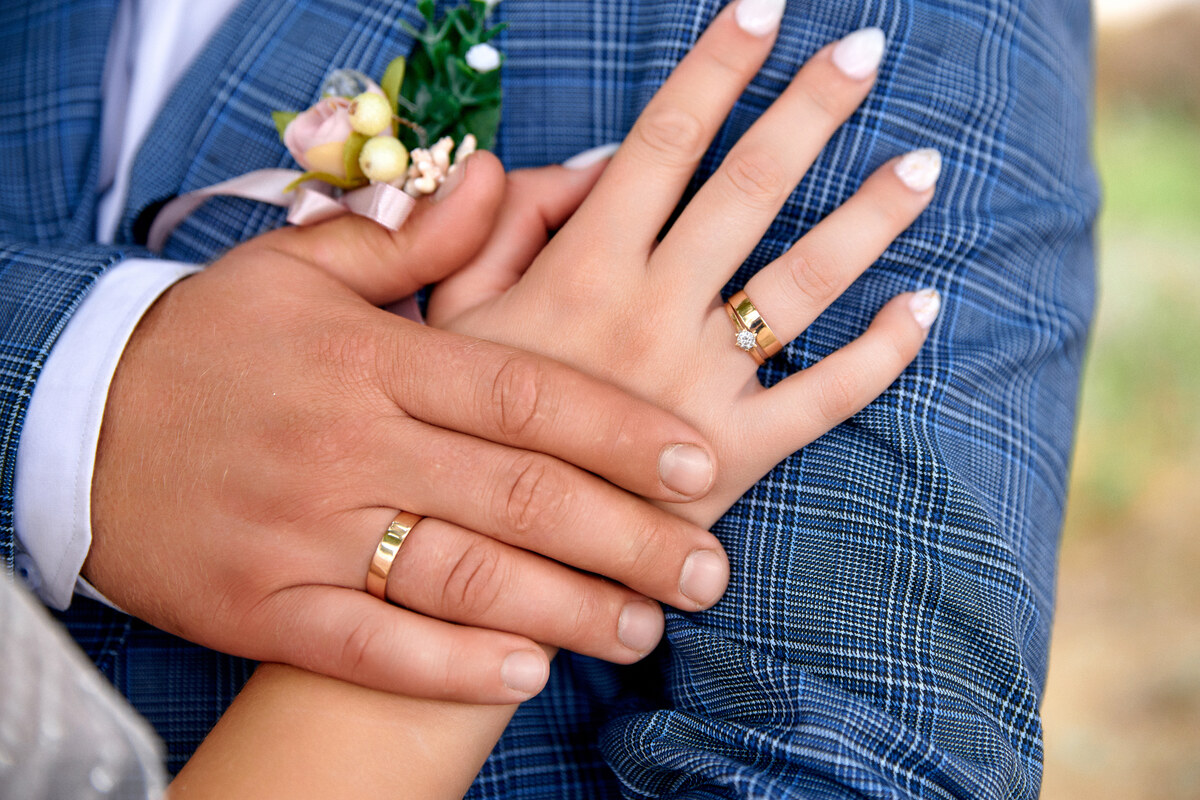
In the US, UK and most of Western Europe, the wedding ring goes on the left hand, a tradition tied to the old “vena amoris” belief, the idea that a vein ran directly from that finger to the heart. It was formally written into Western practice by the Book of Common Prayer in 1662, a specific 17th century liturgical text rather than some ancient universal rule.
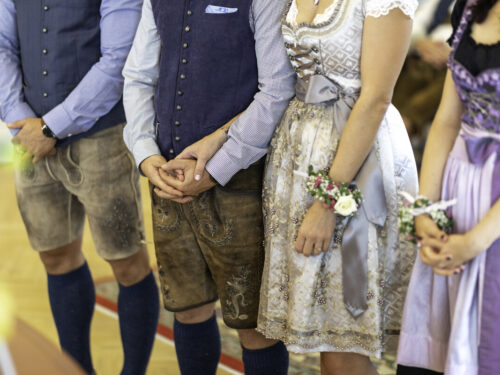
Cross into Germany, Austria, Bulgaria, Poland or Russia, though, and the wedding ring moves to the right hand instead. Meanwhile Sweden and Finland do something different again, placing both the engagement ring and the wedding ring together on the bride’s left hand.
None of these versions is more “correct” than the others. They are simply different answers to the same question, shaped by centuries of local church history and folk custom rather than one shared rulebook.
Germany was decades ahead on husbands wearing rings too
Here is a detail that surprises a lot of couples: in Germany, both spouses have worn wedding rings since at least the 1870s. That is more than a century of husbands wearing a ring as a matter of course.
In the US and Canada, by contrast, only wives traditionally wore a wedding ring. It only became customary for husbands to wear one too during the 20th century, decades behind German custom. What feels like a fixed, ancient expectation today, that both partners wear a ring, is actually a fairly recent habit on this side of the Atlantic.
A ring that used to be two rings
Long before any of these regional customs settled in, one 16th and 17th century ring style captured the idea of partnership in a much more literal way. The “gimmel ring” was made of two interlocking bands, and each partner wore one half after the engagement.
At the wedding ceremony itself, the two bands were physically reunited into a single ring, which the wife then wore as one complete piece. It is a lovely, tangible image of two becoming one, centuries before that phrase became a wedding cliche.
Choose what feels right for your own wedding
None of these traditions are rules you are bound to follow. Whether your ring ends up on the left hand or the right, worn by one partner or two, matched in style or not, the history shows that “tradition” has always been more flexible than it looks from the outside.
What matters most is picking the finger, the hand and the ring that feel meaningful to you and your partner, not the version that happens to be most familiar where you grew up.