The cocktail hour is one of the most sociable moments of your entire wedding day. It sets the mood and gives guests the chance to mingle before dinner even starts. Done right, it can become a real highlight thanks to a few well chosen touches: a photo booth, a cocktail bar with alcoholic and non-alcoholic options, live music or an elegant buffet. Here is a practical guide to help you get the drinks, the food and the flow of the whole thing just right.
What exactly is a cocktail hour
The cocktail hour is a relaxed gathering held right after the ceremony and before the meal. Traditionally, it is the moment for the couple to thank all of their guests, including anyone who might not be staying for dinner.
What used to be simple wine and a few bites has evolved considerably. Today it often includes juice bars, themed stations like a candy bar, and interactive tasting experiences built right into the reception.
Modern cocktail hours can get pretty creative too: live cooking stations, an oyster bar, a ham carving station, or a proper cocktail bar with everything from simple self serve batch cocktails to a mixologist crafting signature drinks on the spot. What matters most is keeping it consistent with your style and your budget.
Cocktail hour, aperitif, cocktail party: what is the difference
These terms get mixed up all the time, but each one actually follows its own logic.
The cocktail hour usually lasts between an hour and a half and two and a half hours. It includes drinks, often a glass of something sparkling, and appetizer sized bites in moderate quantities. It works as a bridge between the ceremony and the dinner.
The aperitif is generally shorter and folded directly into the meal, reserved for dinner guests only.
A cocktail party is often confused with the cocktail hour since it happens at the same time, but it tends to be more elaborate, with more focus on the mixology and the styling of the bar itself.
A standing dinner cocktail replaces the meal entirely, usually calling for 20 to 25 bites per person, eaten standing up. This format is rare at weddings and shows up more in corporate events.
Understanding these differences really helps when it comes to planning the right quantities and avoiding common mistakes.
Five mistakes to avoid
- Watch the length. Keep it between an hour and a half and two and a half hours. Beyond that, the wait starts to feel uncomfortable for guests.
- Spread out your stations. Separate the cocktail area, the non-alcoholic drinks station and the food buffet to avoid bottlenecks and long lines.
- Always have a backup plan. Outdoor cocktail hours look great on paper, but bad weather can force everyone inside. Since your reception room will likely already be set for dinner, think about a marquee or a lightweight tent as a plan B.
- Do not forget shade. Everyone worries about rain, but a heatwave can be just as tough on guests. Look for a spot with natural shade or bring in some parasols.
- Plan your equipment properly. Glassware, plenty of ice (running out of ice is one of the most common mistakes), buckets, pitchers, shakers and clear signage for what is being served all make a real difference.
What to serve
A well balanced cocktail hour usually includes a sparkling wine or champagne, a couple of cocktails, non-alcoholic options like juices and syrups (including a proper mocktail), and plenty of water. Keeping the drinks menu to two or three cocktails maximum, including one signature drink, keeps the wait time down and the quality of service up.
As a rough guide, plan for two to three drinks per person over two hours, one bottle of wine for every three to four guests, one liter of water for every three guests, and about one kilo of ice for every five to six guests. Always add a 10% buffer, and make sure non-alcoholic alternatives are just as thoughtfully prepared as everything else.
Food that works for a standing reception
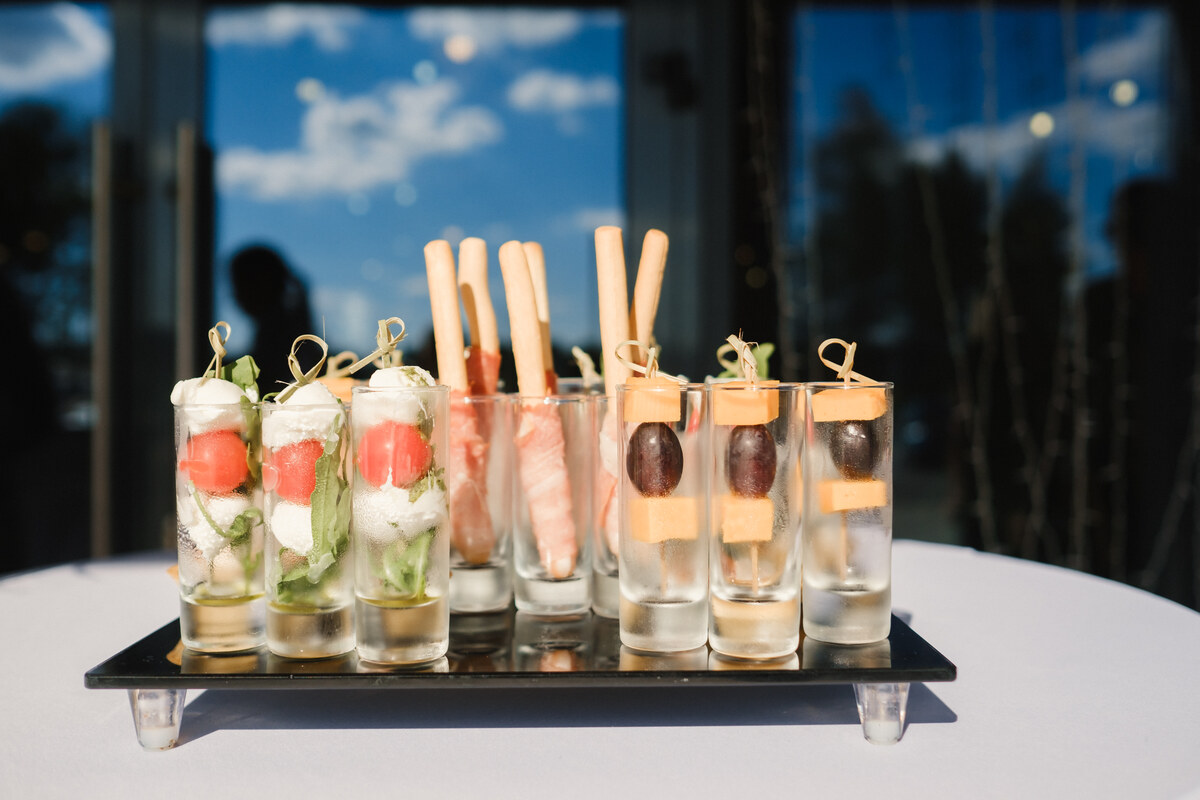
The golden rule is simple: everything should be easy to eat standing up, in one or two bites. Cold bites like mini blinis with salmon, cucumber and yogurt verrines or filled rolls bring freshness and simplicity, while warm bites like puff pastries, mini quiches or gougères add a comforting touch.
Vegetarian options should never feel like an afterthought. Homemade hummus, roasted vegetable tartlets or goat cheese and honey bites are elegant and genuinely delicious choices that any guest will enjoy.
As a rule of thumb, plan for six to eight bites per person for a light cocktail hour, ten to fourteen for a more generous spread, and remember to offer gluten free options and label vegetarian items clearly.
Little personal touches make it memorable
A cocktail hour that stands out usually comes down to well thought out details: a bar styled around your wedding theme, a mixology workshop, personalized napkins or cups, or simple entertainment like a photo booth, live musicians or lawn games to help guests mingle and break the ice.
Keeping costs under control without cutting corners
Managing your budget mostly comes down to simplicity: keep the drinks menu tight, choose versatile spirits that work across several recipes, prep your batch cocktails ahead of time, make your own syrups and buy in bulk. Never cut back on water, food or ice though, these three are what keep guests comfortable and safe throughout the reception.