In the Malay state of Perlis, songket, a cloth woven with gold or silver thread, was once off limits to almost everyone. The exceptions were royal families and brides.
That rule says a lot about how a wedding outfit used to work in Southeast Asia. The cloth a bride wore was not only beautiful. It also marked a day when she could stand a little closer to royalty. It is a reminder that clothing was once a language of rank, and weddings were one of the few days when the rules bent.
A fabric woven with gold
The Malay word menyongket means to embroider with gold or silver threads. Songket was a luxury cloth, traditionally worn on ceremonial occasions as a sarong, a shoulder cloth or a head tie. The gold thread was originally wound with real gold leaf.
Weaving most likely reached Peninsular Malaysia through intermarriages between royal families, a common way of sealing alliances in the 15th century. Because the materials were so costly, production stayed in politically important kingdoms.
Where the bride was the exception
The kebaya, the fitted blouse worn over a sarong, shows the rule at work. In Perlis, a kebaya was often sewn from plain Kasa Rubia fabric because songket was prohibited except for brides and royal families. Once the fabric became harder to find, chiffon and songket became more common.
In Selangor, the nobility traditionally paired their kebaya with cotton and batik or Bugis weaving. Songket was only worn by the bride and groom. Today the choice is much more open and depends on the taste of the wearer, but the old habit explains why songket still feels special at a Malay wedding.
A required garment in Indonesia
Across the water, songket has become a required garment for brides and grooms in the traditional wedding costumes of the Palembangese, Minangkabau and Balinese people. In old Palembang, certain motifs were reserved for nobles, and the cloth could even signal a wearer’s marital status.
One blouse, many wedding looks
The wedding kebaya looks very different from one community to the next:
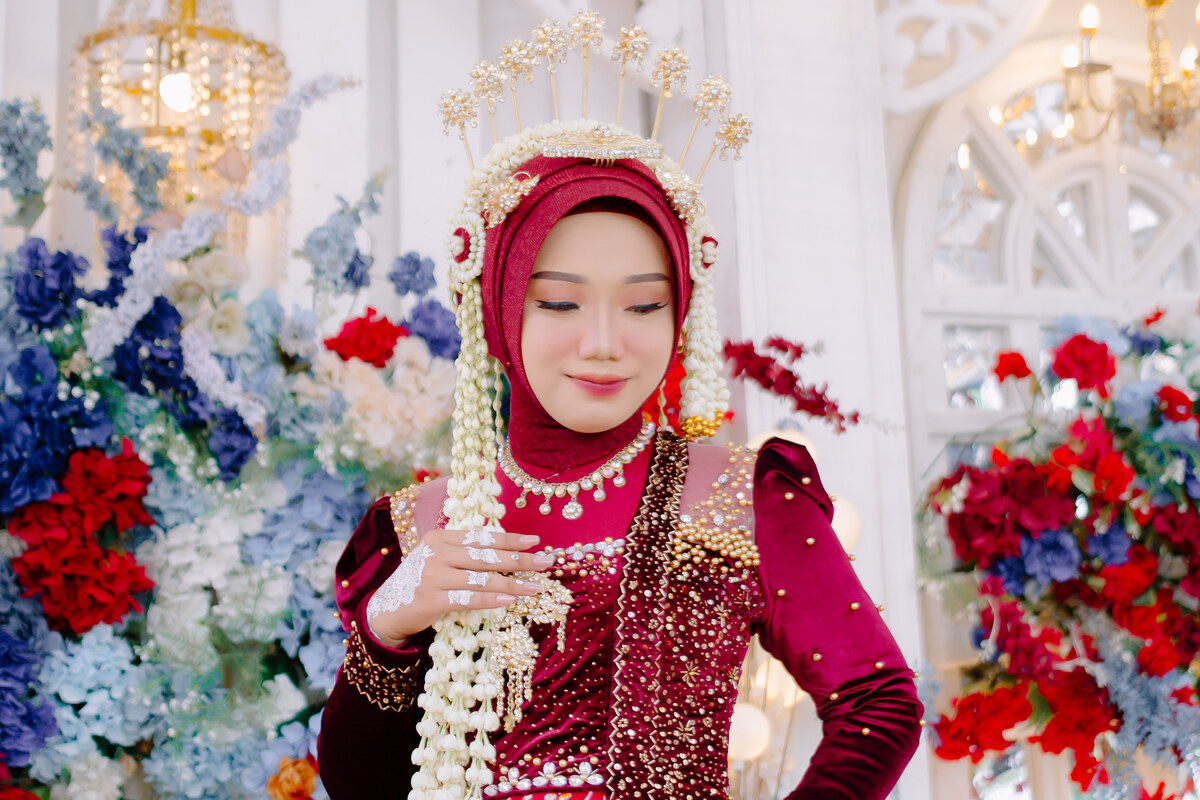
- Javanese Solo style: a court kebaya, usually in dark fabric with black velvet the favorite, edged with gold or silver beads and sequins.
- Sundanese: brightly colored brocade with a broad U neckline. The contemporary wedding version has a sweeping train.
- Batak: red, white, gold and black, often worn with an ulos cloth around the shoulders.
- Minahasan: a white kebaya with a white brocade skirt shaped like a fish tail, called baju ikan duyung, so the bride resembles a mermaid.
- Portuguese Settlement, Malacca: a white kebaya and saias, topped with an elaborate golden headdress and an ornate necklace.
- Cocos Malay: a blue kebayak, a yellow selendang over the upper body, and three sabok to fasten the sarong in blue, red and yellow.
A tradition still being rewritten
Designers today are exploring fine fabrics such as lace to create bridal kebaya, and in 2019 a wave of enthusiasts in Indonesia began promoting the kebaya for everyday wear, well beyond weddings. If you are planning your own look, the lesson is a warm one: your outfit may carry a whole region’s history in its thread.