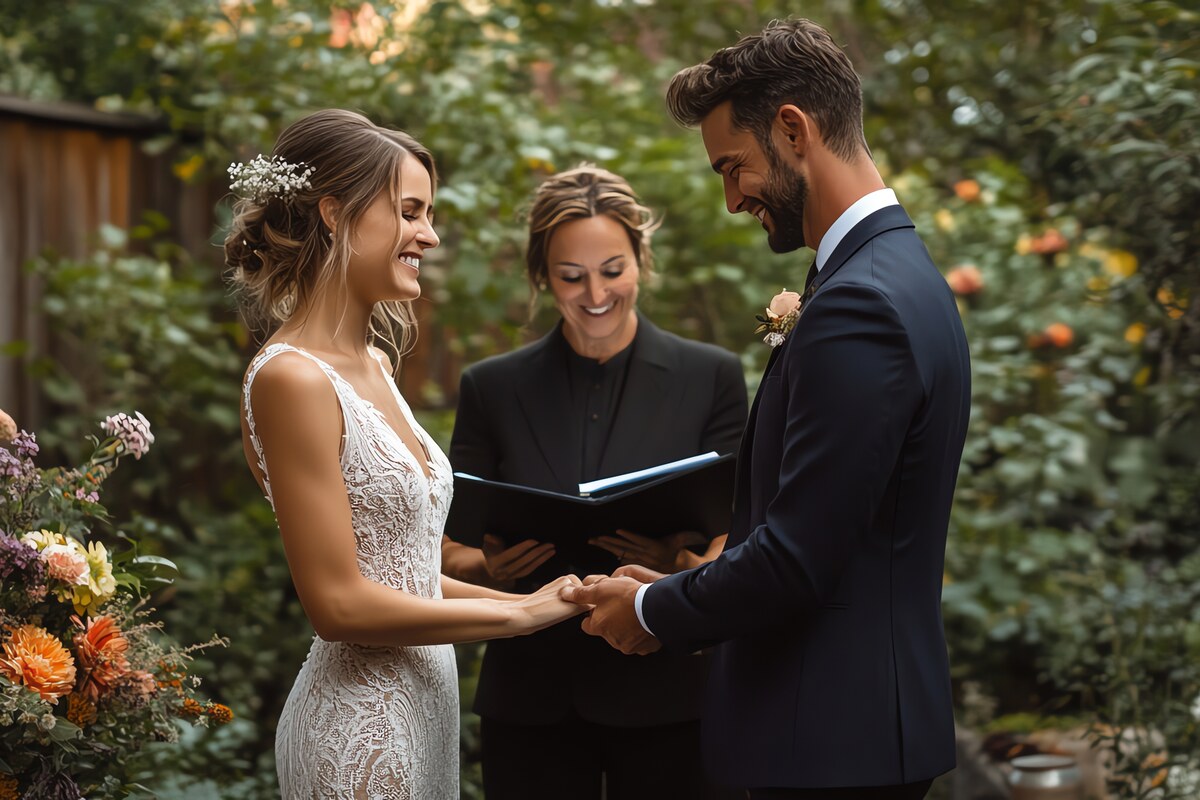
Plenty of brides say “to love, cherish, and obey” at the altar assuming it is the one line of the ceremony that has never changed. It has not been a fixed requirement for almost a hundred years, and the history behind it is more interesting than the word itself.
Where the “obey” line actually came from
Wedding vows are a Western Christian tradition, not a universal feature of marriage at all. They are not legally required in most places to get married, and Eastern Christian wedding ceremonies do not even include vows in the way Western couples picture them.
The oldest traceable English vows come from medieval church manuals, specifically the Sarum (Salisbury) and York diocesan rites, which went on to directly shape the first Book of Common Prayer in 1549. In that older Middle English, the bride’s promise was to be “boneyre and buxsum in bedde and at borde”, roughly meaning good natured and obedient in bed and at the table. It is a strikingly different sound from the version most people picture as timeless tradition.
The moment couples actually got a choice
Here is the detail that tends to surprise people most: the Church of England historically offered an option right at the altar. The groom could promise to “love, cherish, and worship,” while the bride promised to “love, cherish, and obey,” but both partners could also choose a mutual “love and cherish” instead, with no obey on either side.
The word “obey” for the bride still appeared in the 1928 Prayer Book revision, but an alternative version of that same 1928 text allowed couples to leave it out entirely. That means the debate over whether a bride should promise to obey is nearly a century old, not a recent shift in attitude.
What “till death do us part” used to say
The phrase itself has quietly changed too. The now familiar “till death us do part” is a modernized version of an older line, “until death us depart”, where “depart” originally meant “separate.” Once that older meaning of the word faded from everyday English, the wording had to be updated so it would still make sense, which is how the 1662 Prayer Book version most people know today took shape.
Roman Catholic vows in the United States still run close to that older language: “to have and to hold, from this day forward, for better, for worse, for richer, for poorer, in sickness and in health, until death do us part,” nearly word for word descended from the 1549 Book of Common Prayer.
What it means for the vows you choose
Even couples having a civil, non religious ceremony often reach for this same centuries old language, simply because it feels like what a wedding is supposed to sound like. The truth is that couples in a civil ceremony are completely free to write their own vows from scratch.
None of this history is a reason to feel locked into any particular wording, obey included. It is simply a reminder that even the most “traditional sounding” line in a wedding ceremony has already been rewritten, debated, and quietly made optional once before. There is real comfort in knowing the couples exchanging vows a hundred years ago were asking the same questions you might be asking now.