At many Japanese weddings, the bride arrives two hours before anyone says a vow, and the reception that follows often lasts exactly two hours. Every entrance, speech and outfit change has its own place in the schedule, and the result is a beautifully choreographed wedding day.
The legal part happens at city hall first
In Japan, a couple is legally married once they have filed the right documents with the registrar at city hall, using a marriage registration form called the kon’in todoke. No ceremony is required under Japanese law.
Whether the couple later chooses a Shinto or a Western-style ceremony, they must first be legally married, and the official paperwork has to be produced before the ceremony can be held. The celebration, in other words, comes after the legal step, never instead of it.
A popular saying sums up how freely couples mix traditions: “Born Shinto, married Christian, die Buddhist.” Traditional Shinto ceremonies at a shrine now account for around one in six Japanese weddings. Since the mid-1990s, Christian-style chapel ceremonies, often held in a dedicated chapel inside a hotel, have become the most popular choice.
A wedding morning planned around the bride
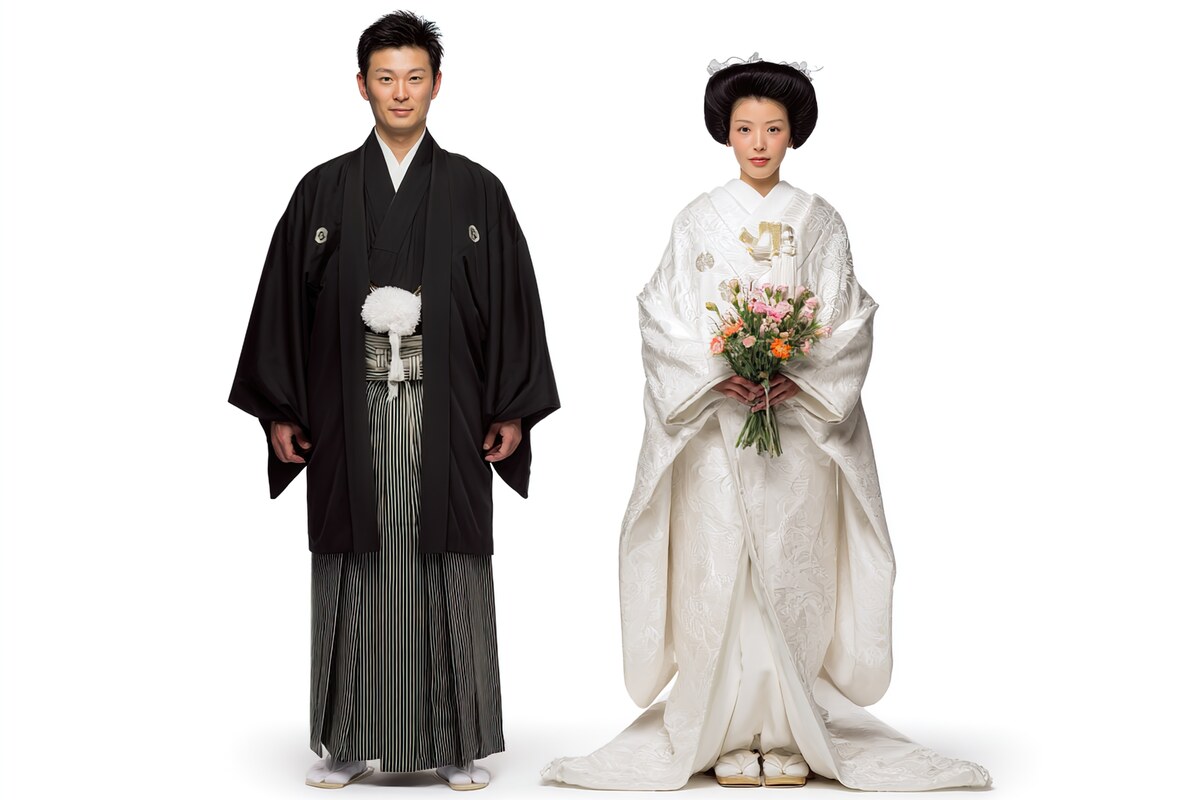
In a contemporary Japanese wedding, which often combines Shinto and Western elements, the day begins at the venue’s own beauty salon. Its staff dress the bride, the groom and other participants in formal Japanese attire.
Dressing the bride takes time, because she will wear several outfits during the day. That is why she must be the first to arrive, two hours before the ceremony, for an elaborate kimono, heavy make-up, a wig and a head covering. The groom and the guests usually arrive about an hour before the ceremony.
The couple then separate to meet their close relatives in a waiting room. An assistant called the kaizoe explains what will happen and what everyone needs to do, since most relatives are not familiar with the ceremony. Next comes the professional photo session with the couple and their families, which is considered the central part of the wedding day. Those pictures are meant to represent the couple’s future together.
The ceremony itself may take place at a Shinto shrine located inside the hotel. Guests who do not attend it can follow along on video screens in the lobby.
Two hours, and not a minute wasted
Because the wedding industry aims to make the most of time and space, the reception is set to last exactly two hours and follows a strict order of events. Nothing is left to improvisation.
The couple make dramatic entrances, sometimes in a cloud of white smoke while the hall lights dim and the stage glows rose pink. The bride changes outfits two to three times, so there are several entrances to photograph. The first entrance, for example, can include the nakodo, the go-between couple, whose role is so important that their names appear on the wedding announcement.
A master of ceremonies introduces the nakodo, who open the speeches. Speakers keep things formal and concise. The couple then cut the cake and share their first dance, before the kanpai toast finally lets everyone relax, eat and drink. By the end of the evening, both bride and groom have moved from traditional Japanese attire to Western clothes, a tuxedo for him.
Guests contribute in their own way. Relatives and friends offer gift money, called goshūgi, in a special envelope, and close family members give about twice as much as friends.
The candle service and flowers for the parents
Two moments make this tightly timed evening especially touching. In the candle service, the newlyweds each hold a long candle, light it at their parents’ table, then walk around the room lighting a candle on every guest table before lighting a final memorial candle at their own.
Near the end, the couple present their parents with flowers to thank them for raising them. Then come quick photos and farewells, and the celebration can carry on at an after-party in a restaurant.
What couples everywhere can borrow
Not every Japanese couple wants this much structure. Some younger couples skip formality altogether with a “no host party”, a relaxed celebration mostly for friends, who pay an attendance fee.
Still, a few ideas travel beautifully. A clear schedule shared with your families, someone whose only job is to tell relatives where to be, or a quiet moment to thank your parents with flowers can make any wedding day feel calmer and more meaningful.