At many Hindu weddings, the most important moment of the ceremony is a walk. The bride and groom take seven steps side by side, and only once the seventh step is complete are they considered husband and wife.
This beautiful rite is called the saptapadi, and it is regarded as the most important ritual of a Hindu wedding ceremony. If you are planning a Hindu wedding, joining one as a guest, or simply curious, here is what those seven steps mean and why they matter so much.
Seven steps, tied together
The word saptapadi comes from Sanskrit and literally means “taking together seven steps”. It is also known as saat phere, which in Marathi means “seven circumambulations”. The ritual is ancient, dating back to the Vedic period.
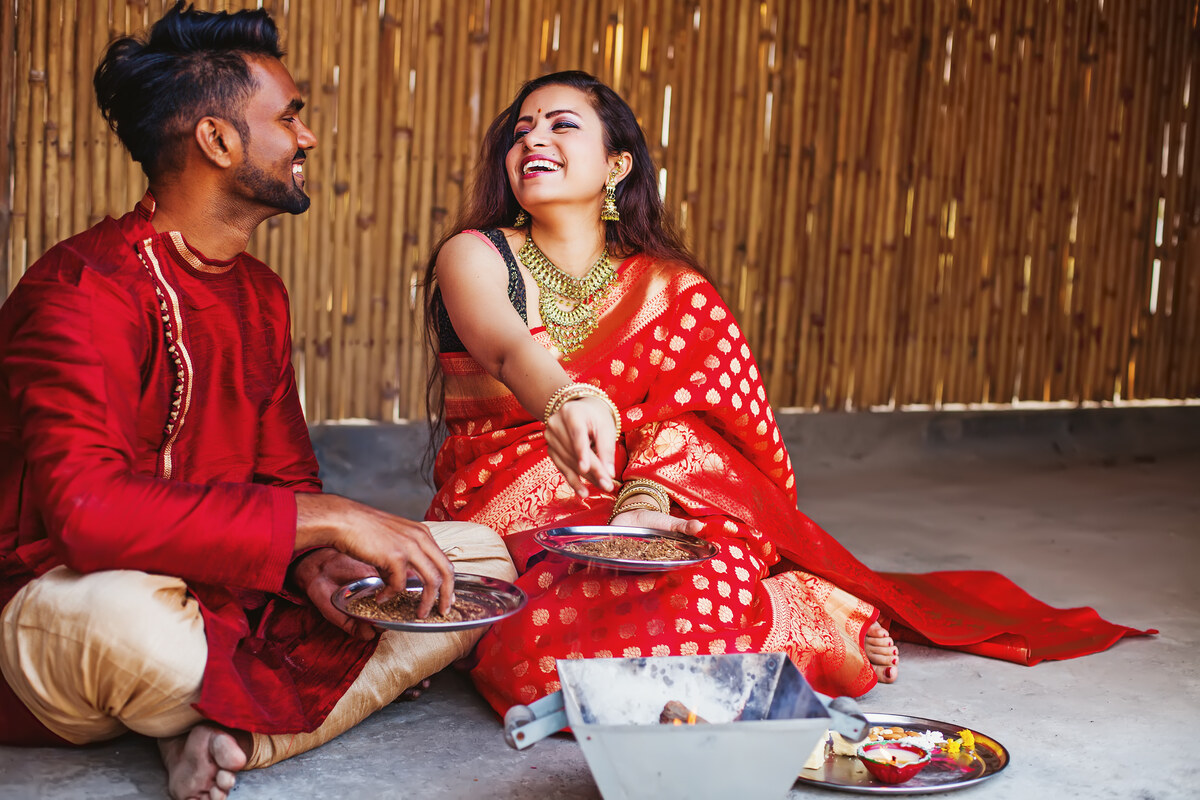
Before the couple begins, the priest often ties the end of the groom’s scarf to the bride’s upper garment, a gesture known as the marriage knot. In other communities, the groom simply holds the bride’s right hand in his own. Then, with one vow for each step, they move forward together.
There is no single standard Hindu ceremony, and the saptapadi changes from region to region. In some places, the couple walks around a sacred fire seven times. In others, they take seven steps to complete a single circle. One detailed version places a small handful of uncooked rice at seven spots in a line, and the couple steps on each little mound with the right foot while the priest recites a mantra.
What each of the seven steps stands for
The wording varies, but one common version links each step to a wish for the couple’s life together:
- The first step, for food that is pure and nourishing
- The second, for strength and good health
- The third, for prosperity
- The fourth, for happiness, love and respect, including for both families
- The fifth, for children
- The sixth, for a long life side by side
- The seventh, for harmony, loyalty and companionship
That last step is perhaps the most touching of all. In one tradition, the husband tells his new wife that they have now become friends, and that they will never break this friendship.
In North India, the couple says these words once the seven steps are done: “We have taken the Seven Steps. You have become mine forever. Yes, we have become partners. I have become yours.” The vow continues with lines that sound like poetry, including “We are word and meaning, united. You are thought and I am sound.”
The moment the marriage becomes official
The saptapadi is not only symbolic. It represents the legal element of the Hindu marriage ceremony. Under Section 7 of India’s Hindu Marriage Act of 1955, a Hindu marriage is not binding and complete before the seventh step of the saptapadi, taken by the bride and groom together in the presence of the fire.
There are exceptions. Some South Indian Hindu weddings do not perform the saptapadi at all, and in those cases the seventh step is not required.
Fire plays a central role. The fire deity Agni is seen as the divine witness to the marriage, and vows made in the presence of the sacred fire are considered unbreakable. Once the steps are complete, the bride takes her place on her husband’s left side, and the couple exchange garlands.
Who leads the way around the fire
One lovely detail often surprises guests: the bride frequently leads. Usually, she guides the groom through the first circuit. In North India, the bride leads the first six circuits and the groom leads the final one. In Central India and in Suriname, the bride leads the first three or four.
The vows are traditionally spoken in Sanskrit, though many couples also say them in their own regional language. If you are planning your ceremony, it is worth asking your priest which version your family follows and whether the vows can also be spoken in your regional language.
The ritual is so cherished that it has inspired films, including a 1981 Telugu film called Saptapadi that won a National Film Award in India. Watch closely at your next Hindu wedding. When the couple finishes that seventh step, you are witnessing the very moment they become husband and wife.