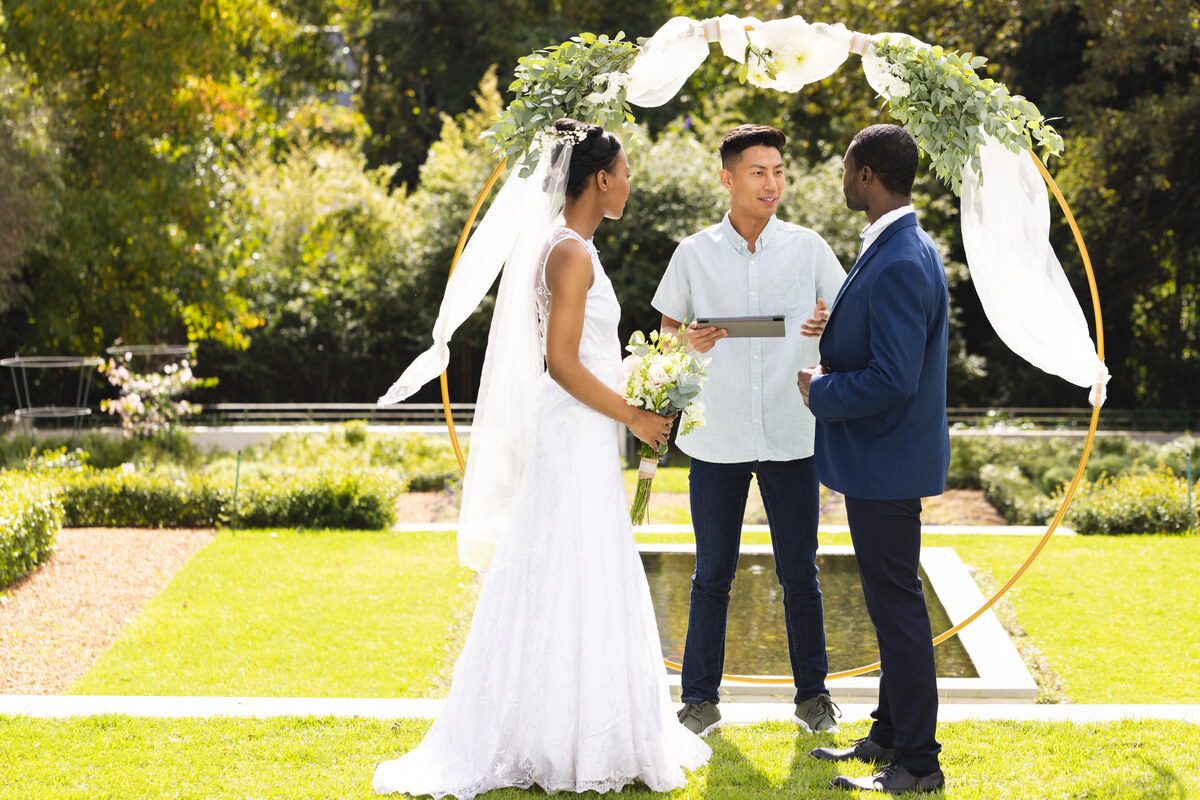
In 2020, 80.3 percent of Australian weddings were led by a civil celebrant rather than a member of the clergy. That quiet revolution began on a single evening in 1973, when a government minister typed out one appointment letter, found a stamp and walked it to the post box himself.
One letter, posted by hand
The minister was Lionel Murphy, then Attorney-General of Australia. The law that allowed him to appoint non-religious marriage celebrants, the Marriage Act, had existed since 1961, but it took his personal involvement, bypassing the bureaucracy, to put that power to use.
According to celebrant Dally Messenger III, Murphy faced opposition from his own staff, the public service and even members of his own party. So on 19 July 1973 he simply did it himself. His first appointee, Lois D’Arcy, later recalled that he had returned to his office one evening, typed her authorisation on his letterhead, placed it in an envelope and posted it.
Lois D’Arcy was a 26 year old mother of two babies. Appointing someone so young was itself one of his breaks with tradition.
Why couples wanted something new
In the early 1970s, couples who could not or would not marry in church had one alternative: the registry office. Those ceremonies were often described as perfunctory and undignified. Divorced people hoping to remarry, and couples from different denominations, frequently found the major churches discouraging or closed to them.
Murphy’s idea went further than offering a simple legal signature. Australia became the first nation whose government appointed non-clergy celebrants with the goal of making civil weddings as meaningful, and if desired as formal, as a church ceremony.
According to Messenger, the changes came in quick succession. Couples were now in charge of the words and actions of their own ceremony. Women were appointed at a time when ceremony providers had been men for centuries. Aboriginal Australians, including Faith Bandler, and young people became celebrants too. And for the first time, couples could choose their own celebrant.
From 3 percent to the new normal
The public embraced the idea quickly. Weddings led by independent celebrants rose from 2.92 percent of all marriages in 1973 to 38.5 percent by 1996. By 2013, the program had helped more than a million couples marry in civil ceremonies.
In 2020 the figure varied by state and territory, from 75.5 percent in New South Wales to 86.8 percent in Tasmania. Other countries followed the Australian model as well, starting with New Zealand in 1977, then the United Kingdom around 1980 with non-legal ceremonies, and the United States in 2002.
Humanist celebrants have followed a similar path elsewhere. In Scotland, a June 2005 ruling allowed them to conduct legal weddings, and by 2015 humanist weddings had become more popular in Scotland than Church of Scotland weddings. In Ireland, where they have been legally recognised since 2012, humanist weddings made up 6 percent of all marriages in 2015.
What a celebrant can do for your ceremony
The heart of celebrancy is that the couple decides almost everything about the content. Australian celebrants follow a Code of Practice asking them to help couples choose or compose a ceremony that meets their expectations, to hold a rehearsal if requested, to make sure everyone present can hear, and to arrive no later than the agreed time. A couple can even ask for the full structure, dress and flow of a formal church service.
New Jersey celebrant Gerald Fierst puts it beautifully: “A wedding ceremony is a crossroad where two life stories intersect.”
If you would love a personal ceremony, check the rules where you plan to marry. Humanist celebrants can conduct legally binding weddings in places such as Scotland, Ireland, Norway, Canada, New Zealand and the United States. In England and Wales, a humanist ceremony still needs to be paired with a civil certificate from a Register Office. In Italy, the mayor can delegate the role, so a couple can be legally married by an independent celebrant of their choice.
Whichever path you take, it is worth remembering that the right to shape your own wedding words is, in many places, younger than you might think, and it started with one letter dropped in a post box.