If you have ever wondered whether there is a “right” day to get married, English folklore has a firm answer, and it is not the day most couples would guess. According to an old rhyme, Wednesday is the luckiest day to marry, and Saturday is the unluckiest of the whole week.
Long before venue availability and guest calendars, couples looked to rhymes, gods and almanacs to find a date that would bless their marriage. Here is how some of those traditions worked, and why none of them should keep you up at night.
The English rhyme that gives every day a fortune
The verse is short enough to learn by heart, and each line hands out a different fate:
“Monday for health, Tuesday for wealth, Wednesday best of all, Thursday for losses, Friday for crosses, Saturday for no luck at all.”
So a Monday wedding promised good health, a Tuesday one promised prosperity, and Wednesday was the true favorite. Thursday and Friday came with losses and troubles, and Saturday brought no luck at all.
It belongs to a whole family of English wedding superstitions. The same folklore says that a cat sneezing on the eve of the wedding is a good sign, and that finding a spider on the wedding dress brings luck too.
Why June was lucky and May was not
The months had their own reputations, and some of them go back to ancient Rome. Juno was the Roman goddess of marriage and childbirth, so marrying in June came to be considered lucky. It is a lovely thought for anyone planning a summer wedding.
May had a much less flattering rhyme attached to it: “Marry in the month of May, and you’ll surely rue the day.” The verse was meant to discourage brides from choosing it at all.
The Romans also had far less charming methods. They studied pig intestines to predict the luckiest time to marry, a habit that, happily, has not survived into modern wedding planning.
Religious calendars mattered as well. During Lent, the Catholic Church discourages marriages, but couples may still marry if they forgo the special blessings of the Nuptial Mass and keep the social celebrations limited.
The Chinese almanac that still helps families choose a date
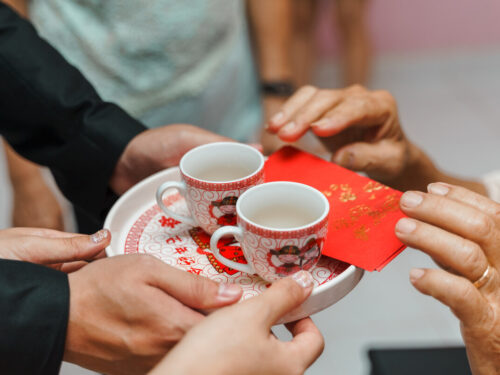
In Chinese tradition, the date can be chosen with the help of the Tung Shing, a divination guide and almanac also called the Yellow Calendar or the Imperial Calendar. Most of its pages deal with what is suitable to do on each day, and its most common use is choosing a wedding date. It lists the auspicious and inauspicious days for weddings or engagements, and even the best timing for the ceremony itself.
Its name has a sweet story of its own. Under the Qing dynasty the book was called the Tung Shu, the “All-knowing Book”. But in Cantonese and Mandarin, the word for “book” sounds like the word for “defeated”, so the title could be heard as “Defeated in All Things”. It was renamed Tung Shing, meaning “Victorious in All Things”, which is a much better omen to bring to a wedding.
Some Chinese families still follow these days for their weddings today. Elsewhere in Asia, Vietnamese weddings often involve choosing an auspicious date for both the ceremony and the bride’s arrival at the groom’s house, while in Tibetan Buddhist communities, couples turn to astrological consultations to find the right day.
And if it rains on your wedding day
Even the weather has a kind superstition attached to it. In India, rain on the wedding day is thought to bring wealth and fertility to the marriage. In Italy, as in several other countries and cultures, rain is considered a good luck omen too.
That is a comforting thought to keep in your back pocket if the forecast turns gray.
Choosing a date that feels lucky to you
These rhymes and calendars are folklore, and they say more about the hopes of the couples who came before us than about how a marriage will turn out. The luckiest date is the one that lets the people you love be there with you.
If you enjoy tradition, you can still borrow a little of it. A Wednesday in June would tick both boxes in the English and Roman rhymes, and a family almanac can add meaning if it belongs to your heritage. Whatever day you choose, it will become the one you celebrate every year.