Long before wedding registries, many young women quietly built their future home one folded tablecloth at a time. In the United States they kept a hope chest, in the United Kingdom a bottom drawer, and in Australia they might call it a glory box.
Whatever the name, the idea was the same: a safe place to gather clothing and household linen in anticipation of married life. It is a tradition with surprisingly deep roots, stretching from Renaissance Italy to Egypt.
A trousseau with a different name in every country
The contents of a hope chest are usually called a trousseau, a French term meaning “small bundle”. Until approximately the 1950s, gathering a trousseau was a common coming-of-age rite, typically a step on the road to marriage that came somewhere between courting and engagement.
The British name tells you a lot about how practical it could be. Not every family owned a special chest, so a young woman would simply set aside one drawer, the bottom one, in a chest of drawers and collect her trousseau there undisturbed. In Australia, women used both terms, along with the lovely “glory box”.
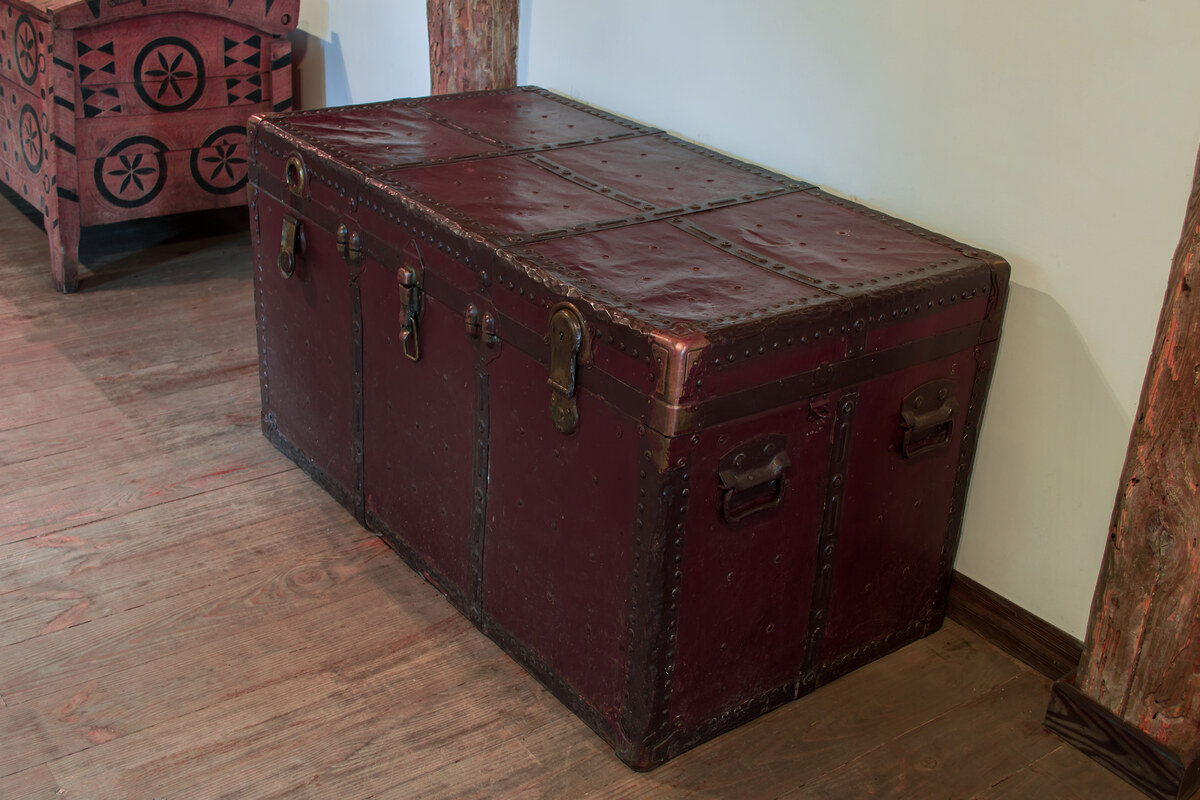
What went inside? Mostly the classic dowry items: clothing, table linens, towels, bed linens, quilts and occasionally dishware. A chest itself was considered an acceptable gift for a girl approaching marriageable age, and it was often reserved for the firstborn daughter of a family.
One small detail is worth knowing: a hope chest is not the same thing as a bridal chest. A bridal chest was given to a bride at her wedding by her husband, while a hope chest was filled before there was any wedding to plan.
From Renaissance Italy to the Cairo Genizah
In 15th and 16th century Italy, wealthy merchants and aristocrats celebrated dynastic marriages with the cassone, a large chest associated with displays of wealth and luxury. Craftsmen decorated many of them with gilded gesso, often inlaid or carved, then painted and gilded.
Further north, Dutch and German families favored the kast or schrank, a tall, wardrobe-like piece with double doors. It was built for everyday use in the married home and could be taken apart for the journey there, a thoughtful touch since brides often left their family home when they married.
In the Middle East, similar pieces were known as dower chests. The Cairo Genizah, a collection of nearly 400,000 texts describing daily life in Egypt between the 6th and 19th centuries, includes numerous marriage contracts that mention them. Two types appear: the muqaddimah, for the bride’s personal possessions, and the sunduq, commonly made in matching pairs for other goods.
How the hope chest became American folk art
European immigrants brought the tradition to America. Scandinavians settled in the Northern Midwest and Germans in Pennsylvania, and each group decorated chests in its own traditional painted style. The Amish built simple chests covered in extensive painted decoration, and engraving to personalize a chest remains common in Amish communities.
Some of these pieces are now museum treasures. Between 1765 and 1820, German immigrant cabinetmakers in Lancaster County, Pennsylvania, decorated chests with sulfur inlay, and the Deitrich chest of 1783 is now at the Smithsonian.
In the 20th century, the Lane Furniture Company of Altavista, Virginia, turned the cedar chest into a household name. In the 1930s its Lane Girl Graduate Plan gave 9-inch cedar chests to girls graduating from high school, and during World War II its advertising, featuring a teenage Shirley Temple, targeted GIs and their sweethearts back home.
Not every trousseau found its way to a wedding. The National Museum of Australia has displayed one hand-made between 1916 and 1918, kept in calico bags rather than a chest. It was never used, because the bride’s fiancé was killed in World War I before they could marry.
If you inherit a vintage cedar chest
Today, some furniture makers simply use the name hope chest for any chest made to hold family heirlooms, which makes it a beautiful place to keep your veil, your vows or the quilt a grandmother stitched.
If the chest you inherit is an older cedar model, check the lock before anything else. In 1996, Lane recalled 12 million self-locking chests that could not be opened from the inside, after reports of child suffocation deaths. The recall covered the locks of all Lane and Virginia Maid cedar chests made between 1912 and 1987, and the CPSC estimates that 6 million still have the original latch. As the recall is no longer available, owners are encouraged to permanently remove the latch and lock. With that done, the chest can go back to doing what it has always done best: keeping your most cherished things safe.