Plan a wedding in Scotland and the paperwork has a surprise built in: the register office posts a public list of upcoming local marriages. Behind it sits a notice period of at least 29 days, and for most couples the real wait is longer.
Each of you files your own notice
In Scotland, both partners must submit a marriage notice form independently to the registrar of the district where the wedding will take place. It is one form each, not one form for the couple.
The minimum is 29 days of notice, unless the Registrar General grants a special exception. In practice, the checks that confirm there is no legal impediment to the marriage stretch the timeline to four to six weeks for most couples.
That is the moment your plans become public. Each register office displays a list of forthcoming local marriages, so your names can appear there before the big day.
One Scottish rule that surprises English couples
The legal minimum age to marry in Scotland is 16, and no parental consent is needed. England and Wales set the bar at 18. That difference goes back centuries, and it is part of why so many couples once crossed the border to marry.
Scotland also went its own way on who may lead the ceremony. There are two routes: a state registrar for civil weddings, or an authorised celebrant for religious ones. A 2005 decision by the Registrar General also allowed humanist celebrants to conduct legally valid weddings, which are non-religious like civil ones.
Where you can say your vows
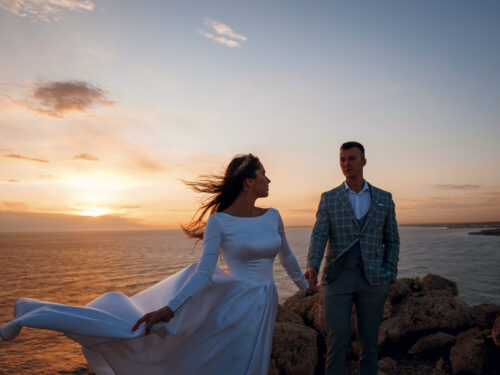
Since the Marriage (Scotland) Act 2002, civil weddings are no longer limited to register offices. They can take place in approved places, as well as in other locations used in exceptional circumstances. Religious ceremonies, on the other hand, have never been restricted by location.
For couples dreaming of something beyond a standard town hall, that opens up a lot of possibilities, as long as the venue has been approved.
What happens on the day
For a religious wedding, the couple completes a document called a Marriage Schedule. It must be shown to the person performing the ceremony, otherwise the wedding cannot go ahead. After the vows, the couple, their witnesses and the celebrant all sign it, and it is then returned to the local Register Office.
At a civil wedding the registrar keeps the schedule and the couple signs it after the ceremony. Either way, the signing is the final step that makes the paperwork complete.
The old custom of the penny wedding
Scotland also has a warm tradition from its past: the penny wedding. Among poorer families, guests contributed towards the cost of the celebration. A meal followed the ceremony, sometimes with music and dancing.
It is a lovely reminder that sharing the cost of a wedding with the people who love you is hardly a new idea. And if you are planning a Scottish wedding today, start the paperwork early: those four to six weeks arrive faster than you think.