A single word could separate an engagement from a marriage in medieval Europe, and that word was a verb tense. Under church law, a couple who promised “I will take you as my wife/husband” were betrothed. The wording we know from wedding vows today, “I take you,” was a different thing entirely.
Engaged by the words, not by the ring
In medieval canon law, a betrothal could be formed with nothing more than the couple speaking those future-tense vows to each other. Even so, these promises had real legal implications.
Betrothal was also considered a “semi-binding” contract. It could be set aside for reasons such as the discovery of a prior commitment or marriage, or evidence of infidelity, and in some traditions the person who broke it owed a financial penalty.
The engagement that rewrote a king’s family
How seriously these promises were taken shows in one famous case. Richard III of England had his older brother’s children declared illegitimate, on the grounds that their father had been betrothed to another woman when he married their mother.
It is a dramatic reminder that an engagement was once far more than an announcement to friends and family.
When the church started the engagement clock
The idea of an official engagement period in Western Europe may have begun in 1215, at the Fourth Lateran Council led by Pope Innocent III. It decreed that marriages should be announced publicly in the churches during a suitable and fixed time, so that any legitimate impediments could be made known. Those announcements are known as banns.
In Roman Catholicism, a betrothal was historically a formal contract considered as binding as marriage, and a divorce was needed to end it.
A betrothal at the church door
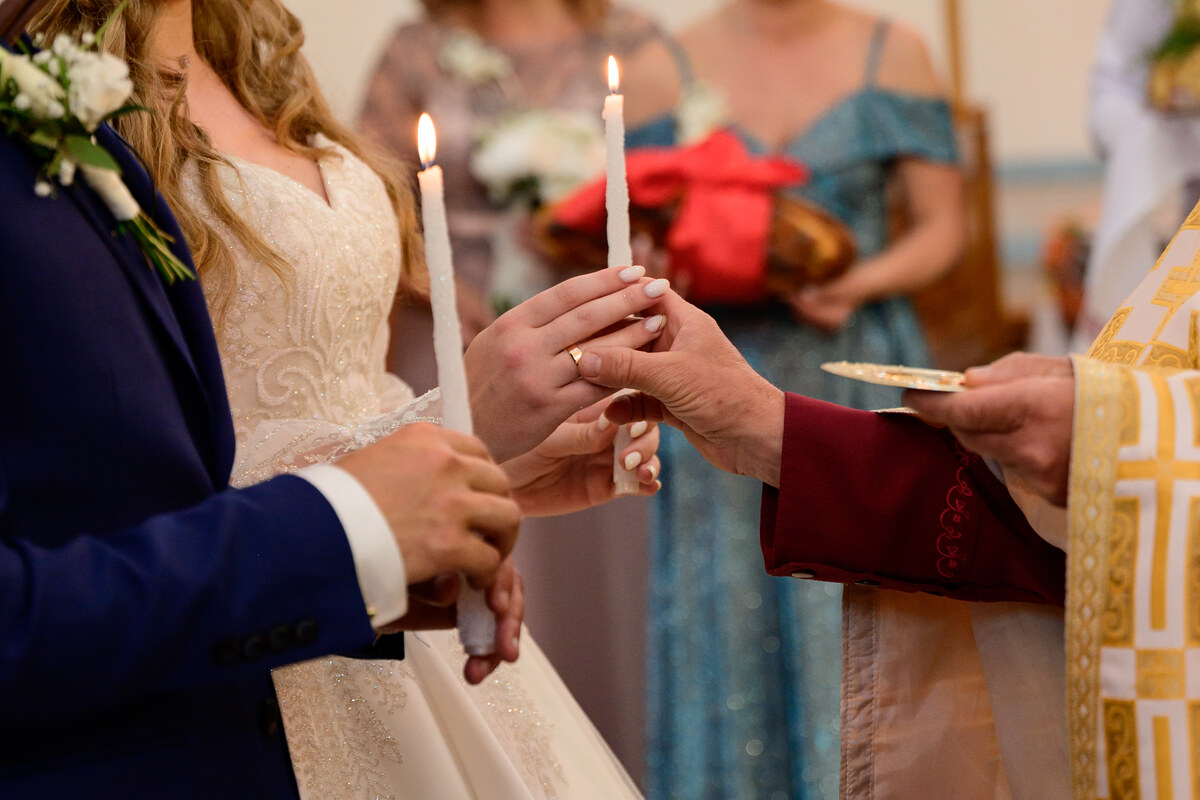
Some traditions still keep betrothal as its own rite. In the Eastern Orthodox and Oriental Orthodox churches, it is traditionally performed in the narthex, the entranceway of the church, to show the couple’s first step toward married life.
The priest gives the couple lit candles to hold, and the rings are exchanged three times, by the priest or by the best man. Traditionally the groom’s ring is gold and the bride’s ring is silver.
Two rings in Argentina
Customs around the ring differ widely. In Argentina, the couple may begin with silver bands to mark an informal relationship. A gold band is given when the commitment becomes formal, and the optional diamond ring, called a cintillo, is saved for the wedding ceremony itself.
In Brazil, by contrast, the bands are always gold, and there is no tradition of a separate engagement ring.
What to take from it
In some English-speaking countries, a spurned partner could once sue for “breach of promise,” but that legal claim has become obsolete in most places. Today an engagement is a personal promise rather than a legal one, which leaves couples free to shape it however they like.
Whether that means a quiet blessing, a family dinner or two matching bands, you are following a tradition that has always varied from place to place.