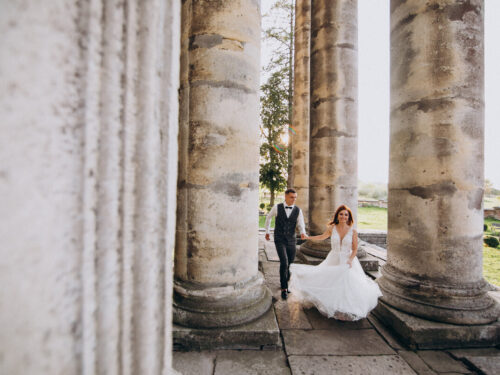
In France, the wedding that counts in the eyes of the law is the one at the town hall. A church ceremony can follow, but only once the couple is already married by the state, a rule that has been in place since 1802.
It sounds like a small detail of paperwork, yet it explains why so many European couples plan two ceremonies, and why a town hall wedding can be every bit as festive as a church one.
How Napoleon put the town hall first
Civil marriage was created in France in 1792, during the French Revolution. From then on, marriage was a matter for the state, and religious marriage was no longer recognised by it.
Ten years later, Napoleon looked for a way to reconcile the two. Advised by Portalis, he set out a simple order in 1802: religious ceremonies could only be performed for couples who had already been married in a civil ceremony.
That order still holds today. In France, only civil marriage has legal validity, and a religious ceremony may only take place afterwards, with no legal effect. Since 1802, ministers who celebrate a religious wedding without a civil marriage first risk criminal sanctions. Napoleon also spread this custom throughout most of Europe.
Germany, Belgium and the Netherlands each found their own rhythm
In Germany, the Napoleonic Code only applied in the territories Napoleon had conquered, and civil marriage faded after his empire fell. Then, one state after another brought it back in the 19th century, from Frankfurt in 1850 to Württemberg in 1863. These civil weddings made it possible for couples of different faiths, or of different Christian denominations, to marry.
After unification, a civil marriage law initiated by Otto von Bismarck was adopted in 1875. Since then, only civil marriages have been recognised in Germany. Couples remain free to add a religious ceremony, and until December 31, 2008, that religious wedding could not take place before the civil one.
In Belgium and the Netherlands, most couples now marry without any religious ceremony at all. Full formal weddings, complete with wedding gowns, family and friends, usually take place in special ceremonial rooms in the town hall.
In England, a civil ceremony leaves God out entirely
England took a different road. Its Marriage Act of 1836 removed the requirement for a religious setting and allowed registrars to record marriages that no religious official had conducted.
Today, couples in England and Wales can marry in a register office, but also in stately homes, castles and hotels approved by the local authority. A civil ceremony is short and non-religious, and the registrar, the couple and two witnesses must all attend, with guests welcome too.
One rule surprises many couples: no reference may be made to God, to any deity, or to a particular religion. This is strictly enforced, so readings and music must be agreed upon in advance.
Where couples travel for a civil wedding
Some countries have no civil marriage at all. In places such as Jordan, Lebanon, Israel, Qatar and Saudi Arabia, marriages are conducted by religious authorities. Israel and Lebanon do, however, recognise civil marriages performed abroad, even remotely by videoconference.
That is why some Lebanese couples, as described in Lara Deeb’s book Love Across Differences, choose a civil wedding abroad, typically in Cyprus, sometimes with their parents’ full blessing. For them, it is a practical way around the country’s religious personal status laws rather than an act of rebellion.
Change can come quickly, too. Abu Dhabi introduced civil marriage in 2021, open regardless of religion or nationality and without any residency requirement. Around 53,000 civil marriages were registered there between 2022 and the end of 2025, an average of about 70 a day.
What this means if you are planning your own wedding
In the United States, the picture is simpler. Every state requires a marriage license, but a religious or a civil ceremony is equally valid, and there is no need to hold a civil ceremony before a religious one.
If you are marrying in Europe or Latin America, though, check the local rules early. In most of those countries a civil ceremony is required, and a religious wedding on its own has no legal effect. If a religious ceremony matters to you, plan it as a second moment after the civil one, a town hall wedding for the law and a celebration that reflects your faith. Both can be just as joyful.