Long before anyone hired a videographer, a few devoted friends and relatives filmed weddings on the family 8mm camera. There was just one catch: every four minutes, the film ran out and they had to stop and load a new cartridge.
Today a wedding film can follow the whole day, from the first look to the last dance. Getting there took decades of bulky cameras, fuzzy pictures and a few clever inventions along the way.
When wedding films came in four-minute pieces
Wedding videography has roots that go back before the modern video camera, to 8mm and 16mm film. When film was the only way to capture moving pictures, a few enterprising people would bring the family 8mm camera to the weddings of friends and family.
These film cameras had a major limitation. After exposing four minutes of film, the operator had to load a new cartridge. A wedding could only be captured in short pieces, one cartridge at a time.
The first camcorders were far from glamorous
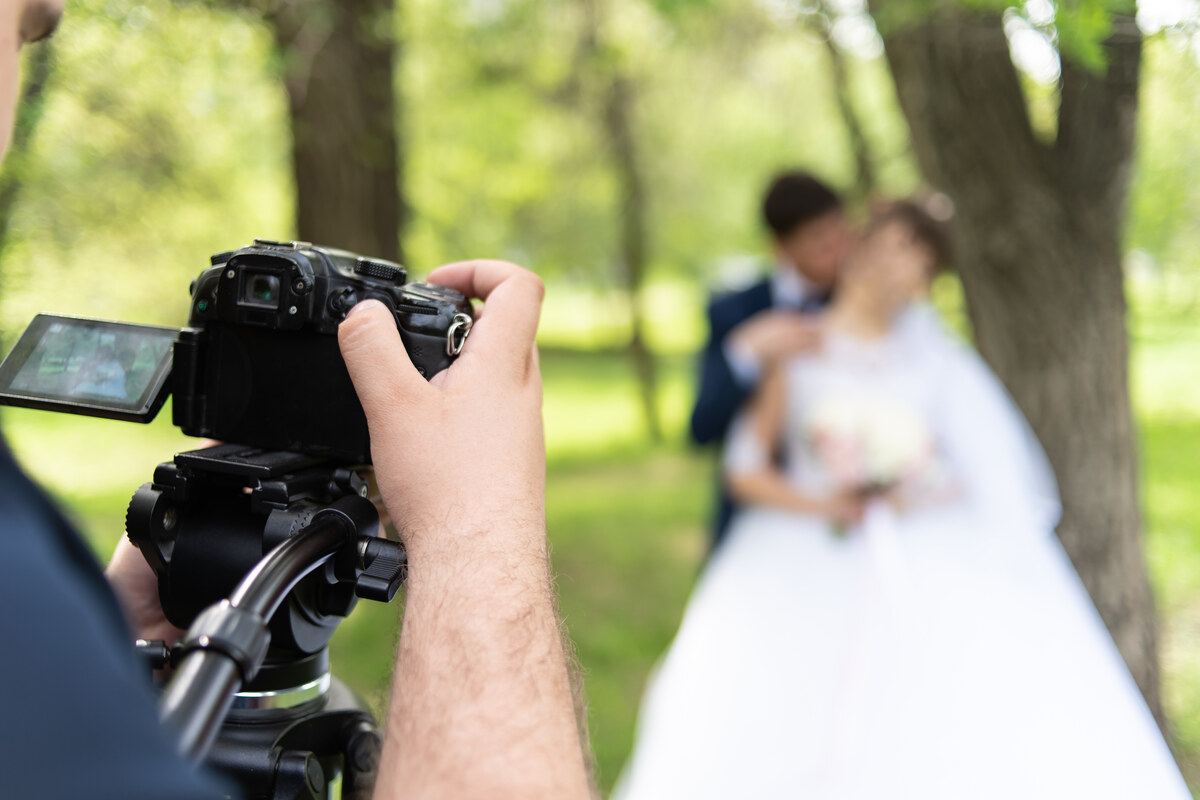
The arrival of early camcorders made wedding videos far more popular. Still, the early days of professional wedding videography were marked by primitive technology, and the image quality was generally low.
Cameras needed bright lights, and the results often had fuzzy pictures, weak colors and poor single-channel audio. The cameras were also bulky, with a separate recorder attached by a cable, which severely limited how much the videographer could move around the room.
Editing was not a given either. Many wedding videos were simply handed over as they were filmed, without any editing at all. Because analog tape lost quality with each copy, every duplicate looked a little worse than the last.
Wedding videographers also helped create a whole new trade. As camcorders reached consumers in the late 1970s, those who filmed weddings began offering their services for other occasions, such as First Communions, anniversaries, bar mitzvahs, proms and concerts. Event videography grew directly out of wedding videography.
How the wedding video grew up
In the late 1980s and early 1990s, things began to improve. Videographers formed regional and national organizations, the largest still active today being the Wedding and Event Videographers Association International (WEVA). Manufacturers also created a new class of cameras, known as prosumer, sitting between professional and consumer models.
Editing took a major leap in the early 1990s with tools like the NewTek Video Toaster. For a few thousand dollars, it offered an editing suite that rivaled professional systems costing ten times as much, and it won an Emmy Award for Technical Achievement in 1993. More affordable non-linear editing systems followed, giving editors far more creative options.
By the mid-1990s, digital cameras arrived. They were small, mobile and better in low light, which finally allowed the videographer to be discreet. The last change came at the end of the decade, when the recordable DVD replaced VHS tape. Weddings could now be recorded, edited and delivered digitally, with much better image quality.
Choosing the style that feels like your day
Wedding videos today generally range from journalistic to cinematic, and knowing the main styles makes it easier to talk with a videographer about what you want:
- Journalistic or documentary: a documentary film of the day, edited in the order events happened to preserve continuity.
- Cinematic: a filmic look that aims for emotional impact, with slow motion, transitions, saturated colors, creative camera angles and dramatic music.
- Concept: the most artistic and elaborate option, usually scripted, often with a few pre-wedding shoots and interviews with the couple or guests.
- Short social videos: with the popularity of phones and apps like Instagram, much shorter wedding videos have become more common.
- Drone shots: drones are increasingly seen at weddings, bringing aerial views of the venue and the celebration.
Whichever style you choose, it is worth remembering how far the wedding film has come. What once fit into four-minute pieces of 8mm film can now tell the full story of your day, in exactly the tone that feels like the two of you.