For generations, eloping couples from England headed for a tiny Scottish village just over the border. Couples who could not marry at home raced to Gretna Green, and the person waiting to marry them was often the local blacksmith. Today, couples still say their vows there over an anvil, by choice rather than in a hurry.
A 1753 law that sent couples north
The story starts with a law passed in England in 1753, Lord Hardwicke’s Marriage Act. Once it came into force in 1754, a parent could legally veto the marriage of a son or daughter under the age of 21. The Act also required couples to give the community notice of an upcoming wedding, which made a quiet ceremony much harder.
There was one important catch. The Act did not apply in Scotland, where couples could marry with or without their parents’ consent. For young lovers facing a disapproving family, the answer was simple: get across the border.
Gretna Green did not become the obvious destination straight away, though. It was only in the 1770s, when a toll road was built through the hitherto obscure village (then called Graitney), that it became the first easily reachable stop on the Scottish side. The name itself has nothing to do with romance: Gretna comes from Old English words meaning “gravelly hill.”
Why the blacksmith performed the ceremony
Scots law also allowed what were called “irregular marriages.” A declaration made in front of two witnesses was enough, which meant almost anybody had the authority to conduct the ceremony. In Gretna Green, that role famously fell to the blacksmiths.
They became known as the “anvil priests,” and the forge became a wedding chapel of sorts. The most prolific of them was Richard Rennison (1889-1969), who performed an astonishing 5,147 ceremonies. Between the village’s two blacksmiths’ shops and its countless inns and smallholdings, Gretna Green became the backdrop for tens of thousands of weddings.
Gretna was not the only option. Other Scottish border villages such as Coldstream Bridge, Lamberton, Mordington and Paxton Toll welcomed eloping couples too, while Portpatrick served those coming over from Ireland. But Gretna Green is the name that stuck.
From Jane Austen to Bridgerton
The village became such a symbol of runaway love that it found its way into fiction. In Pride and Prejudice, Lydia Bennet leaves a note saying she and Wickham are headed for Gretna Green (they are later found in London, not yet married at all). Lady Sybil tries to elope there with Tom Branson in Downton Abbey, and in the first season of Bridgerton, Colin Bridgerton and Marina Thompson plan a quick Gretna Green wedding that never happens.
The name even became a legal expression. In common law, a “Gretna Green marriage” came to mean any wedding held outside the couple’s home jurisdiction to avoid its rules. In the United States, places such as Elkton in Maryland, Reno and later Las Vegas earned the nickname of “Gretna Greens.”
The rules changed, but the anvil stayed
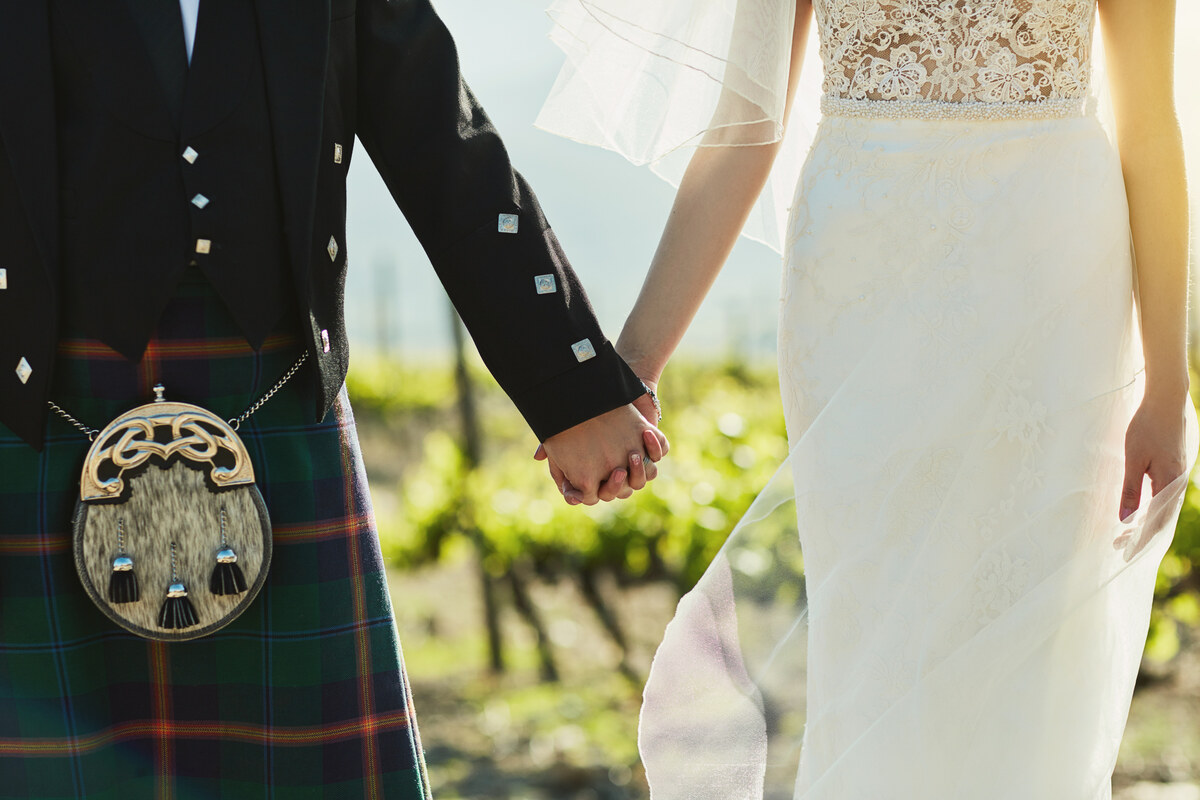
Over time, the legal loopholes closed. From 1856, Scotland required 21 days of residence before a marriage (a requirement only lifted in 1977), and the Marriage (Scotland) Act 1939 abolished most forms of irregular marriage. That same Act is also the point at which handfasting, the old practice of making a marriage pledge by joining hands, stopped being recognised as a legal form of marriage in Scotland.
Yet the romance survived the paperwork. Today there are several wedding venues in and around Gretna Green, from former churches to purpose-built chapels, and the ceremonies at all of them are still performed over an iconic blacksmith’s anvil.
What this means for couples today
The couples who once raced north were often escaping families who said no. Modern couples who choose Gretna Green are usually doing the opposite: they bring their loved ones along to share a tradition with a few centuries of devotion behind it.
If you love the idea of a small, meaningful ceremony with a story attached, an anvil wedding is a sweet nod to all the couples who travelled through the night to be together. And if you plan to marry in Scotland as a visitor, check the current legal requirements well ahead of time, since the rules have changed many times since the days of the anvil priests.